Guide
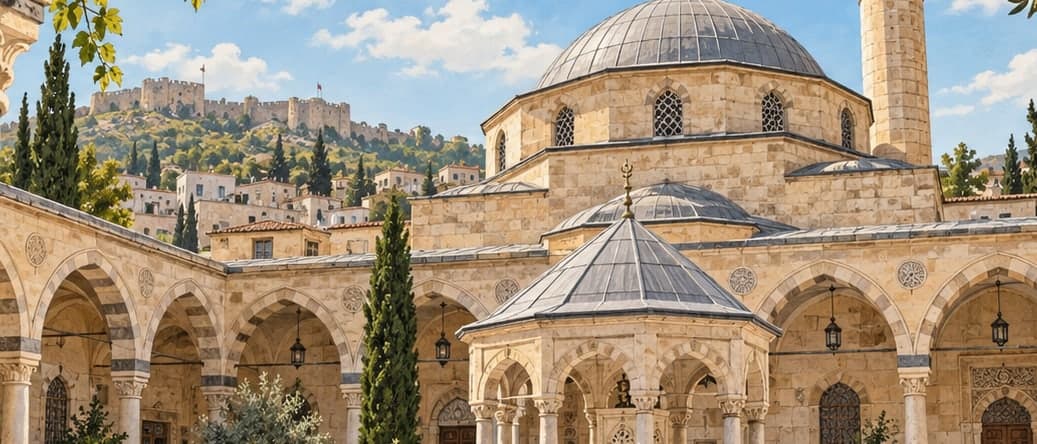
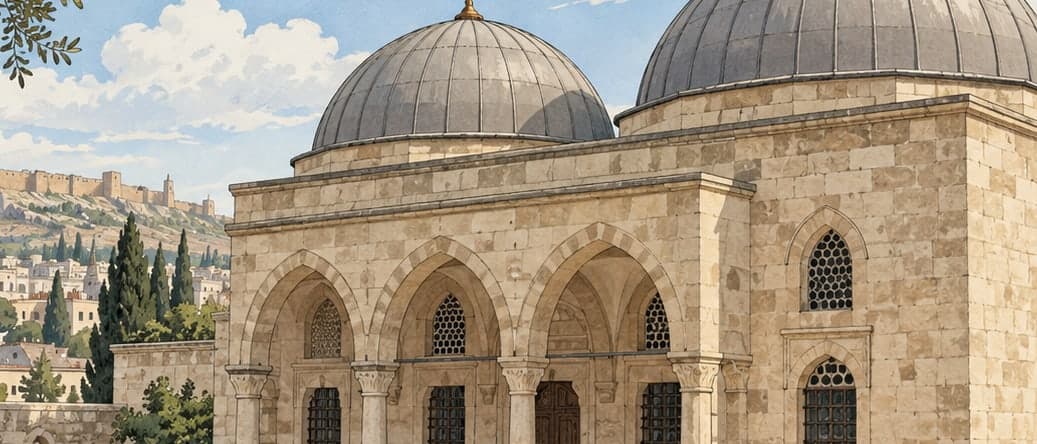
This is the oldest and largest mosque in Kilis, in the Hacı Gümüş quarter — one of the town's oldest, recorded in the Hurufat registers as the Sibat quarter. The plan is a rectangle running parallel to the qibla with a dome in front of the mihrab, and cross vaults covering the sections east and west of it. There is no porch for latecomers.
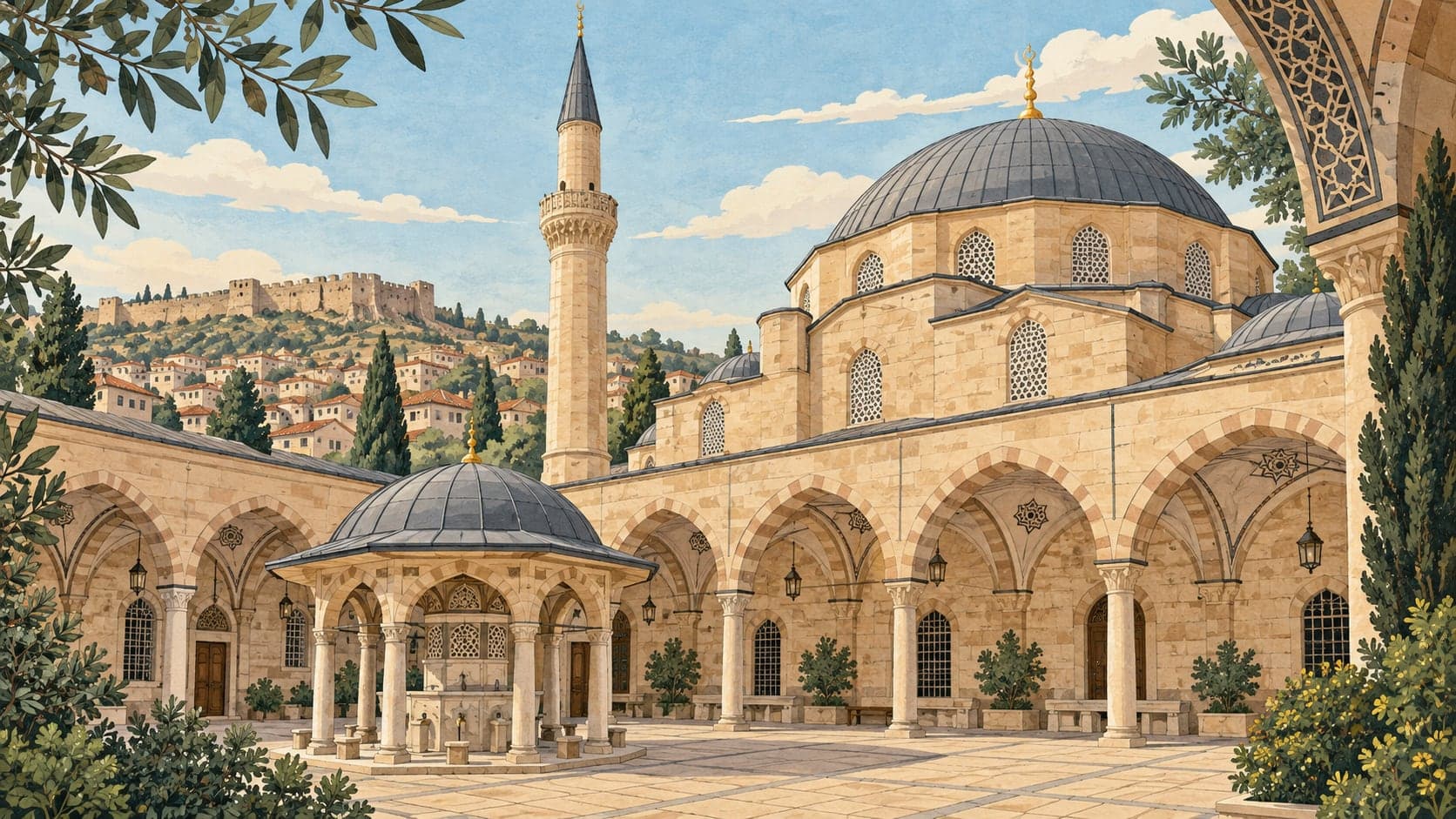
The dome is 7.30 metres across and spans two aisles. Built of brick on four engaged piers, it is sheeted on the outside; its drum is round within and twelve-sided without, with twelve arched windows. The mihrab, set on the central axis of the prayer hall, has a pointed arch with its niche filled with muqarnas, and the capitals of the colonnettes at its corners are worked with rose and palm-leaf motifs.
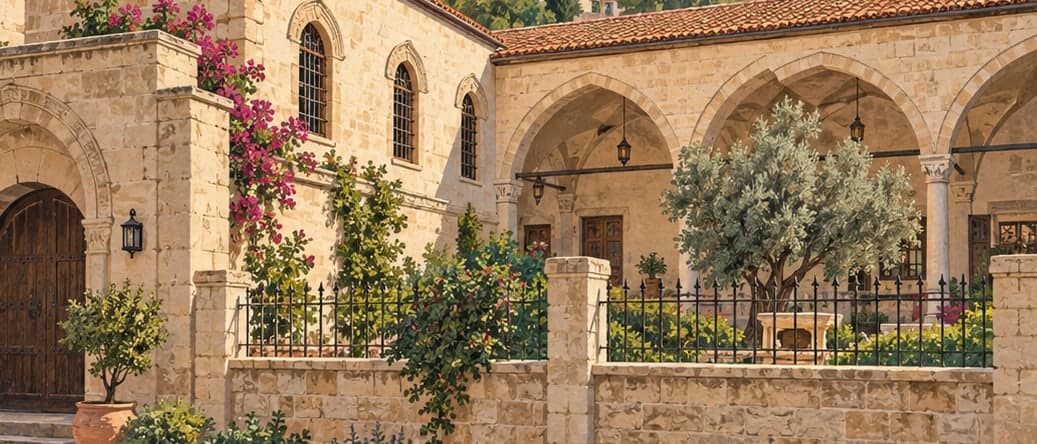
The prayer hall opens onto a courtyard on the north with medrese cells to its east and west. The courtyard is entered through the portal on the north-east and a door on the west; a depressed arch leads into an intermediate space under a cross vault. The cells and the arcade around the courtyard, covered by barrel and cross vaults, have flat roofs. Two of the masonry piers on the north side of the courtyard carry mihrab niches: this arcaded area under pointed arches and cross vaults was used in the past as the Şafii mosque, recorded in the Hurufat registers as the Şafiye mescid within the great mosque.
The minaret has a square base built of regular cut stone in yellowish and black. The upper corners of the base are chamfered and there is a depressed-arched door on the south. The polygonal shaft rises from an octagonal shoe, and the lantern and cap are as plain as the shaft, which has no bands; there is no finial, and one balcony. Among the details worth noticing are the muqarnas corbelling under the balcony and the pierced star motifs on the upper part of the lantern. Otherwise the ornament is gathered at the portal into the prayer hall, above the mihrab niches on either side of it, and at the mihrab.