Guide
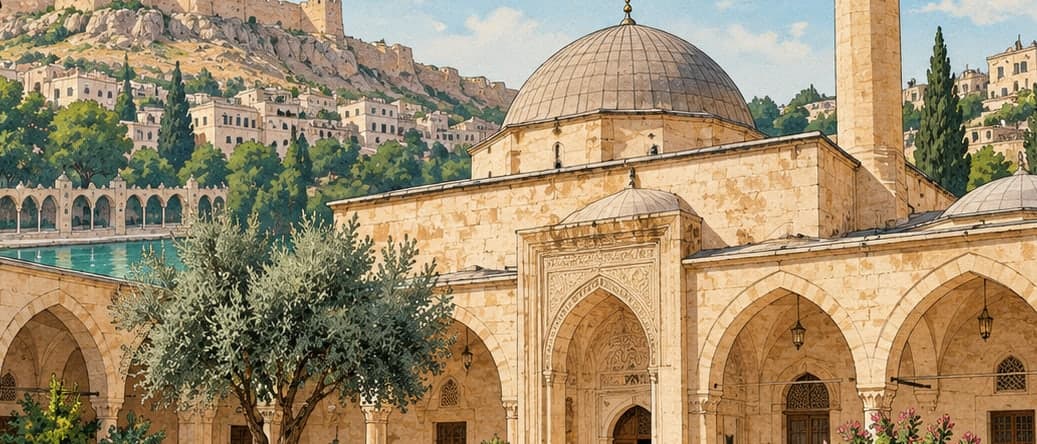
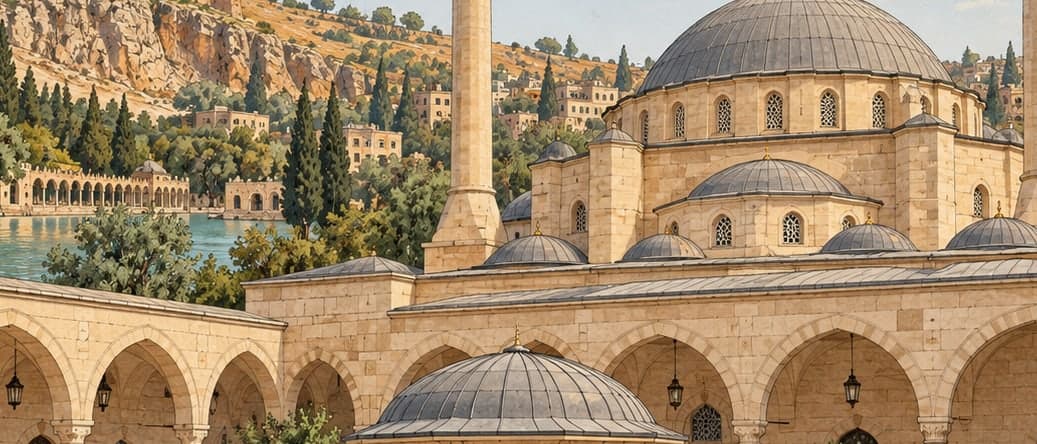
The mosque stands on Divanyolu Caddesi in the centre of Şanlıurfa, built on the site of an older church known as the Red Church whose date cannot be established. Courtyard walls, columns, capitals and the bell tower of that earlier building still stand.
There is no foundation inscription, so who built the mosque and when is not known for certain; it is thought to have been built by the Zengids between 1170 and 1175. From the inscriptions it was repaired in 1684, 1779, 1780 and 1870. After the Islamic conquests it was called the Red Mosque, both for the red marble of its columns and for its connection with the church.
One feature is claimed as a first: the porch for latecomers, resting on piers and opening onto the courtyard through fourteen pointed arches each covered by a cross vault, appears in Anatolia for the first time in this mosque.
There is a well inside the prayer hall. A local belief holds that the cloth Jesus sent to King Abgar with his disciple Thomas was placed in this well, and for that reason its water is regarded as healing. The minaret was turned into a clock tower in the Republican period with the addition of a clock, and it serves as the first and only clock tower in the city.
The north-west part of the courtyard, enclosed by the thick walls of the Red Church, is a graveyard. The tomb there holds the grave of Şehabeddin Ahmet, younger son of Mevlana Halid Ziyâeddin, founder of the Halidi order, who died in 1823; the tomb was restored by the provincial culture foundation. The mosque itself was repaired by the Directorate General of Foundations in 2010–11.