Guide
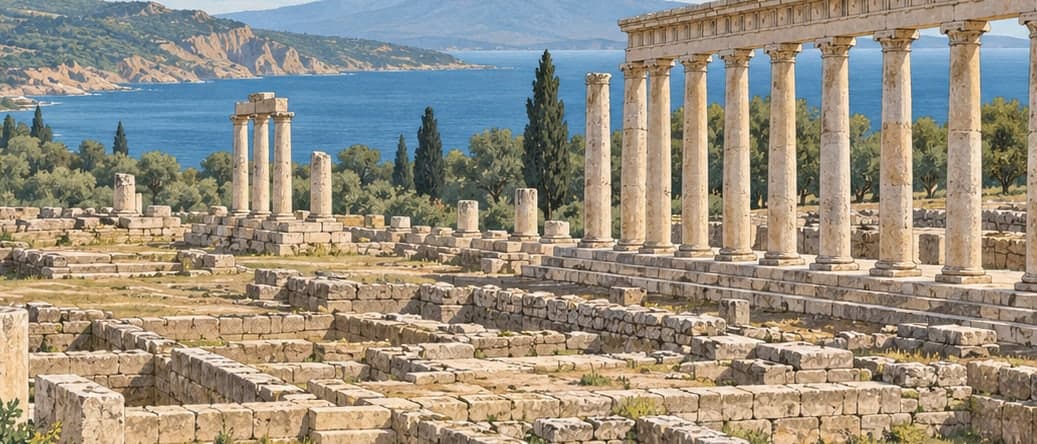
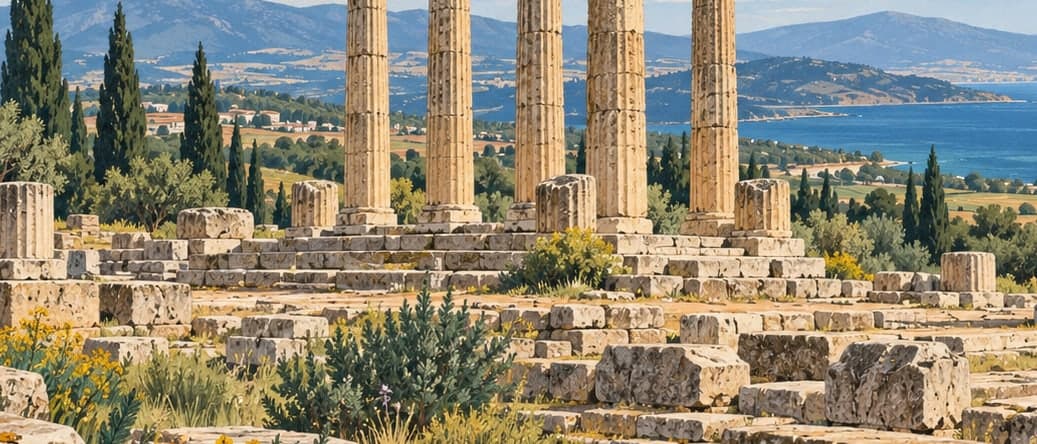
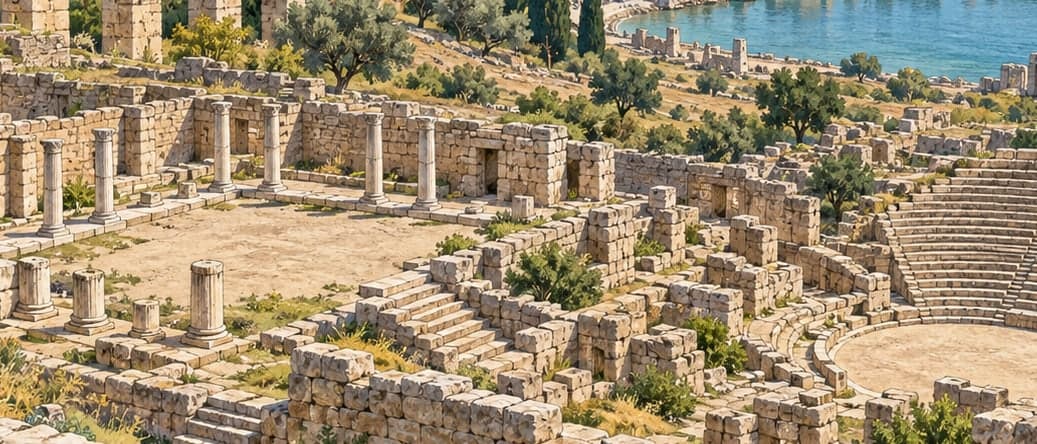
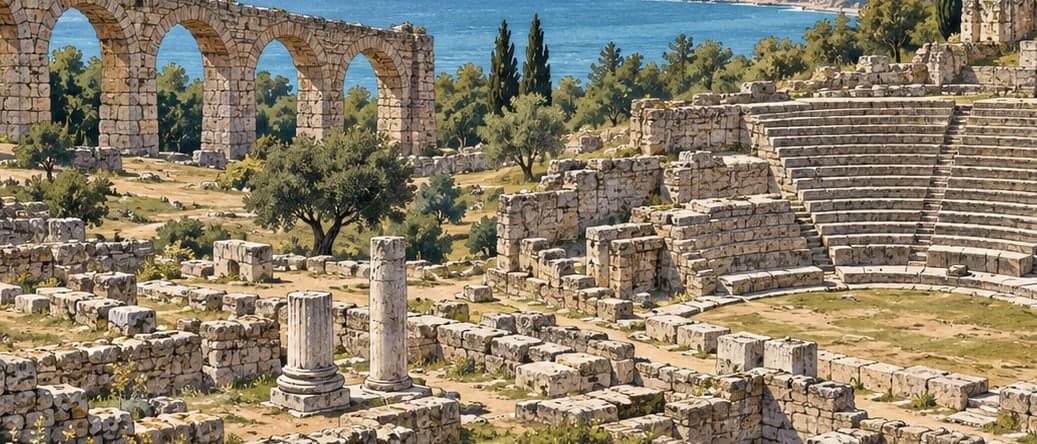
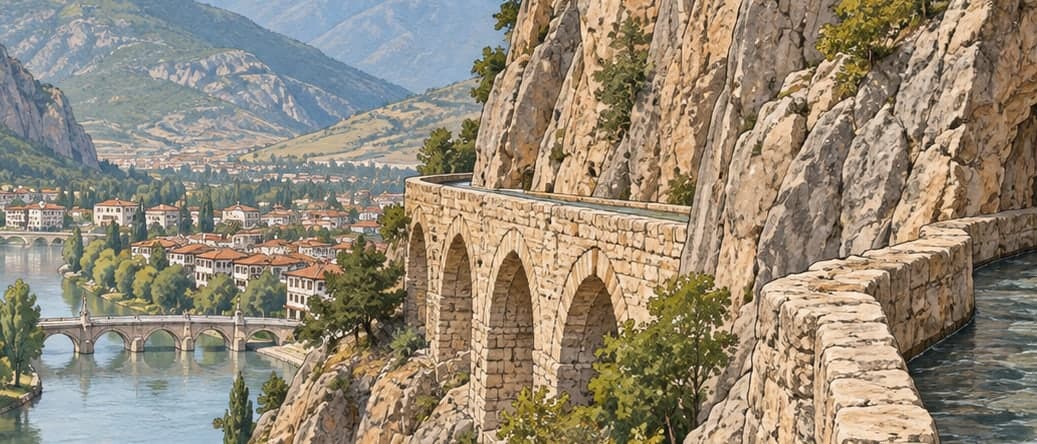
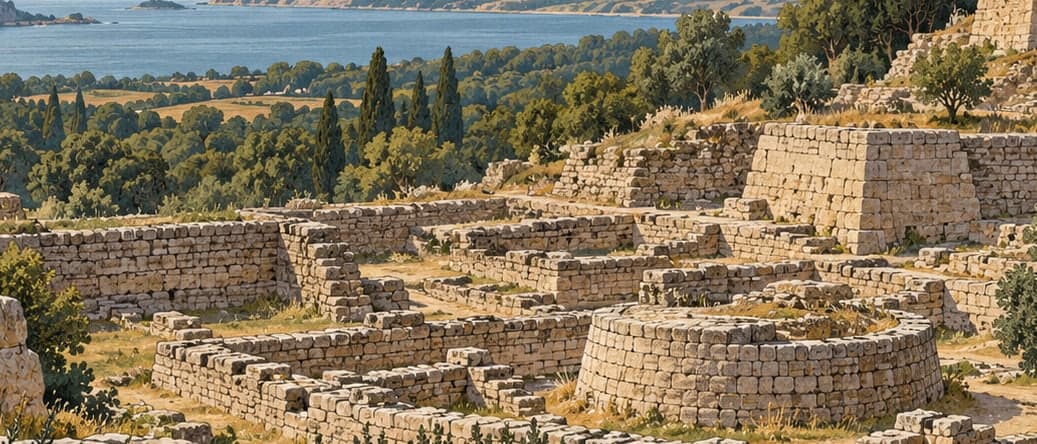
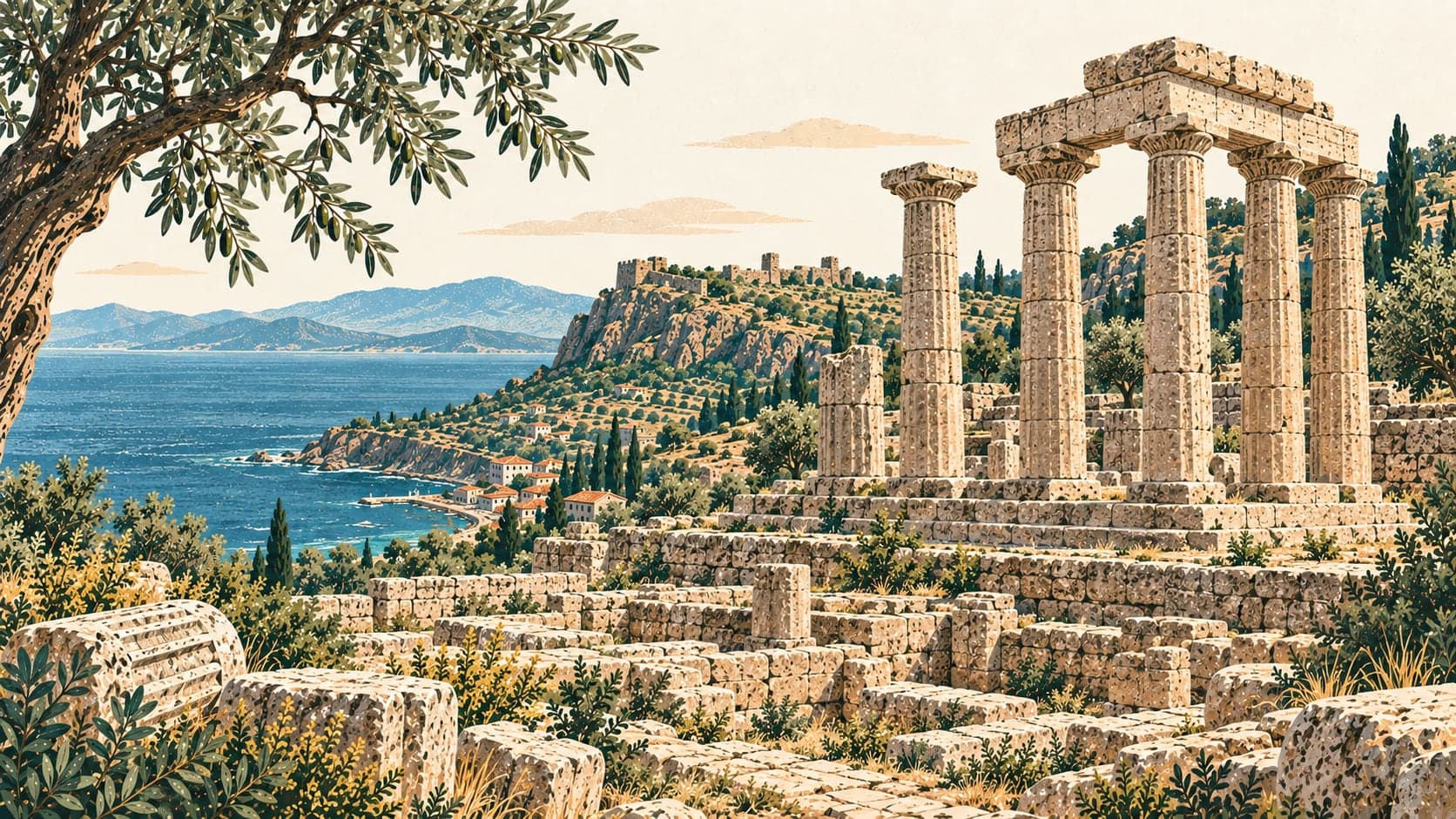
Assos stands on the southern coast of the Troad, built on a rocky hill of andesite some 234 metres above the sea. Almost every building on the site is of that volcanic stone. To the north the Satnioeis, today the Tuzla stream, rises on the western slopes of Mount Ida and reaches the sea between Cape Lekton and the city of Alexandria Troas.
In the Iliad, Homer tells that the Leleges, one of the native peoples of Anatolia living in the southern Troad, were known for seafaring and for piracy. Pedasos was destroyed by Achilles during the Trojan war, and the Roman geographer Strabo records that the Leleges held the region around Assos; whether Pedasos was Assos, however, is open to argument.
On the archaeological evidence, Aeolian settlers from Lesbos, ten kilometres away, began settling at Assos from the seventh century BC. From that century the people of Assos grew in strength and founded the city of Gargara twenty kilometres to the east. In 560 BC the city passed under the control of the king of Lydia, and it was one of the strongest and most important cities of the Troad; the mines between Atarneus and Pergamon, which Assos controlled, counted among the important sources of revenue of the Lydian kingdom.
In 548 BC the Lydian kingdom was destroyed by the Persians and Anatolia passed under Persian rule. The Troad was attached to the satrapy of Hellespontine Phrygia. After the Persian defeats at Salamis, Plataea and Mykale, the Persians began to lose their old strength along the Aegean coast of Anatolia.
During the Peloponnesian wars and afterwards the Troad did not pass fully into Persian hands, but after the Peace of Antalcidas in 387 BC many cities were left to the Persians once more. When the Persian satrap Ariobarzanes rose against the Persian king, Assos was besieged in 365 BC by the satraps Mausolos and Autophradates, but the city was not taken.
Soon after that the banker Euboulos declared his independence as ruler of Atarneus and Assos. After his death his slave Hermias, a Bithynian, succeeded in establishing his rule over these cities. Deeply influenced by his master, Hermias had been sent to Athens to study under Plato and Aristotle. As a pupil of Plato he invited his friends Xenokrates and Aristotle to Assos.