Guide
The Kaymaklı Underground City lies in the town of Kaymaklı in the central district of Nevşehir. It is one of the largest underground cities in Cappadocia and one of the most visited sights in Türkiye. Cut into soft tuff, the city has eight levels; four of them have been cleared and were opened to visitors in 1964.
It was made by people who had suffered repeated attack and who dug shelters underground against emergencies. The past of the place reaches back to the seventh century BC. The city was made in the time of the Hittites, and traces of the Phrygians and the Assyrians are found in it as well; it was cut further and enlarged in the Roman and Byzantine periods. Ottoman sources call it by the Greek names Anaku or Enegüp, and it was known locally as Eneği.
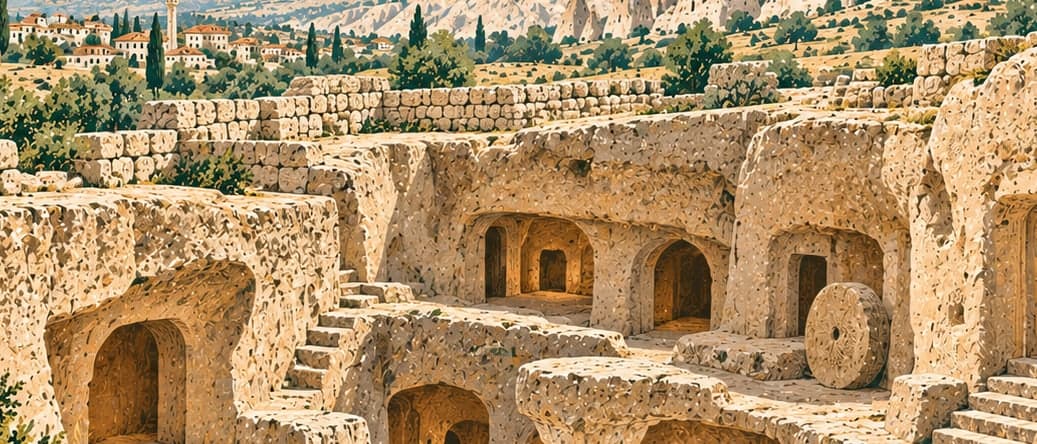
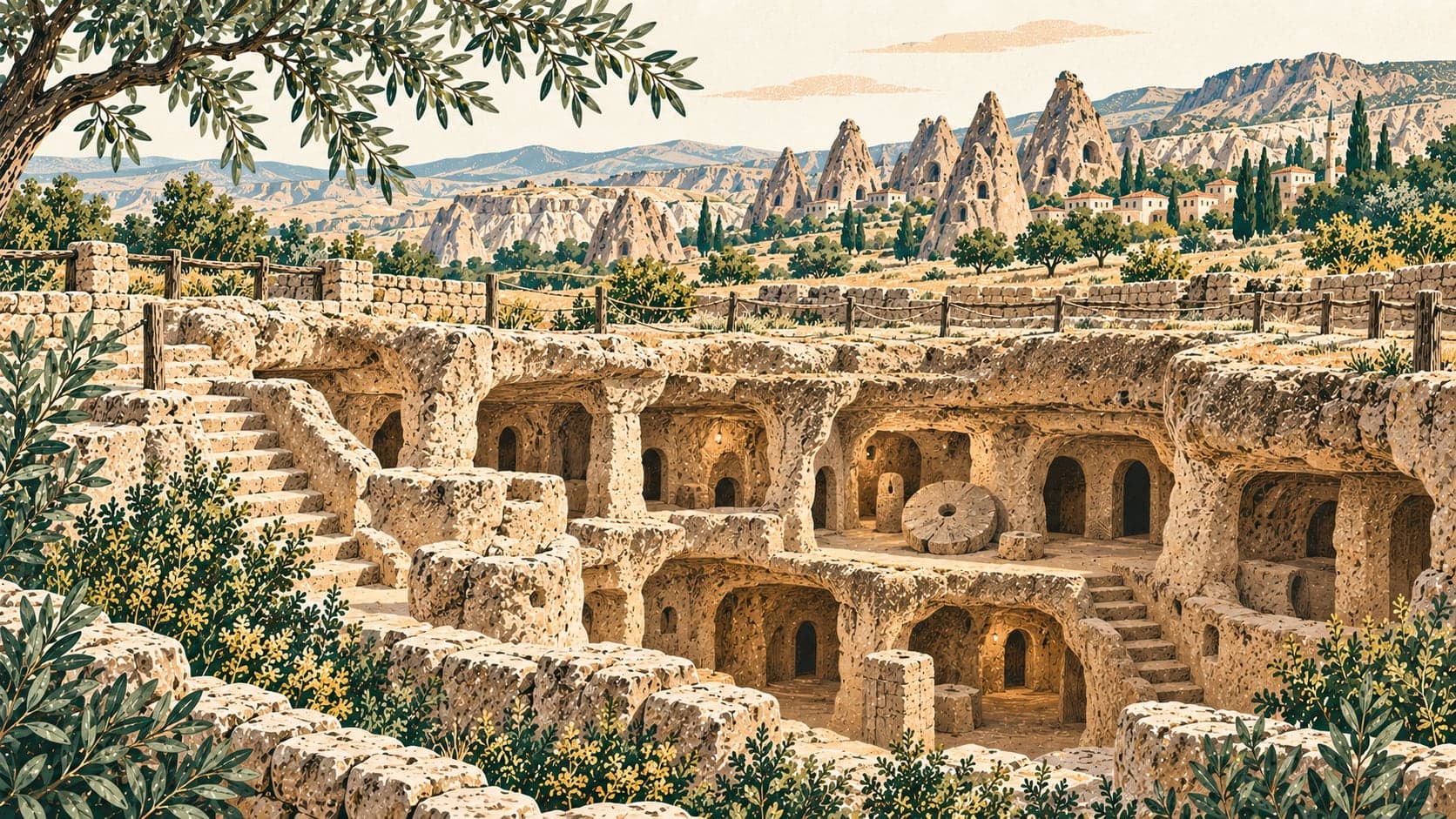
Like the other underground cities, Kaymaklı holds everything a body of people needed to live below ground for a time: halls joined to one another by narrow corridors, wine stores, water cisterns, a kitchen and food stores, ventilation shafts, wells, great rolling stones to close the doors against danger, and a church. The number of food stores strengthens the likelihood that a great many people lived here.
The plan is a maze of tunnels, rooms and passages. What sets Kaymaklı apart from the other underground cities is its narrow corridors, which make moving about easier, and details such as the stone carving, the worked doorways and the ventilation system show the engineering skill of the people who cut it. The shafts made for ventilation and for passing word along were treated as the centre, and the spaces were laid out around them. The wells were built so as to have no connection with the surface, against the risk of poisoning.
On the first of the levels open to visitors there is a stable along with various living quarters. The stable is on this level because bringing animals further down would have been difficult.
The four cleared levels are lit and open to visitors. In 2023 the underground city drew 559,527 people and was the most visited spot in the Cappadocia region; in 2025 it had 460,262 visitors and stood seventh among the most visited destinations in the whole of Türkiye.