Guide
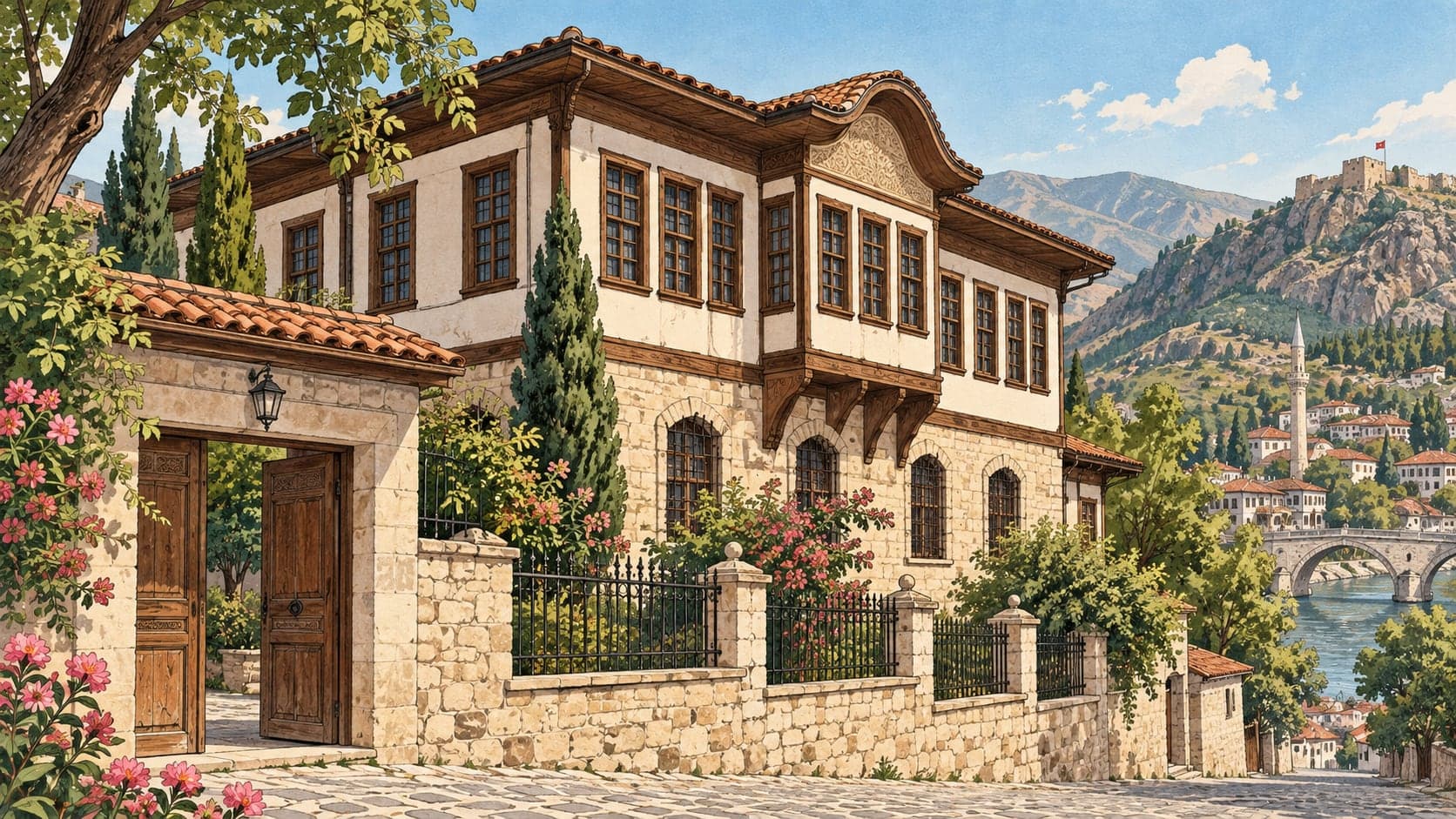
The Latifoğlu konak stands on Gaziosmanpaşa Bulvarı in central Tokat, and is also known as the house of Mazhar and Fahri Bey Latifoğlu. Its building date is not known: one of the heirs, Fahri Latifoğlu, gave it as Hijri 1160, which he put at 1746. The ministry bought it in 1985 and opened it as a museum house in 1989 after restoration; it was repaired and redisplayed again between 2007 and 2010.
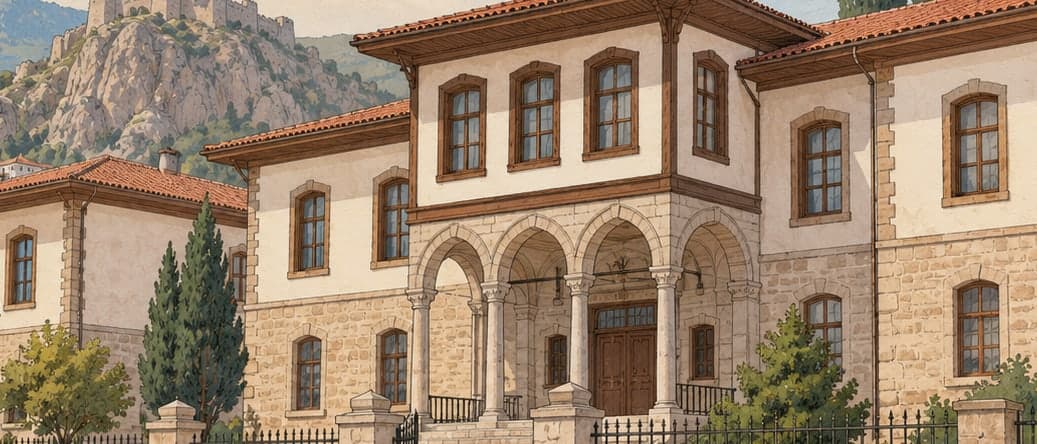
It is two storeys of timber frame with mudbrick infill, under a hipped roof of Turkish tile. The rooms are set in an L around a central hall, which within Turkish domestic architecture counts as a free plan rather than a standard one.
The house is furnished with the region's own objects and dress, and staged with mannequins: everyday life in the bath room, the bath itself, the kitchen and the bedroom; the receiving of guests in the selamlik, known as the Pasha's Room; and a henna night in the harem section, known as the Poolside Room. The upper hall is arranged as a display area, with cases of Tokat ethnographic and household material donated by leading families of the town.
What makes the konak worth the visit beyond the staging is the decoration. The Pasha's Room has a baroque wooden ceiling rose, a scalloped wooden cornice, and door, cupboard and bedding-niche panels that are good examples of joinery. The Poolside Room has a gilded ceiling rose and painted wall decoration: flowers in vases, dishes of fruit, and views of İstanbul. Plasterwork appears in the painted moulded fireplaces of both rooms and in the grilles of the upper windows, where the stained-glass plaster grilles use the motif known as the Seal of Solomon.