Guide
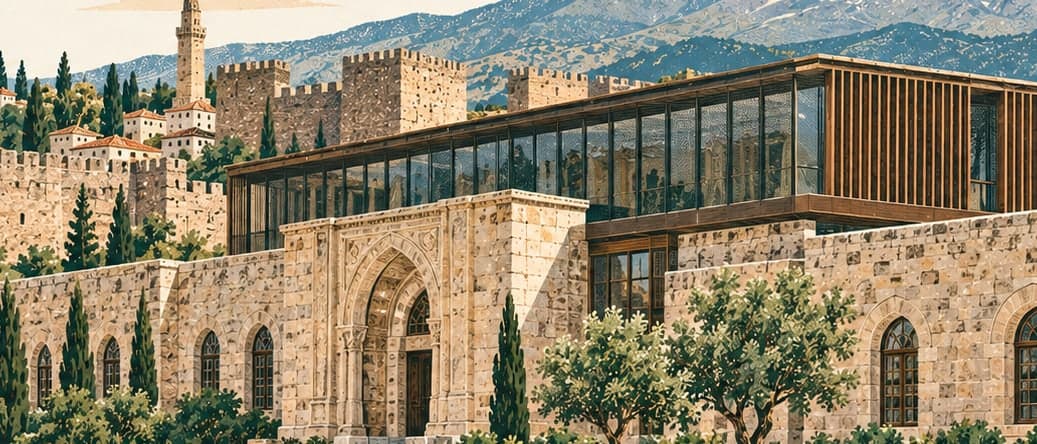
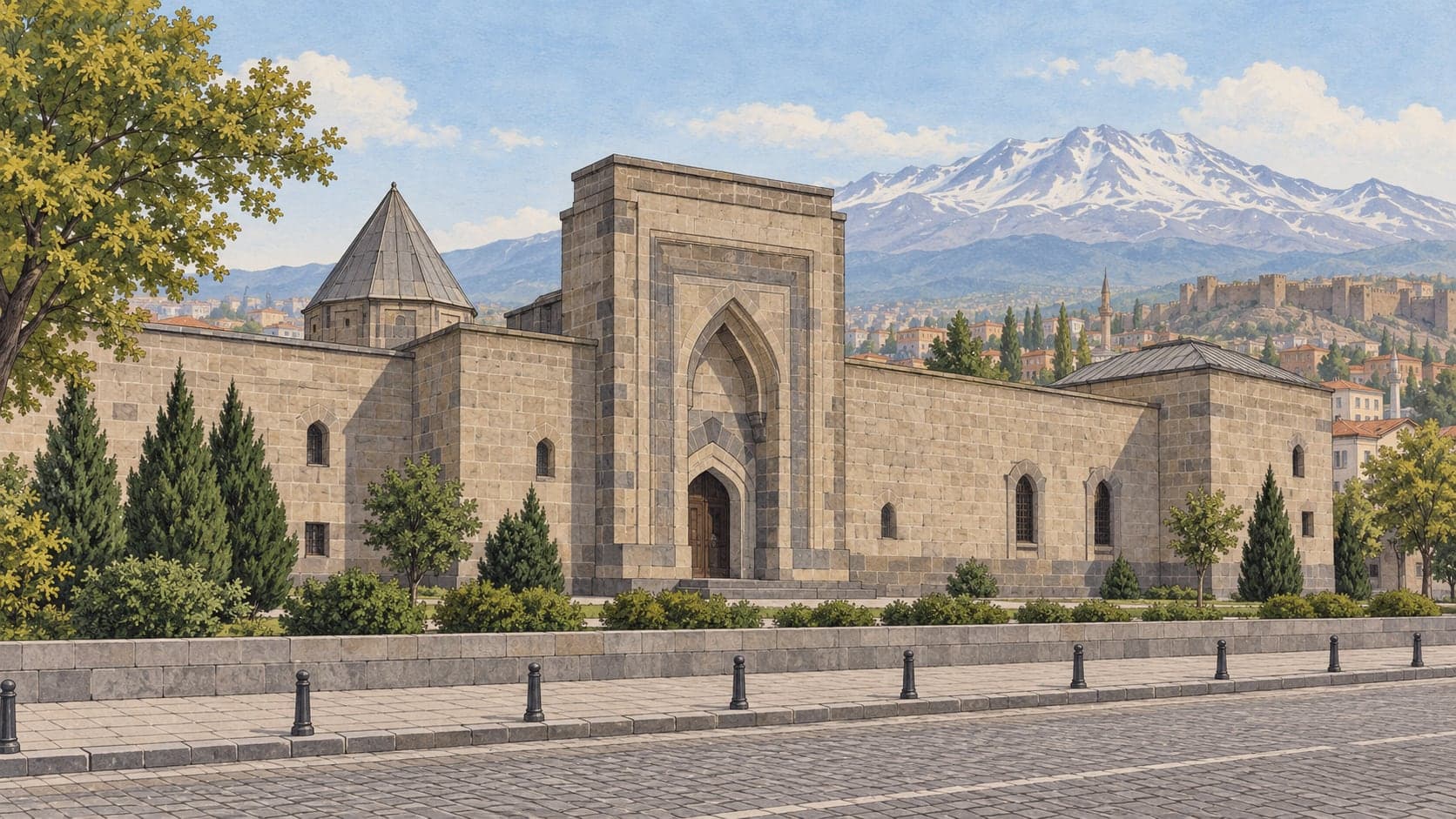
The building came first, by eight centuries. The Gevher Nesibe hospital and the Gıyasiye medrese stand side by side — which is why Kayseri calls them the Çifte Medrese, the double medrese — and were put up in 1205-1206 by the Seljuk ruler Gıyaseddin Keyhüsrev I on the deathbed wish of his sister Gevher Nesibe Sultan, daughter of Kılıçarslan II. The municipality counts the complex, plain as its architecture is, among the most important buildings of Anatolian architectural history still standing.
Its later life was harder. Partly repaired under the Ottomans but left in ruins, it was put through a long restoration from the 1960s onward, and from the 1980s Erciyes University used it as a museum of medical history. The municipality took over its use in 2012, spent two years on repairs — the roof above all — and on assembling a collection and writing the displays, and opened the Museum of Seljuk Civilisation on 21 February 2014.
The museum is arranged thematically and in two halves, and the split follows the building. One half is Seljuk civilisation: the Seljuk city, its architecture, art, science and dress, and sections on the Seljuks in Kayseri and in Anatolia at large. The other half keeps to what the place was built for, medicine — illnesses, treatments and the instruments used, the scholars, pharmacy, water and health, and healing by music and by colour.
Objects of the Seljuk and adjacent periods are shown alongside interactive and screen-based displays meant to be listened to, tried and handled rather than only read. There is a children's room with cartoons and games, and rooms within the museum set aside for concerts and other events.