Guide
Tralleis lies north of Aydın on the plateau just below the southern slope of the Kestane mountains, a kilometre from the city centre. It was founded by Argives and Trallians on the fertile ground of the Menander basin, and after Alexander took it in 334 BC it changed hands frequently among the Hellenistic kingdoms.
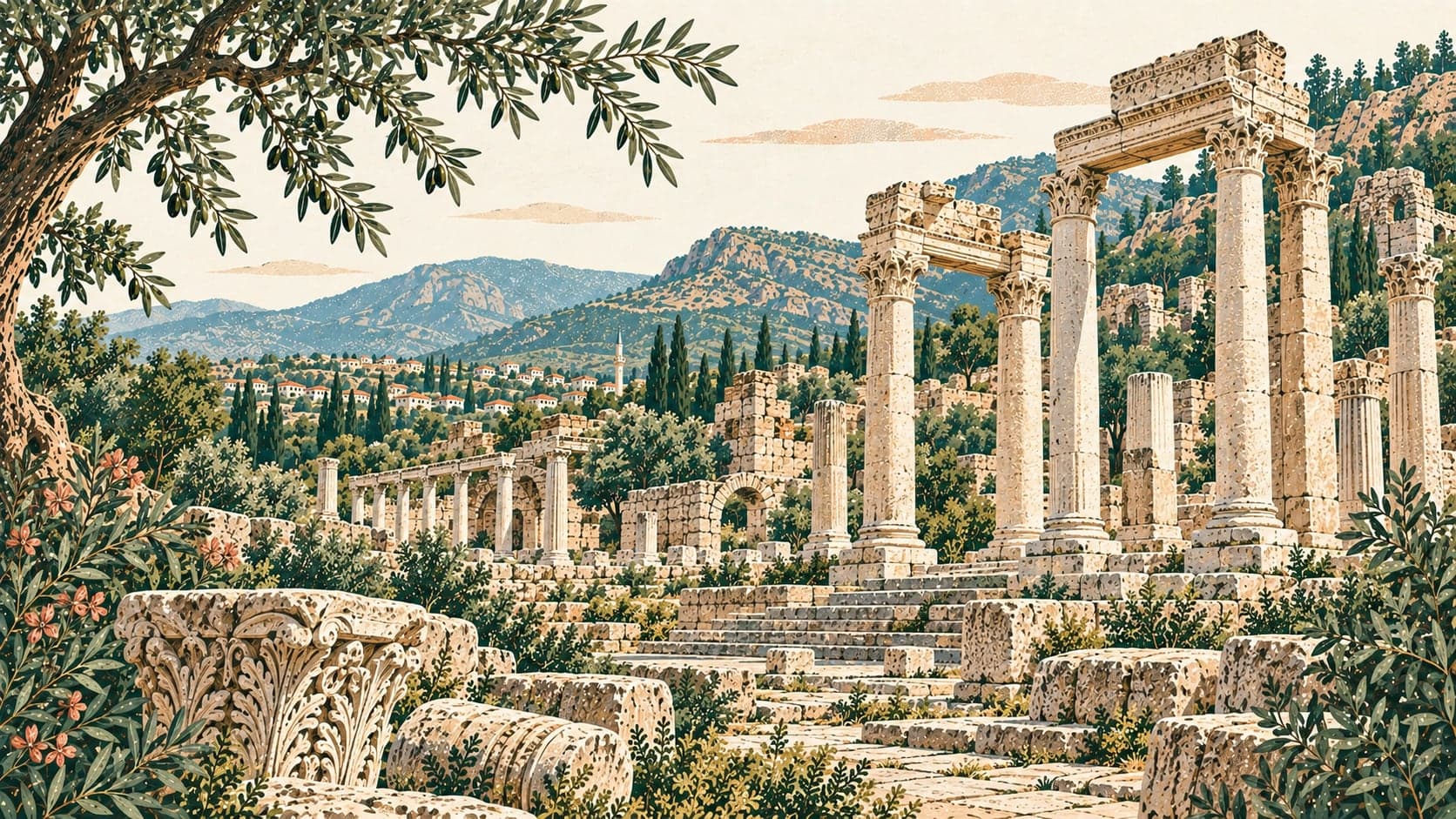
Only one building still stands: the remains of the gymnasium known as Üç Gözler, built in the second century, a type of building that was among the leading institutions of education, sport and culture in the ancient world. A Roman bath, a theatre, an agora and a stadium are the city's other structures.
In antiquity the city was known for the leather and the red pottery it made. It produced two great sculptors, Apollonios and Tauriskos, and Anthemios, one of the architects of Ayasofya. Two world-famous pieces of sculpture, the Farnese Bull and the Young Athlete, came to light here.
Something else found here is older than any of that in its own way. During the building of the İzmir–Aydın railway in 1883 a gravestone appeared belonging to a young man named Seikilos who lived near Tralleis in the first or second century AD, and on it are both the words and the music of a song in Greek. Research established it as the earliest known song. The stone speaks first in its own voice — Seikilos set me up, I am a statue of stone, and my task is to keep his memory alive for ever — and then gives the song: shine while you live, take nothing to heart, life is short and time exacts its price when the day comes. A line records that Seikilos, son of Euterpes, had it made while still alive. Very few songs have come down from antiquity, and mostly in small fragments; this one survives whole, and each syllable of the words carries a note above it. The stone is displayed in the National Museum in Copenhagen.