Guide
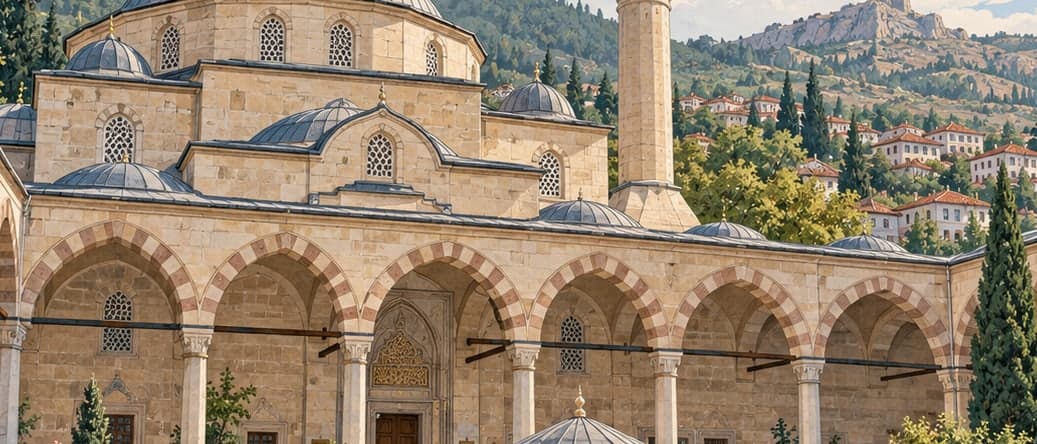
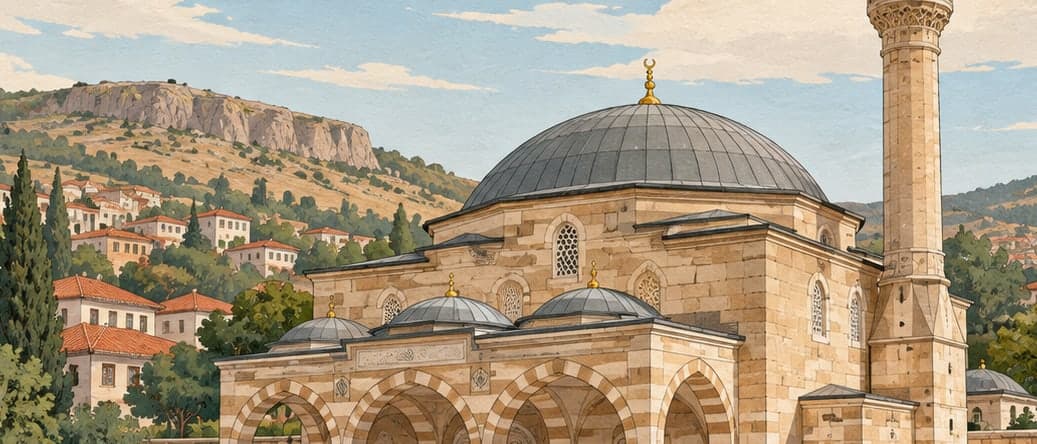
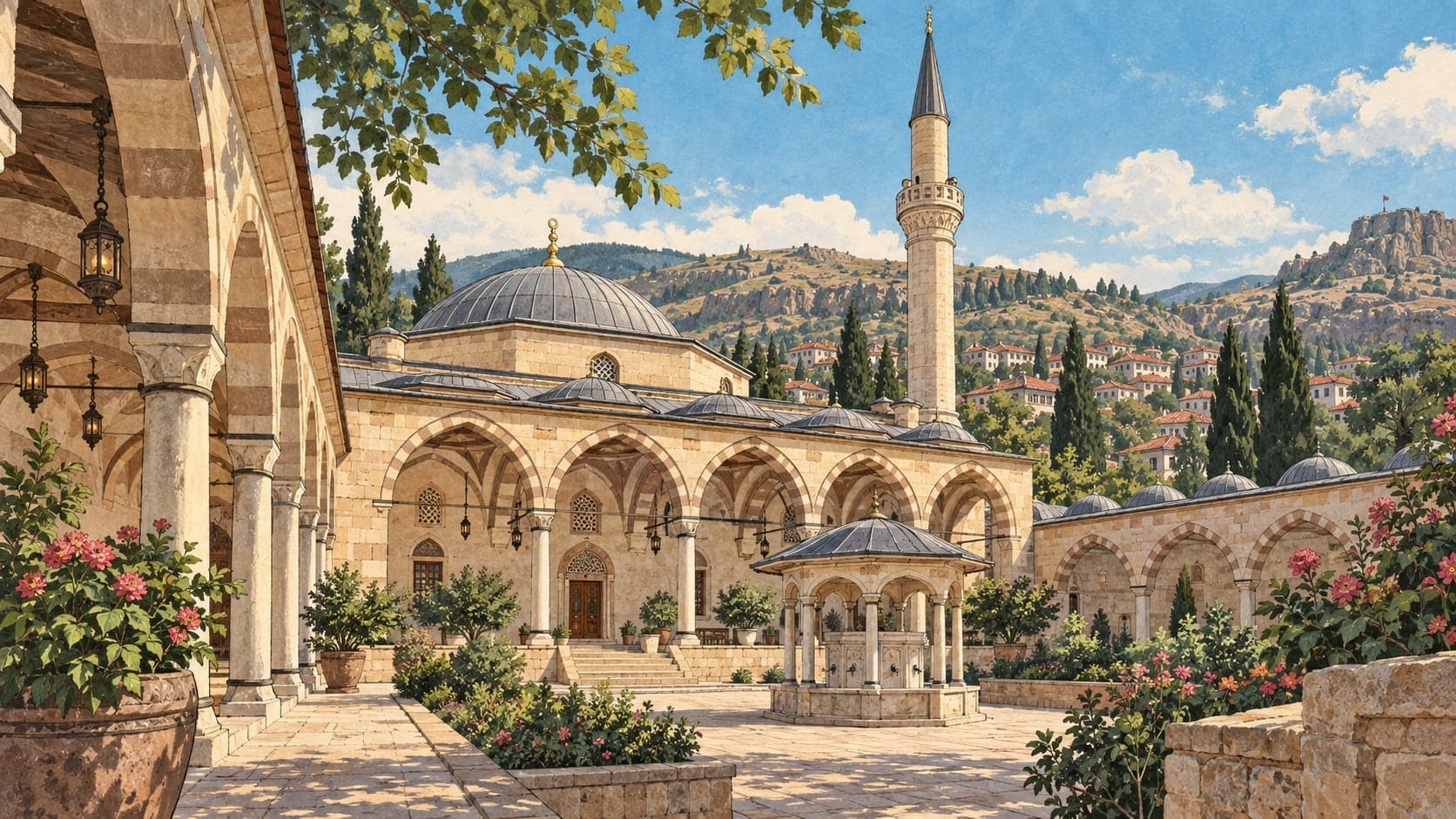
The Başçavuşzade Mosque stands in the İstanbulluoğlu neighbourhood of Yozgat. The inscription at the entrance to the prayer hall dates it to 1215 AH, 1800–1801, and names the patron: Halil Ağa, head sergeant to Çapanoğlu Süleyman Bey. His grave, cut in yellow stone, is in the burial ground along the west side of the courtyard.
It is a masonry building of mixed stone and brick under a hipped roof, with a flat ceiling and a round minaret against the north-west corner that can also be reached from above. The courtyard is large and entered by small gates on the north and south. The inscription panel sits west of the door from the courtyard: the written field is 70 by 75 centimetres within an overall panel of 165 by 225.
The prayer hall is rectangular and flat-ceilinged, lit by rectangular windows that widen inward — three each in the east and west walls, two each in the north and south. The mihrab is a half-round cylinder on the axis of the south wall and the wooden minbar stands to the west of it.
The gallery over the porch is the part worth looking at. It reaches out above the porch and reads from outside as a two-storey narthex, supported inside and out by two large wooden posts. Its side wings form galleries running south toward the qibla, carried on seven slender colonnettes tied to each other by lath arches, and the middle of the gallery projects southward like a balcony. Stairs at the south-west and north-west corners of the porch lead up to it. There is no decoration at all on the outside; inside, the timber and the painted work carry everything.