Guide
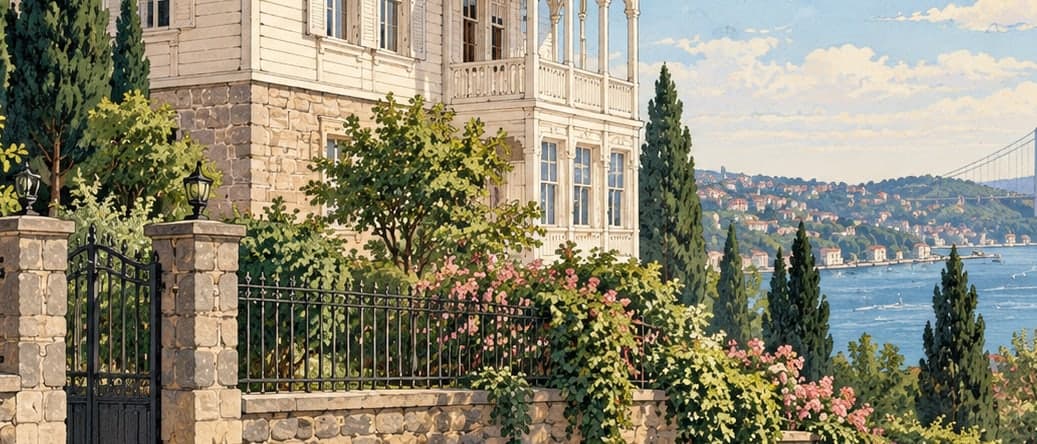
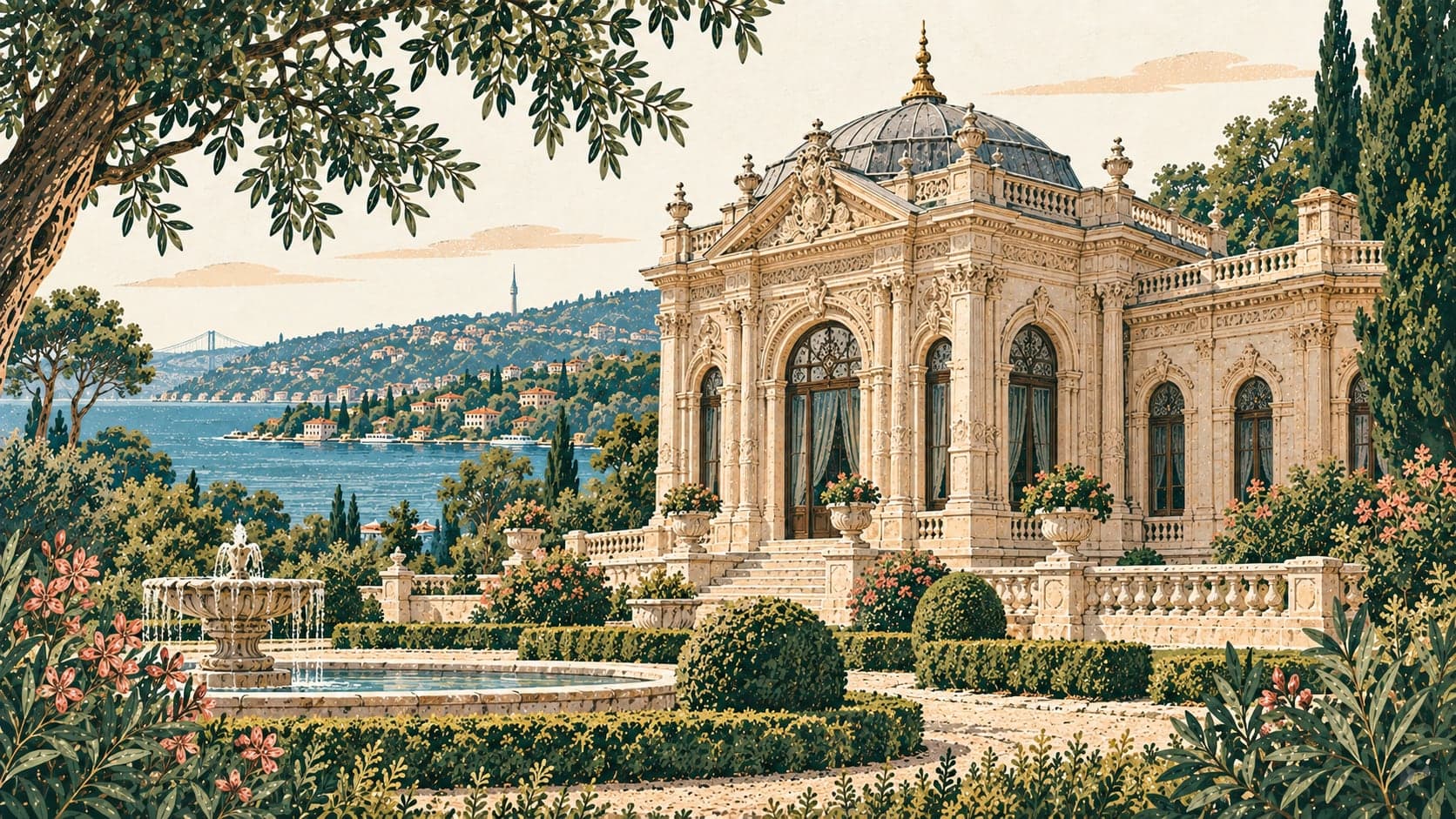
Beykoz Mecidiye Pavilion stands at Hünkâr İskelesi on the Asian shore of the Bosphorus, at the top of a wooded park that rises from the water in terraces. It predates both Dolmabahçe and Beylerbeyi palaces, and the Directorate of National Palaces describes it as the first building on the Bosphorus to be built in masonry and in the new style.
It was a gift, and an awkward one. Mehmed Ali Pasha of Kavala, the governor of Egypt, began building it for Sultan Abdülmecid in 1845; after his death his son Said Pasha completed it in 1854 and presented it to the sultan. Because the pavilion stood as a reminder of the Egyptian Question, which had caused the empire considerable trouble, Abdülmecid showed it little favour — the Directorate offers that as the likely reason. In its early years the sultan used it as a riding pavilion for day stays; later it served for receiving foreign statesmen and ambassadors.
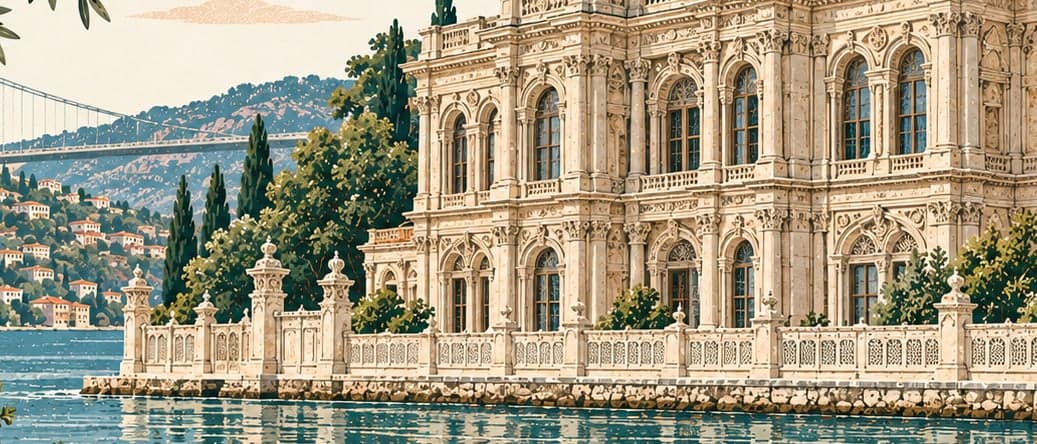
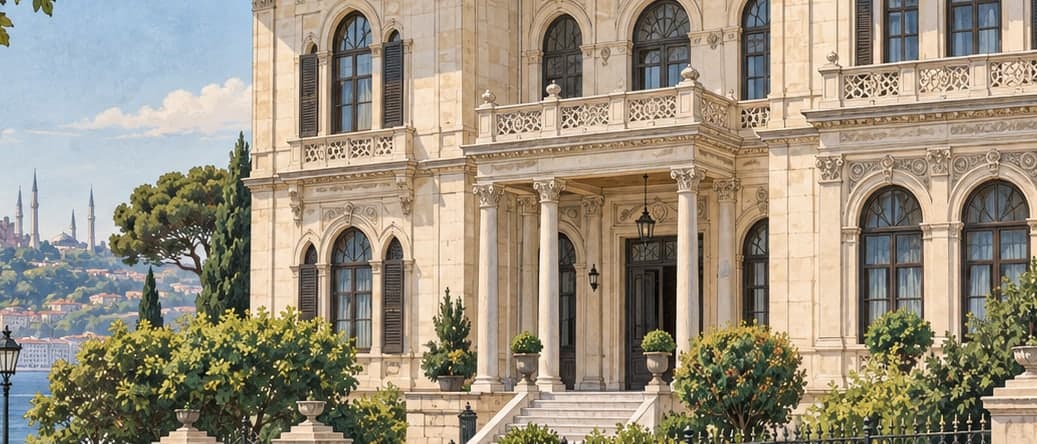
Architecturally it is a 19th-century version of the older Ottoman serdab pavilion. It has two storeys, is half masonry, symmetrical, and its front is neoclassical; the facing uses stone imported from Italy alongside Turkish white marble, and the interior is finished with coloured porphyry. Photographs from the reign of Abdülhamid II show it richly furnished with gilded suites, Hereke fabrics for upholstery and curtains, Baccarat vases and large crystal candelabra. Archive documents record that rooms for the sultan's officials and servants, a kitchen, a bathhouse with a small pavilion opposite, a water cistern, an orangery, a henhouse, an aviary and a dovecote were built alongside; most of these are gone.
One occasion gives the measure of the place. On Saturday 15 October 1869 Abdülaziz gave one of his grand banquets here for the Empress Eugenie of France and had the army parade past for her. İstanbul came out to Beykoz by land and sea to watch; troops lined the main roads, decked with Turkish and French flags, and an ornate pavilion in Arab style was put up on the meadow, its centre for the sultan and his guest and its wings for state officials and ambassadors. Abdülaziz used the pavilion often in summer, watching the Bosphorus, having wrestling matches held on the Beykoz meadow and hunting in the game preserve at Tokat village.
What happened afterwards is the unexpected part of the story. Because the pavilion stood outside the city in clean air, it was given over to public service: first as an orphanage, then in the 1920s for patients with trachoma, and from 1953 as a preventorium. When that closed in 1963 it became the Beykoz children's chest diseases hospital. It passed to the National Palaces on 23 December 1997, was restored between 2010 and 2016, and opened as a museum on 11 April 2017.
Visit status for this record: open to visitors.
Entry fee
- Beykoz Mecidiye Kasrı · Local
- 120 ₺
- Beykoz Mecidiye Kasrı · Foreign
- 300 ₺
- Beykoz Mecidiye Kasrı · Reduced
- 60 ₺
Visiting hours
- Visiting hours
- 09:00:00 - 17:00:00