Guide
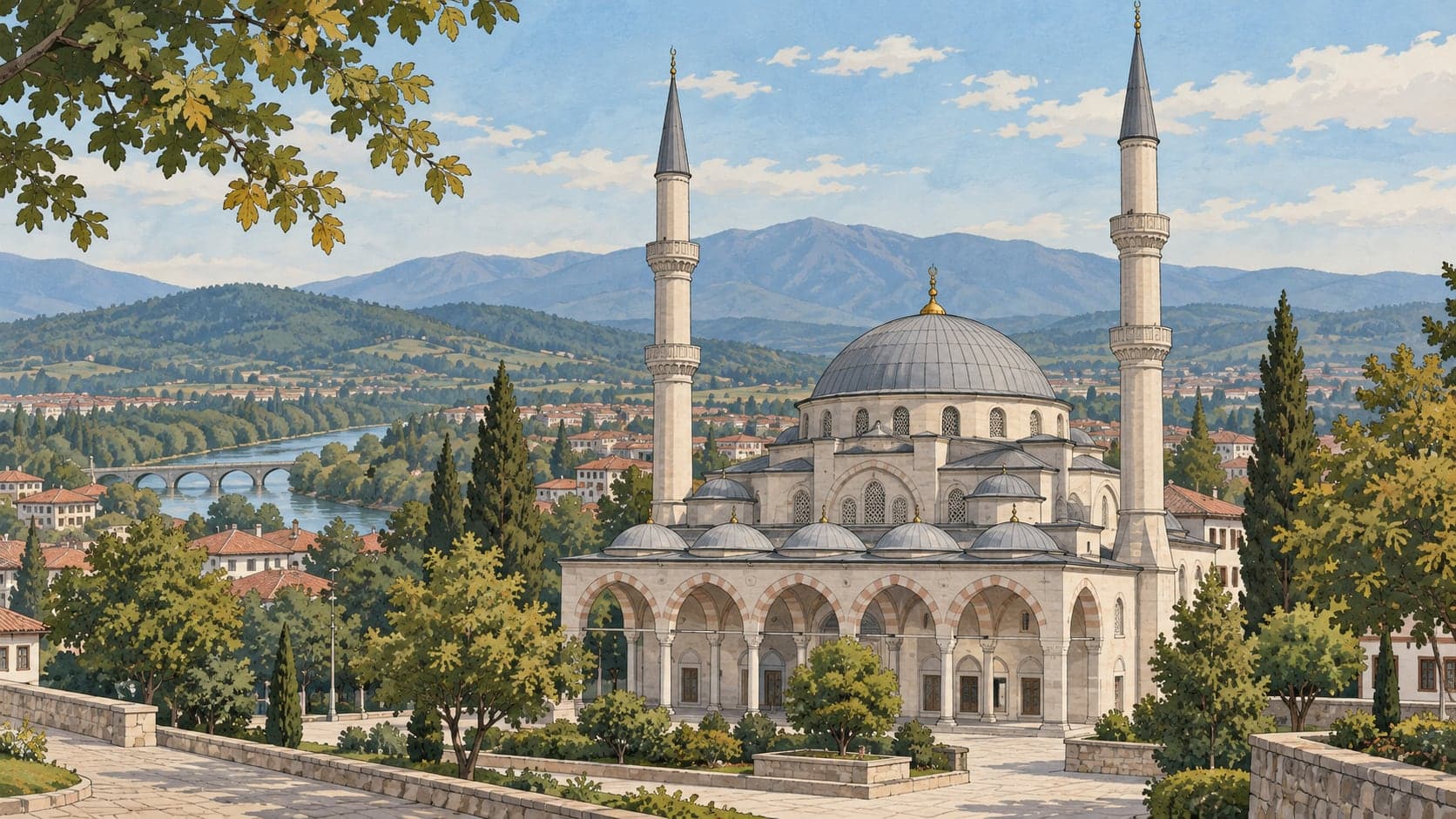
Visitors to the Büyük Cami, also called the Yeni Cami, in central Düzce should know that the building described in the records is not the one standing today. The original was built on a rectangular plan in 1912 — though the inscription on the arch above its door gives 1328 in the Hijri calendar, which is 1910, and the Ministry's page carries both dates. It collapsed in the earthquake of 1999. What replaced it, and what is open for prayer now, measures 36.2 by 22.6 metres with four domes and two minarets, and it has lost most of the character of the original.
The mosque that was lost is worth describing, because it explains what the town had. Its outer walls were 1.10 metres thick, rubble stone with cut stone at the corners. Five windows on each of the east and west fronts, 1.40 metres wide and 3.42 metres high, were round-arched and framed in cut stone, and a round-arched side door with a stone frame opened on each of those fronts; the main entrance was on the north, with a rosette carved into each upper corner. The roof was timber, pyramidal, covered with Spanish tiles, and a single-balcony minaret stood at the northwest corner. Inside, a large central dome rose on four piers, supported by rectangular vaulted bays on all four sides. The mihrab was plaster and the minbar was walnut, made as interlocking panels. The mosque is on Hafız Hasan Efendi Caddesi in the centre of Düzce.