Guide
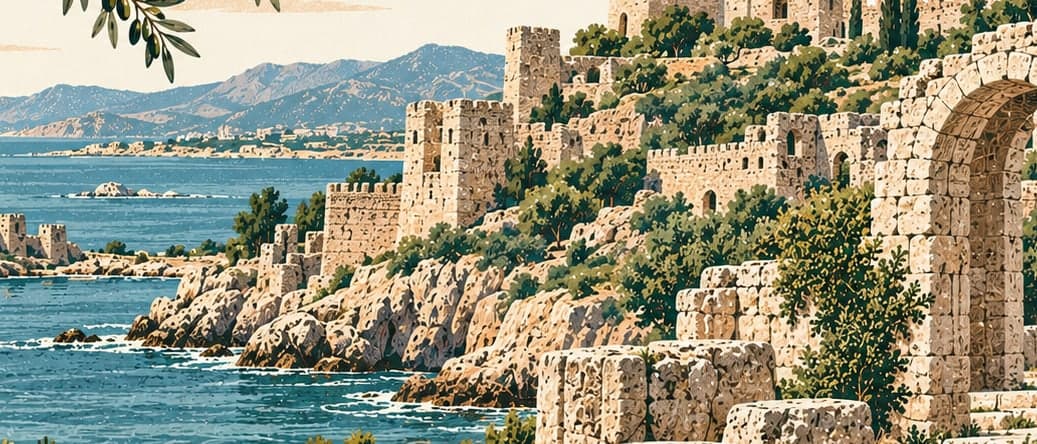
Elaiussa Sebaste is in the Erdemli district of Mersin and was founded at the end of the second century BC. Strabo writes that part of the city stood on the mainland and part on the island opposite, and that it came about through the joining of two places, Elaiussa and Sebaste. Its position on the coast road linking Anatolia to Syria, together with rich natural and agricultural resources, made it an important centre of trade, production and shipping from the second century BC to the beginning of the seventh century AD.
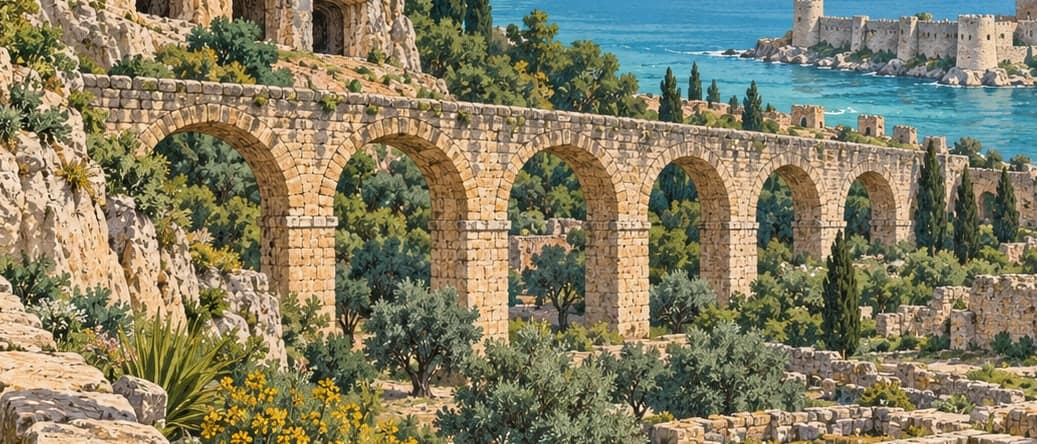
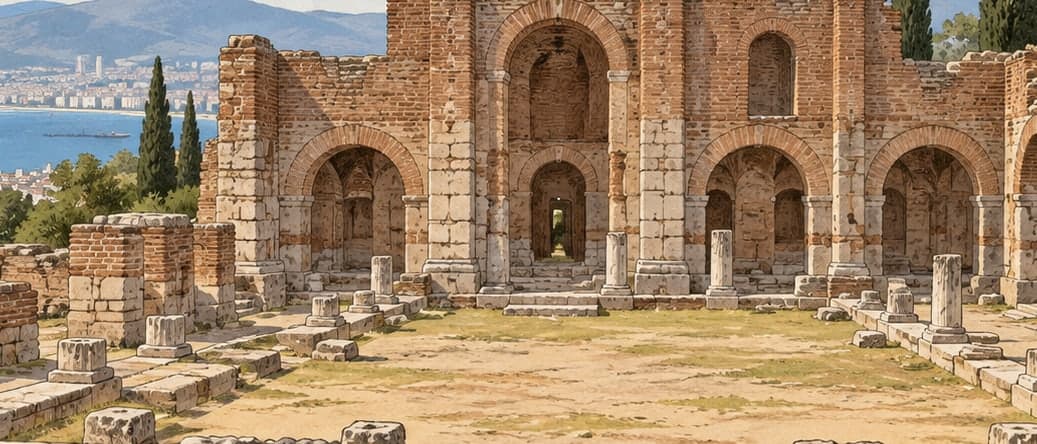
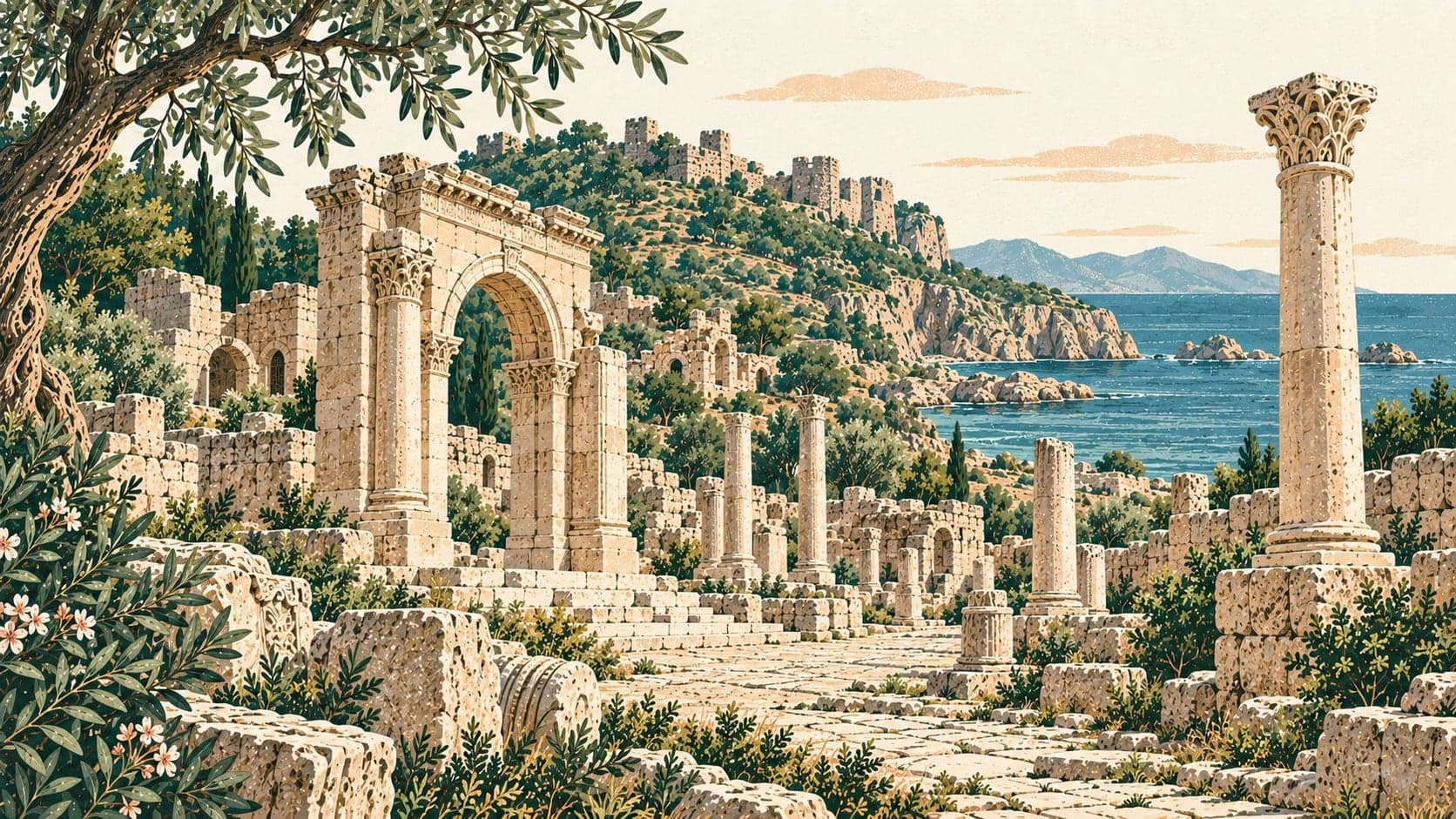
It is a large Roman city, with a theatre, temples, an agora, a basilica, a necropolis, a Byzantine palace, production areas and baths. Among what survives are a well-preserved basilica of five aisles, the cavea of the theatre, aqueducts, church remains, cisterns for olive oil and for water, a palace with two marble columns, the palace gate, and fifty metres north of that gate a temple of Jupiter with floor mosaics showing various animals. That Roman temple was converted into a church in the fifth century, in the early Christian period.
The cemetery lies to the east and north. An ancient road runs through the necropolis with stone sarcophagi and graves along both sides. One sarcophagus carries an inscription that reads: Plutinos, son of Hyginos, had a sarcophagus made in his lifetime for his daughter in the Sebaste cemetery. After his death only his daughter will be buried there. If anyone else is buried, that person's family will pay 600 denars to the treasury and 300 to the municipality.
Another monumental tomb is worth seeing for its reliefs. The two-storey building carries on its front an eagle with its wings spread, a snake beneath its feet, and a child bound in chains on either side of the bird, with two lions facing one another along the chain. All of this is Roman work. In the Lamas valley the remains can still be followed of the water system that carried the Lamas — the Limonlu — to Elaiussa Sebaste and on as far as Korykos.