Guide
Kanlıdivane lies about 50 kilometres west of Mersin, reached by a three-kilometre road turning north from the Yemişkumu quarter of the town of Ayaş in the Erdemli district.
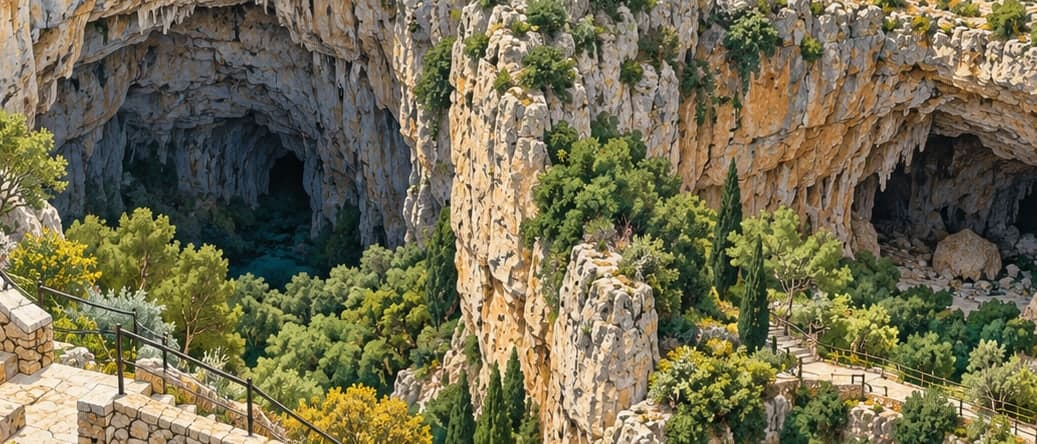
The city was built around a sinkhole — one of the largest in the region. The Kanlıdivane sinkhole measures 142 metres on its long axis and 95 on its short, is 50 metres deep, has a circumference of 413 metres and covers 12,000 square metres.
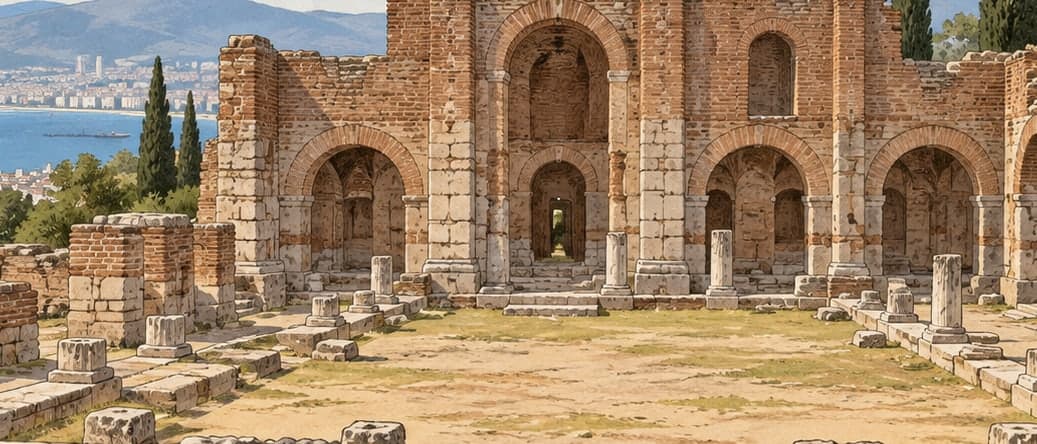
The first evidence indicates that the city was occupied without a break from the Hellenistic period to late antiquity, between the second century BC and the seventh century AD. Establishing that there is a wall built in polygonal masonry has been important, because it shows there was a fortified settlement here in the Hellenistic period.
Once the vegetation was cleared, most of the spaces uncovered turned out to be workshops for processing olives, and a great many cisterns were identified. The city has also been shown to be connected with the ancient harbour at Akkale, and the cut-stone Roman road west of Church III has been made easier to follow.