Guide
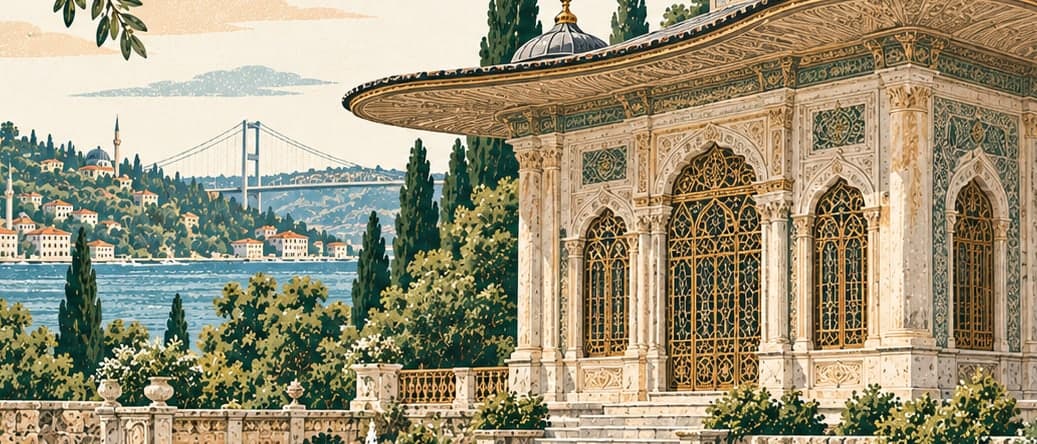
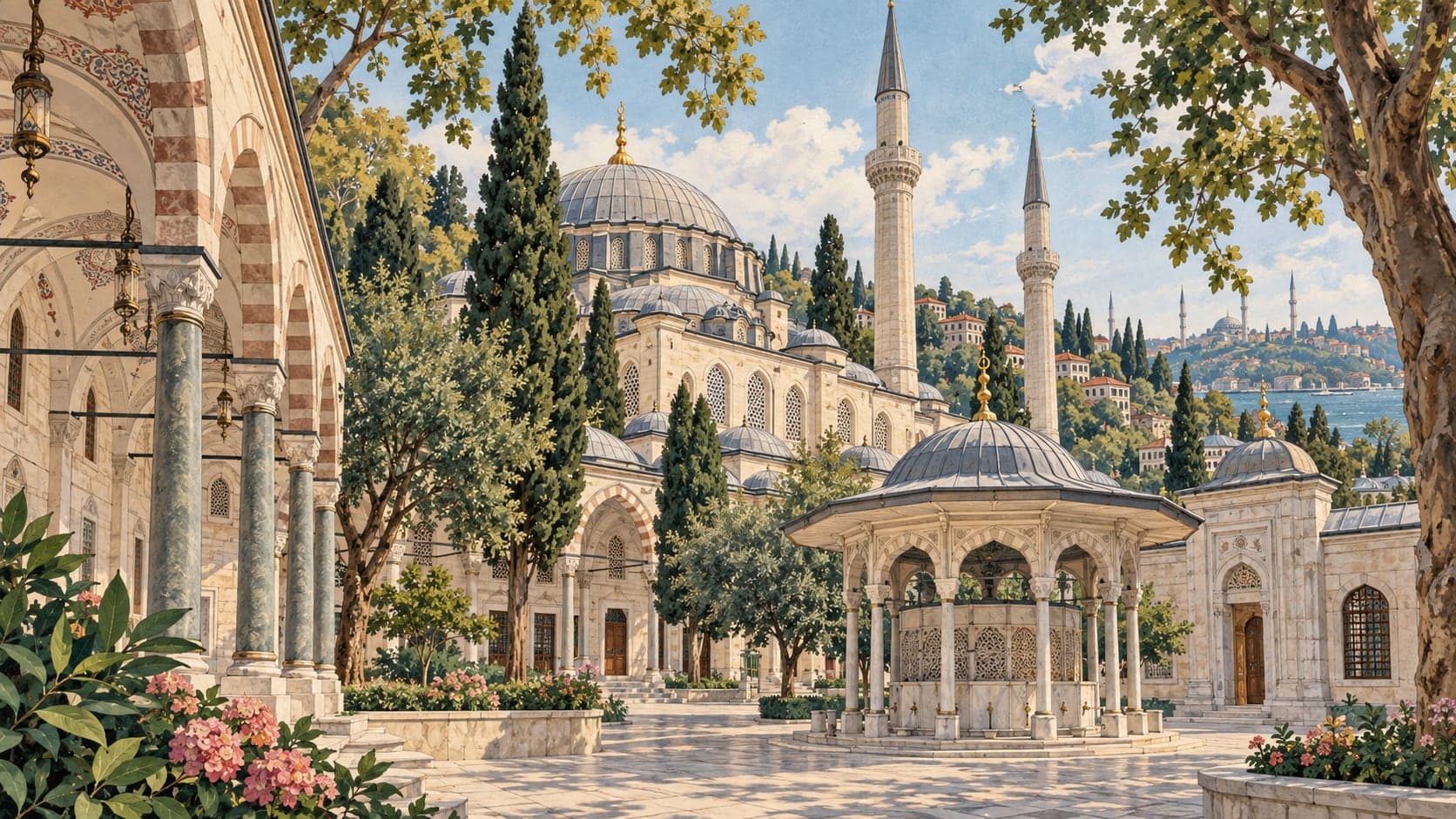
The mosque is rectangular in plan with a projecting mihrab. Its central dome rests on arches carried by six columns and two great piers, with half domes around it. The tomb of Eyüp Sultan stands at the centre of the complex, with a spring at the foot of the sarcophagus and a plane tree centuries old in the middle of the courtyard.
It was built in 1458 and repaired many times afterwards. The minarets were short at first; the tall ones date from 1733, and the minaret on the seaward side was rebuilt in 1823 after lightning damage. The Sinan Paşa pavilion that stood in front of the main gate was pulled down in 1798.
In its place is a railed terrace and a lawn under the shade of the great plane tree. Four small fountains stand at the corners of the railing, known as the fountains of wishes or of fortune. Sultan Selim III, who reopened the mosque and prayed there after the repairs, belonged to the Mevlevi order, and Mevlevi caps are worked into the railings.
The outer courtyard has two gates onto the street; the inner one is roofed by thirteen domes on twelve columns, with an ablution fountain at its centre. The tomb itself is octagonal under a single dome, with an imprint of the Prophet's foot at the entrance and a public fountain to its right.