Guide
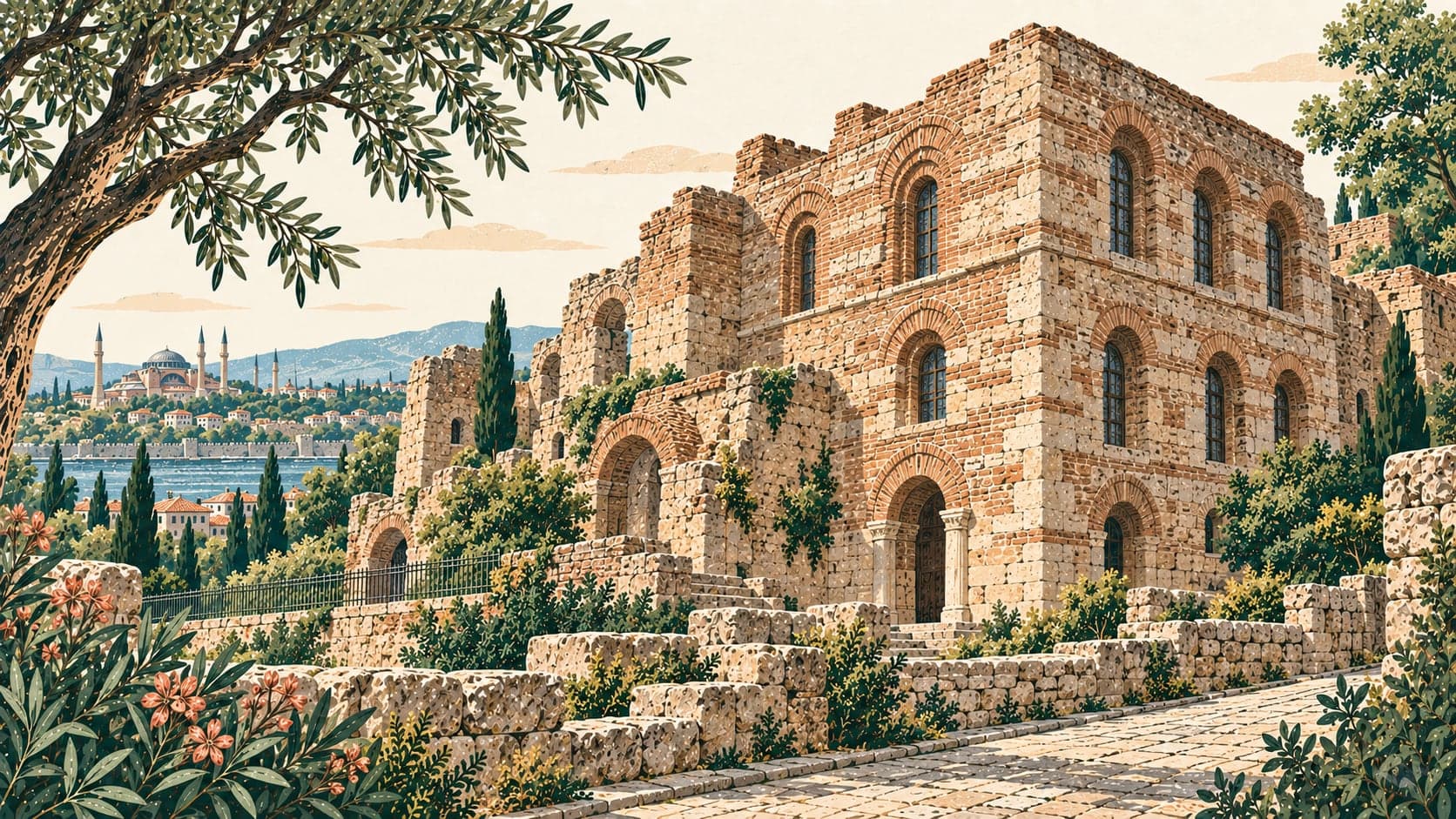
Tekfur Sarayı at Edirnekapı in Fatih is the surviving piece of the Blachernae Palace complex, which the Byzantine emperors used from the 12th century onwards — the southernmost and highest part of it, built on three floors between an older stretch of wall and the Theodosian land walls. Neither the date it was built nor who built it is known with certainty.
Its second life gave the museum its subject. When it was decided in 1718-19 to have tiles made in İstanbul, a tile workshop was set up in the courtyard of Tekfur Sarayı, and what came out of it is still known as Tekfur Sarayı tilework. Another workshop opened on the site at the beginning of the 19th century.
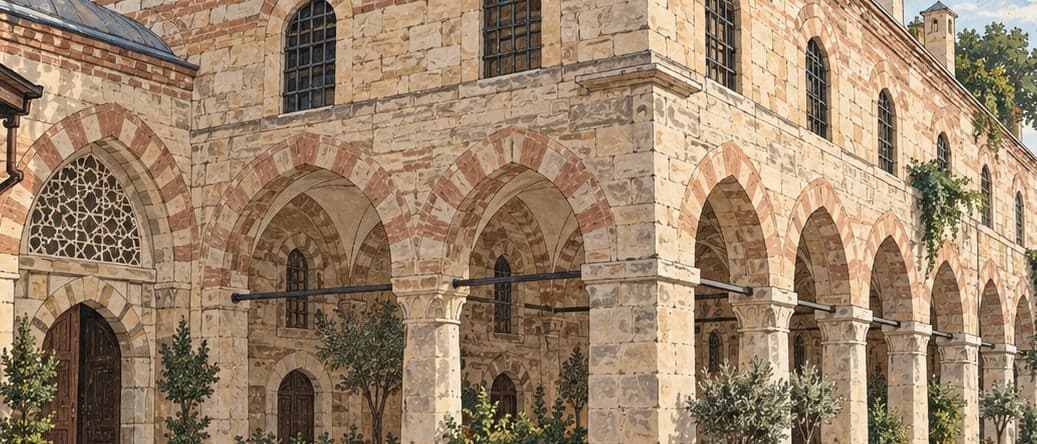
The building then had a bad hundred and fifty years. A fire in neighbouring houses in 1864 destroyed important parts of the palace, its marble masonry, its interior fittings and the balcony at the southeast corner. By the start of the 20th century it was a ruin, and the columns carrying the courtyard front had to be propped with iron posts to stop it collapsing; in the repairs of 1955-1970 those iron posts were replaced with marble columns.
İstanbul Metropolitan Municipality began restoration on 24 May 2005 and finished it in 2014, at which point it was decided that the building would become a museum of tile, glass and pottery. The fitting-out was tendered again in May 2017, and the Tekfur Sarayı Museum opened on 17 June 2019, showing works recovered from the excavations on the site. The restoration was directed by the archaeologists Professor Sümer Atasoy and Professor Filiz Yenisehirlioglu.
Two other restored buildings stand within a short walk: the vaults known as the Anemas Dungeon, which belonged to the same Blachernae complex and run down towards the Golden Horn, and the Kazasker Ivaz Efendi Mosque above them.