Guide
Gordion was the historic capital of Phrygia. The city stood above the point where the Sakarya river meets the Porsuk stream, and the site lies today at Yassıhüyük, ninety-four kilometres from Ankara and twenty-nine kilometres northwest of Polatlı. The name comes from the Greek Gordion, which in turn takes its origin from the Phrygian word gordum, meaning city.
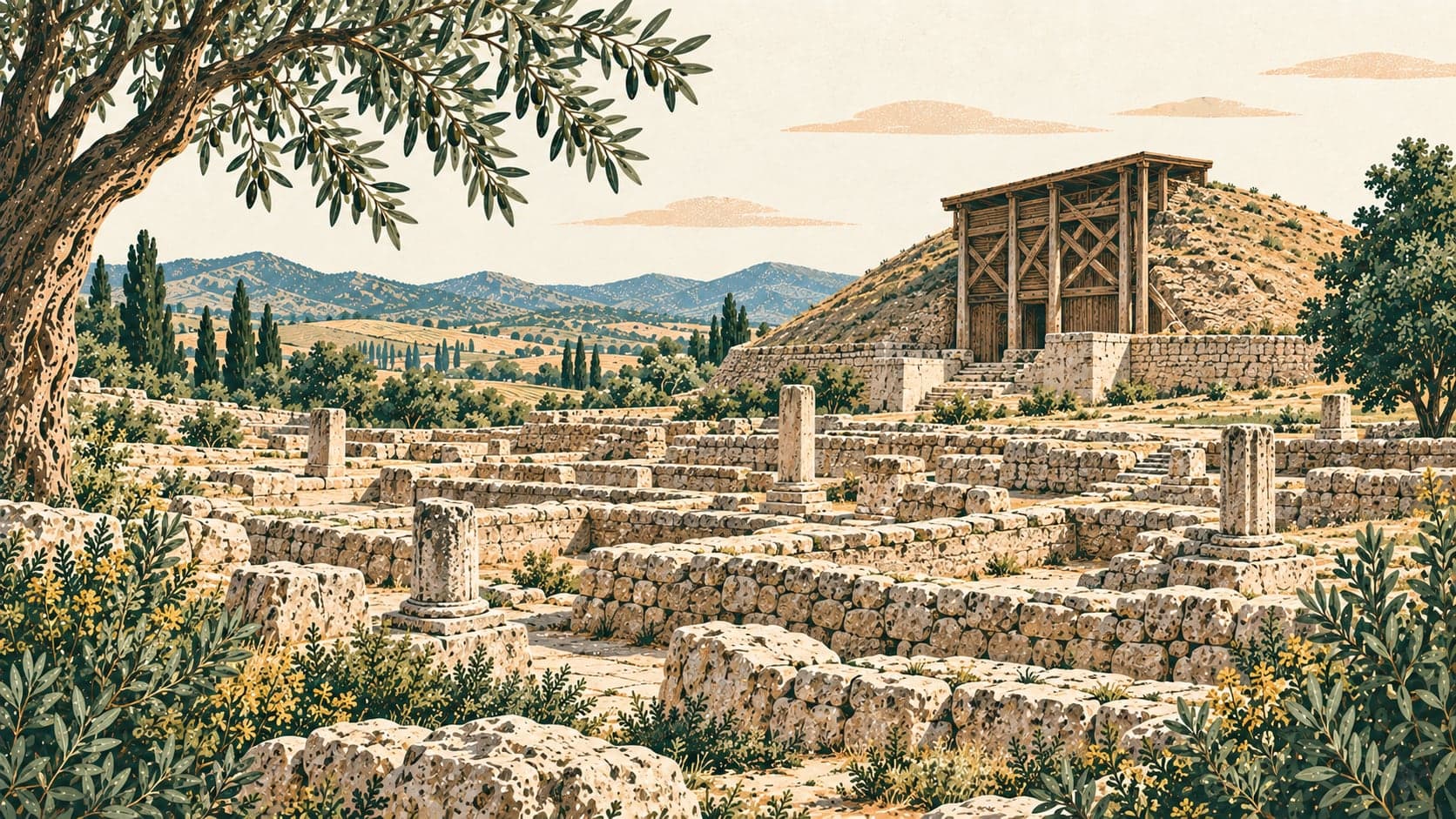
Occupation here ran without a break from the Early Bronze Age, around 2300 BC, to the fourth century AD, and the site was settled again in the thirteenth and fourteenth centuries AD. The mound covers about thirteen and a half hectares, and at its height the settlement spread well beyond it, over roughly a hundred hectares.
Gordion is a characteristic example of Phrygian civilisation. Its well preserved destruction layer, dated to about 800 BC, is an important fixed point in the chronology of the region. The long tradition of tumulus burial at the site offers a significant record of the monumental and funerary practices of the elite through the Iron Age.
The first excavations were carried out in the 1900s by Gustav and Alfred Körte. A second campaign ran between 1950 and 1973 under the direction of Rodney Young, supervised by the University of Pennsylvania Museum of Archaeology and Anthropology.