Guide
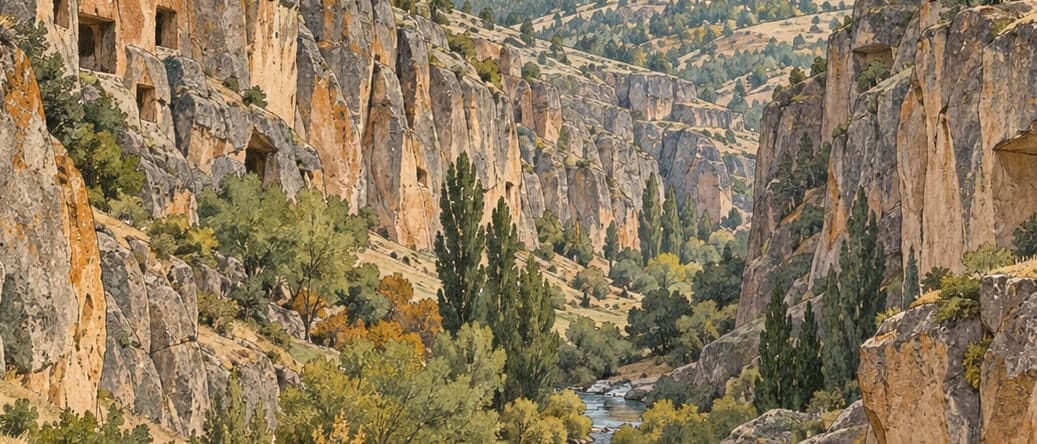
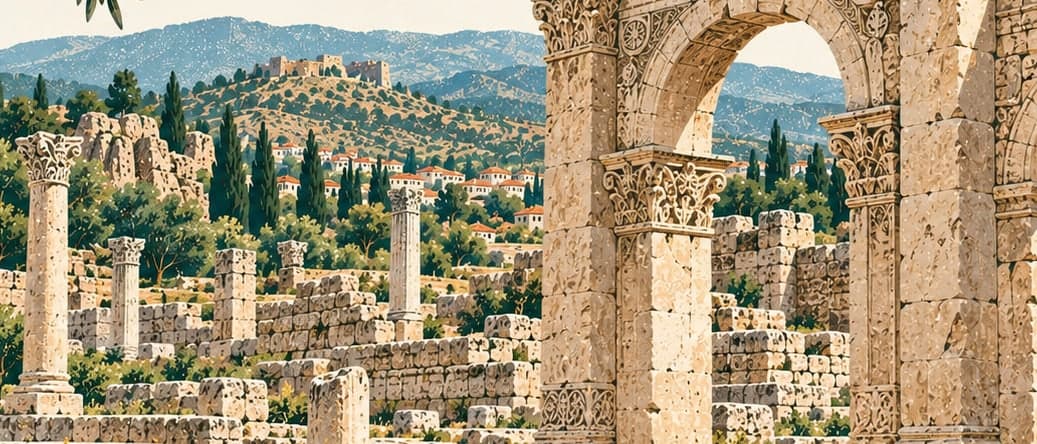
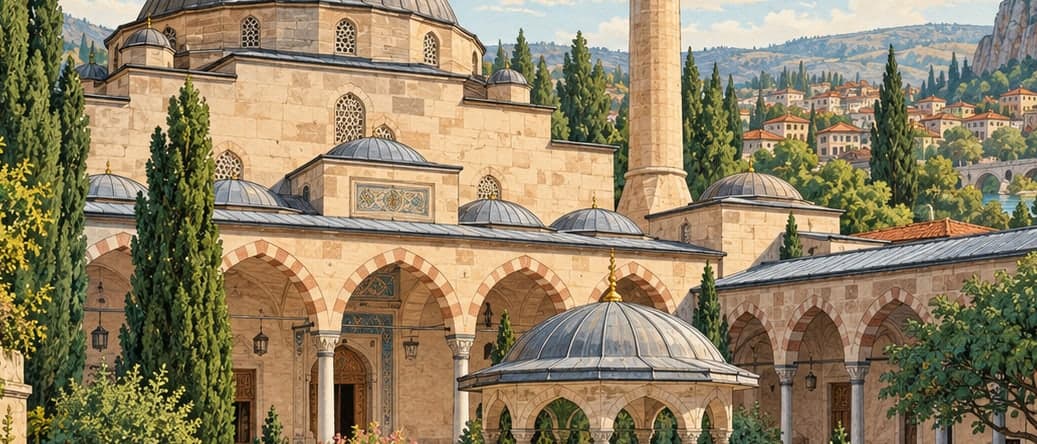
Han sits on one of the crossings of the old road that tied the east to the west and the south, and it has been a stopping place for a long time — a refuge for the first Christians, and a staging town under the Seljuks and the Ottomans. Rock-cut Roman and Byzantine settlements line the connecting roads around it.
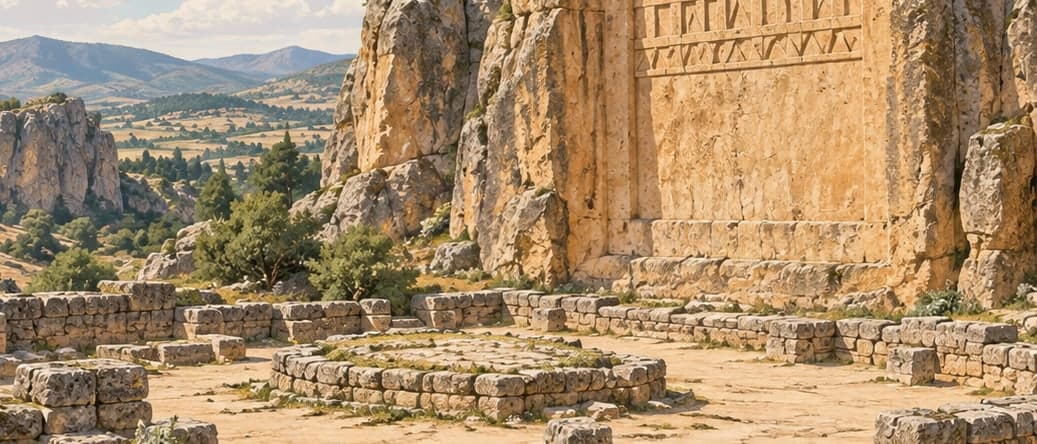
Traces of the ancient settlement that stood where the district centre is now can be followed on the rocky slopes to its south and west. Excavation on the northern and eastern slopes of the rocky hill south of the town has shown that this was its cemetery: more than a hundred graves, all cut into rock, single and chamber types, have been recorded so far. What was found in them indicates the necropolis was in continuous use for about four centuries, from the first century AD to the sixth.
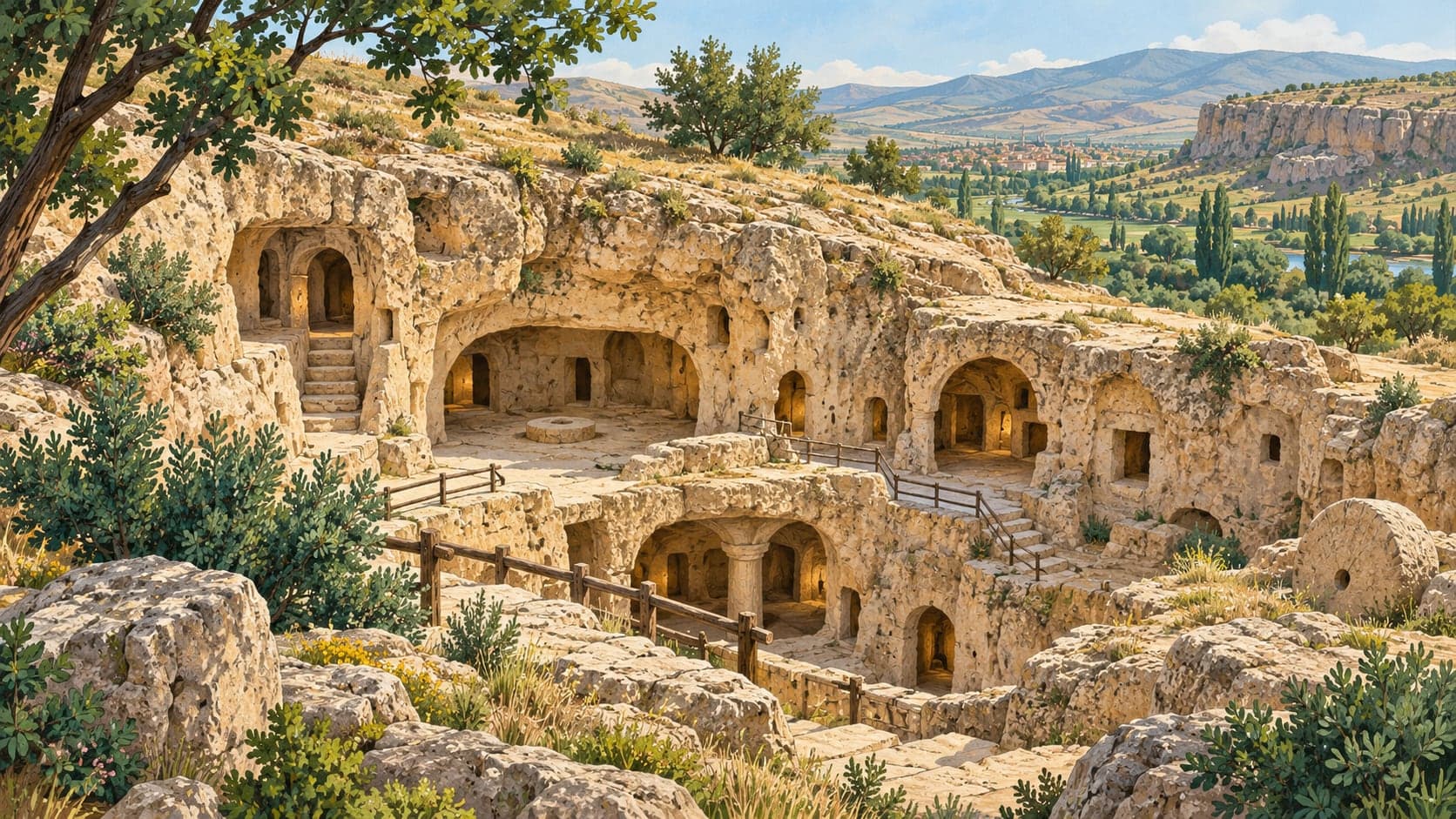
The underground galleries are what most visitors will come for. They were cut into the natural rock in levels, with corridors joining the rooms, and at the lowest level they connect to a clean-water channel arriving from the north. The burial chamber is entered from the south-east and has three rock-cut rooms with arcosolium tombs. Rosettes, lozenges, bows, leaves and whirl motifs are carved high on the walls and on the ceilings — the only example of the kind known in this region. Colossal grave stones stand in the district centre as well.
No historical or archaeological evidence has been found that would say when the complex of galleries and the many grain stores were made, or for what. The source is clear on that point and equally clear on one inference: they were built for defence and shelter against a long and serious threat.