Guide
The Hüsrev Pasha Mosque in the Han district of Eskişehir is the only surviving building of a complex raised between 1631 and 1638 by Hüsrev Pasha, one of the viziers of Murad IV. The complex — a mosque, a bath and a caravanserai — stood on one of the busiest staging roads in Anatolia, in use until the middle of the nineteenth century. The caravanserai has disappeared entirely and most of the bath has collapsed; the mosque is sound and in use.
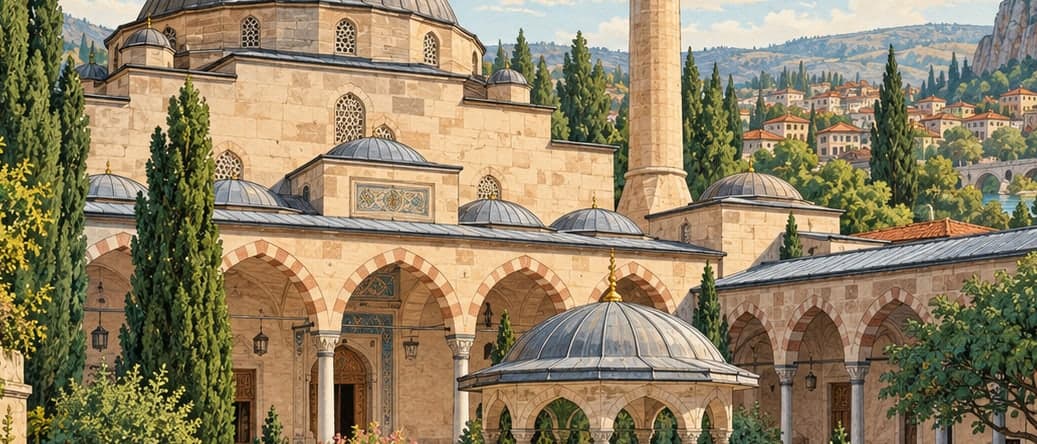
It was probably built over a Byzantine church. It stands in a wide courtyard, follows the inverted T, or zaviye, plan, and is covered by a large central dome supported by half domes on four sides. It is an imposing building of carefully worked cut stone in a pinkish tone. Seen from a distance, its outline, the projecting mihrab section, the roofing system and particularly the high dome drum suggest that the fabric of the building does not really conform to Turkish architectural tradition; the interior elements, on the other hand, carry the features of the Turkish manner.