Guide
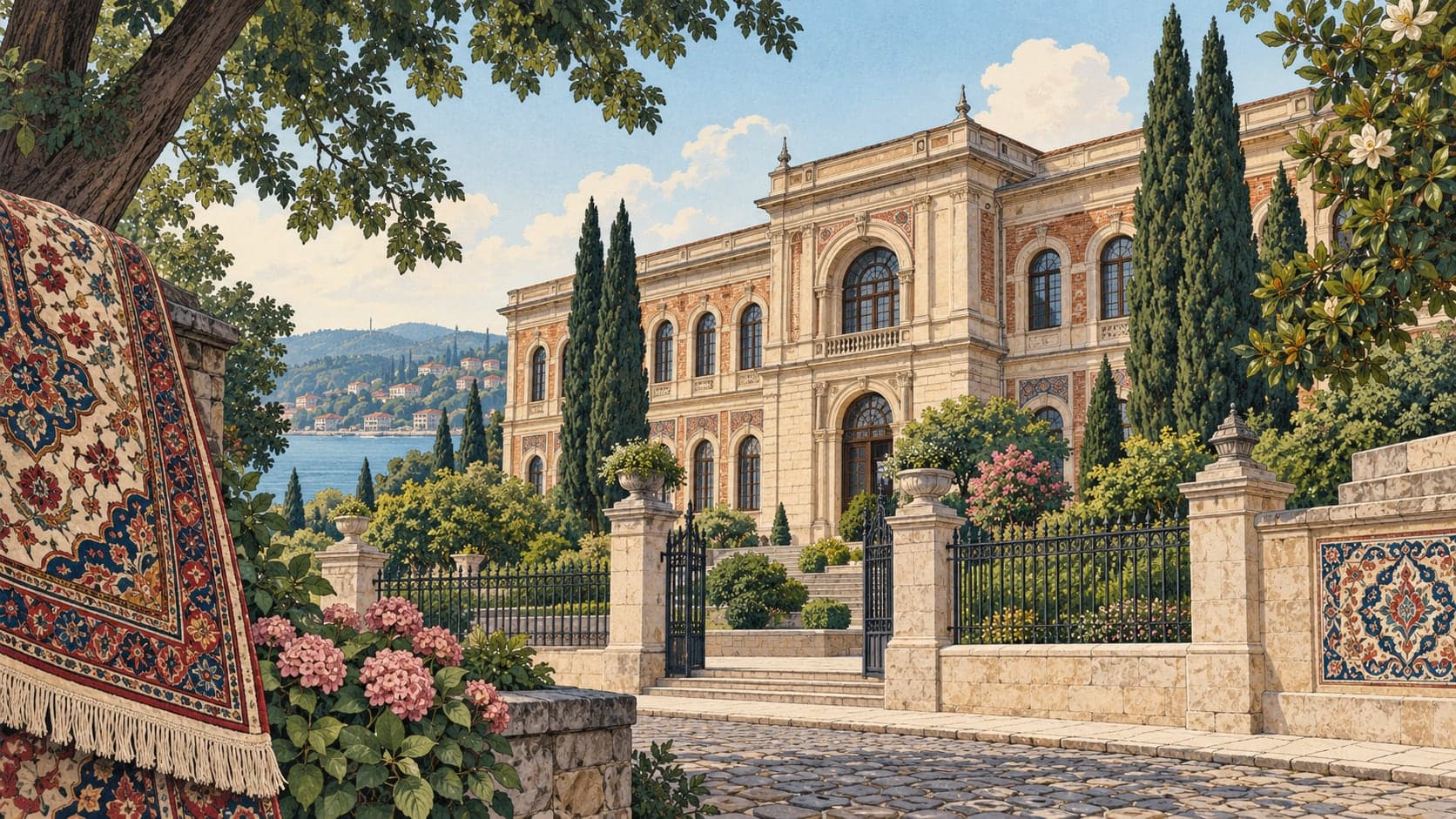
Before planning a visit: the Directorate of National Palaces states that the factory itself is closed to visitors. What is open is the wooden pavilion beside it, run as a museum-pavilion — a prefabricated building originally put up at Yıldız Palace for the visit of Kaiser Wilhelm II, with halls opening towards both the sea and the land.
The factory at Hereke, on the north shore of the Gulf of İzmit, was founded in 1843 and began production in 1845 as the Hereke Imperial Factory, supplying the upholstery and curtain fabric for the palaces then being built. The Directorate describes it as the most extensive silk weaving factory the Ottoman state had established up to that date; jacquard looms and designers were brought from France to start production.
Carpet weaving units were added under Abdülhamid II, and that is where the Hereke carpet — known internationally ever since — began. A weaving workshop attached to the factory, known as the Hereke Dokumahane, is recorded as having operated inside Dolmabahçe Palace itself in the same period. The factory's best work furnished the palaces, pavilions and kiosks that served as a shopfront for Ottoman industry, and reached European courts as gifts to foreign royalty.
In the republic it continued under Sümerbank, and in 1995, under the privatisation law, it was transferred to the National Palaces. It still produces. Researchers work with the factory to recover original Hereke fabric patterns and weave lost designs again, so that the palaces can be refurnished with the fabrics they were meant to have.
Visit status for this record: open to visitors.
Entry fee
- Wilhelm Kaiser Müze-Köşk · Local
- 50 ₺
- Wilhelm Kaiser Müze-Köşk · Foreign
- 100 ₺
- Wilhelm Kaiser Müze-Köşk · Reduced
- 50 ₺
Visiting hours
- Visiting hours
- 09:00:00 - 17:00:00