Guide
The fertile land of Mesopotamia is country through which a great many peoples passed and in which they made civilisations. In the third millennium BC the region was held by the Assyrians, and the first known name of Diyarbakır appears in the Assyrian texts as Amidi.
Over the millennia the Hurrian-Mitanni, the Urartians, the Persians, the Romans, the Seleucids, the Parthians, the Arabs, the Umayyads and Abbasids, the Marwanids, the Inalids, the Nisanids, the Seljuks, the Artuqids, the Ayyubids and the Ilkhanids all left their marks on the history of the city.
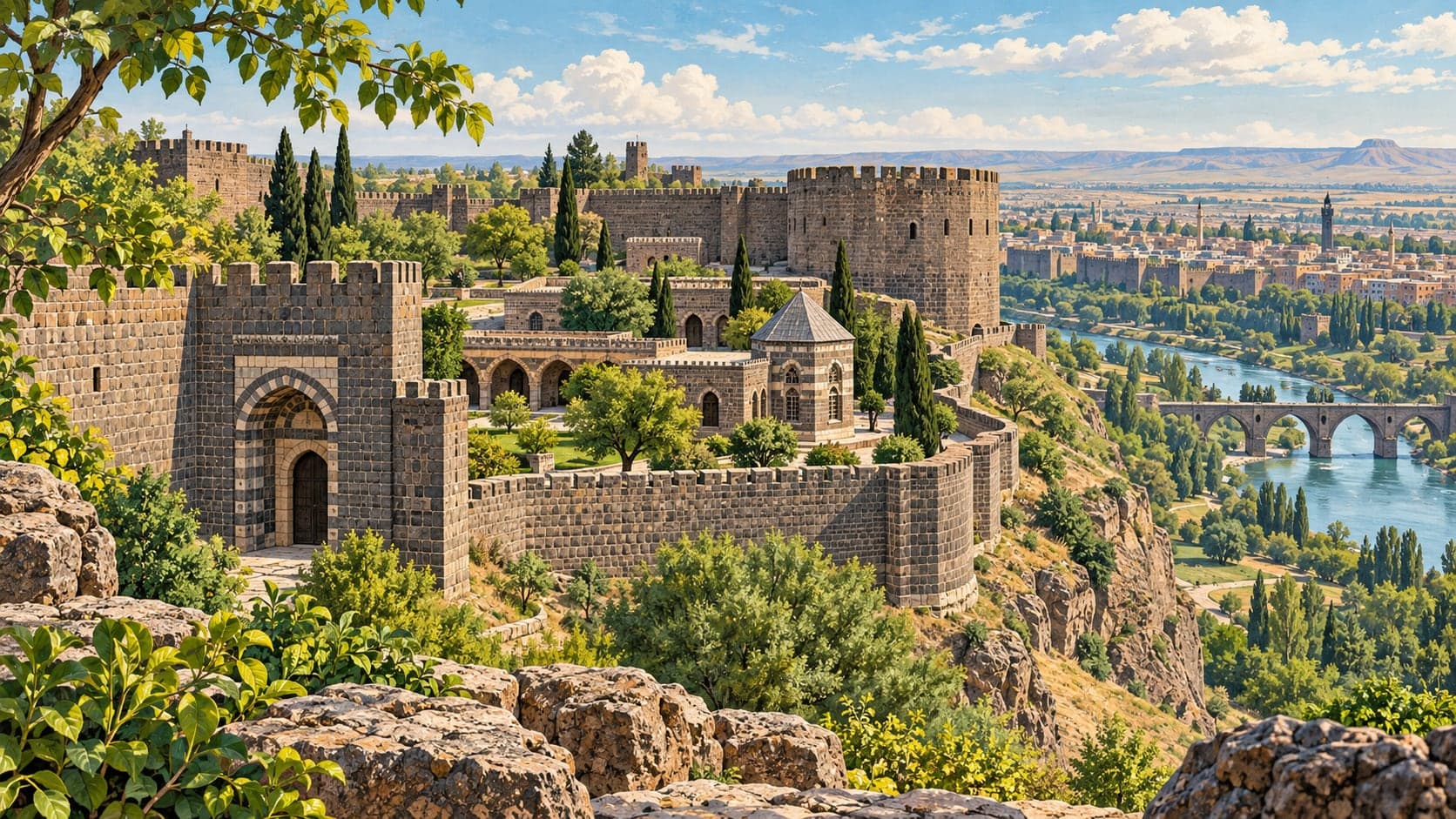
Strikingly, all these different cultures and states agreed about where the essential parts of the city should stand. From the evidence surviving in the inner castle and from where it lies, it is clear that this place served continuously as the seat of government until recent years. For that reason Süleyman the Magnificent enlarged the inner castle, adding sixteen towers and two new gates.
Excavation at the mound of Virantepe within the inner castle brought to light the remains of the Artuqid palace of the early thirteenth century. The most important part of those remains is an ornamented pool opening on four sides into iwans. The selsebil, the cascade device used by the Artuqids to enjoy both the sound and the coolness of water, still survives in the Gazi Pavilion, a building of the same period.
The inner castle served as the seat of government until recent times, and the old courthouse, the prison, the corps and gendarmerie buildings and the church of Saint George are now open to visitors in new uses.
The headquarters building, put up in 1902 as the office of the inspectorate general, was used as his headquarters by Atatürk while he was in Diyarbakır in 1917 as commander of the Second Corps. It was repaired in 1973 by the Seventh Corps command and reopened, rearranged, as the Atatürk Museum in 2017.
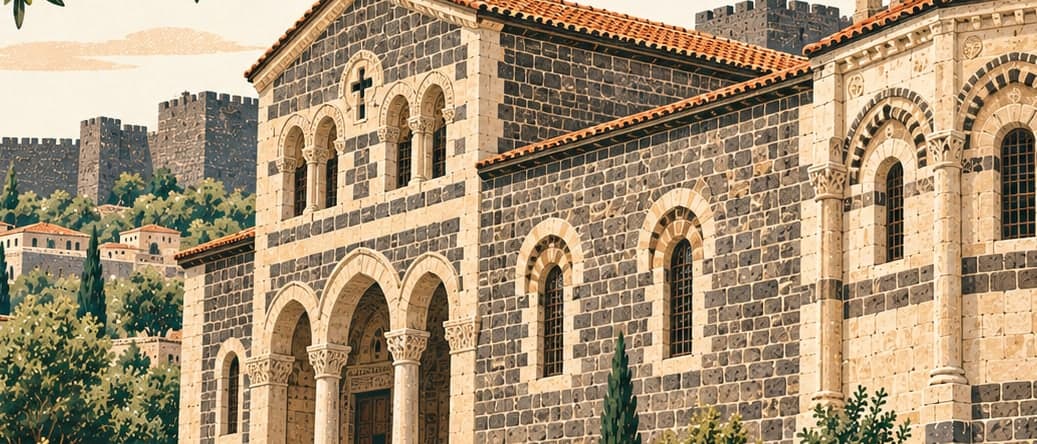
The building raised between 1891 and 1893 in the reign of Abdülhamid II as the great courthouse serves today as the governor's reception hall. The church of Saint George, dated by its architecture to the fourth century AD, was turned into a bath in the Artuqid period by the addition of a domed section on its western side, and is now used as an art gallery. A public building of the Ottoman period dated between 1900 and 1907 houses the directorate of foundations and the provincial treasury and also serves as the museum's administrative building.