Guide
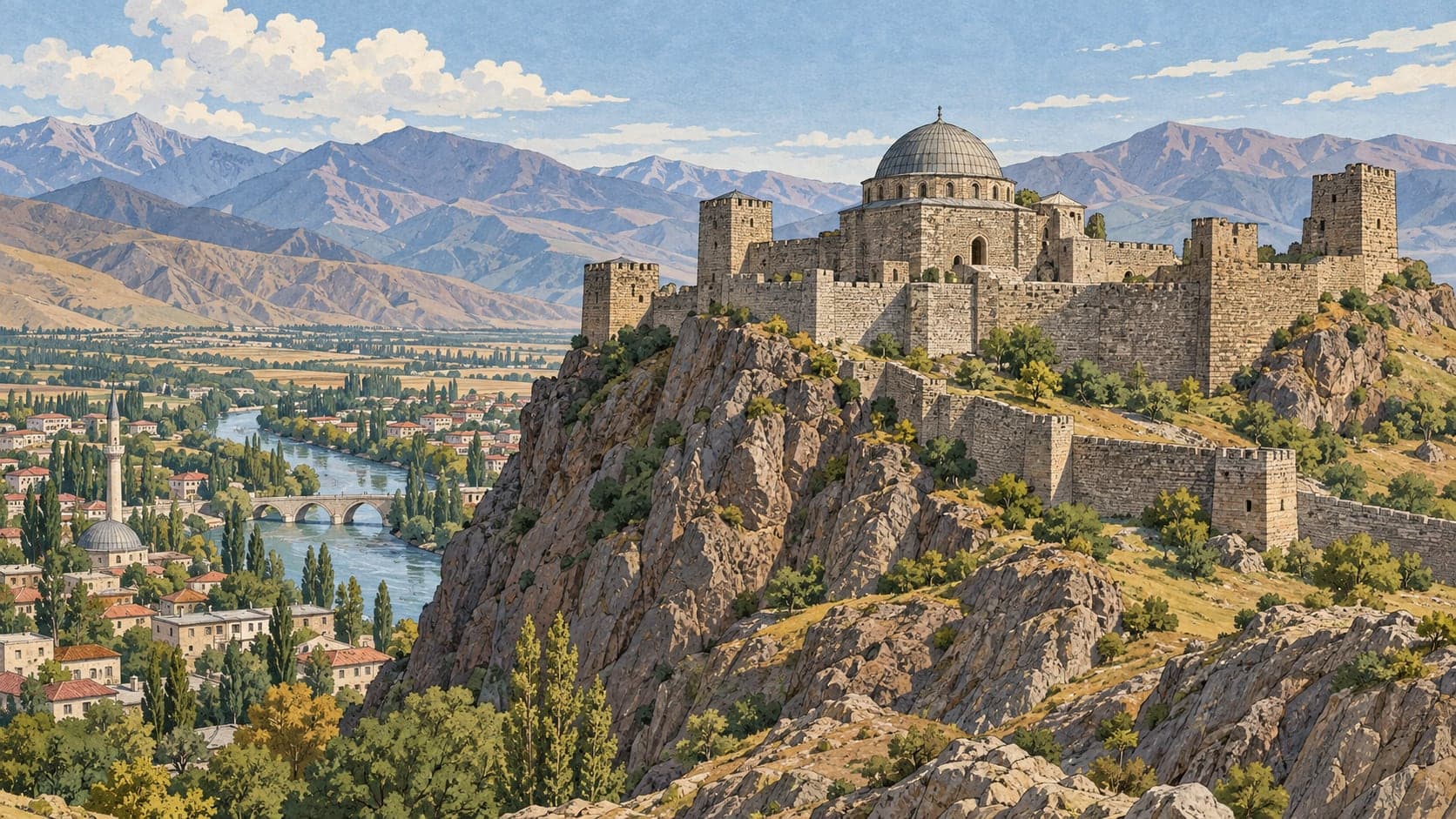
Oltu Castle stands on a steep but not high rocky hill in the middle of the town of Oltu in Erzurum province. It was built, as the rules of warfare would have it, above an important pass, at the point where the waters coming down from Narman and the Sivri stream meet to form the Oltu stream.
Two accounts are given of when it was built. The first puts it in the fifth century BC; the second, which the source calls the weaker of the two, holds that the Urartians built it in the tenth century BC. Against these, an article in the Georgian newspaper Iveria in 1888 spoke of Georgian inscriptions in the castle, and T. Masalskiy of the Petersburg Geographical Society, who studied the castle in the last quarter of the nineteenth century, held it to be a work of Georgian architecture.
The castle was afterwards used by the Byzantines, the kingdom of Georgia, the Great Seljuks and the Akkoyunlu. Before the Ottomans took it in the middle of the sixteenth century it was one of the important centres of the rulers of Samtskhe-Saatabago, and under the Ottomans it became the administrative centre of the sancak of Oltu within the province of Çıldır. It served as a caravanserai in the Ottoman period and was restored later.
Under the Treaty of Berlin, signed after the Russo-Turkish war of 1877 and 1878, the castle was ceded by the Ottoman state to Russia. Under Russian rule Oltu was the administrative centre of the Oltu district and the Russians kept a barracks here. The Georgian historian and archaeologist Ekvtime Takaishvili, who visited in 1907, wrote that the town spread along both sides of the Oltu stream, that the barracks stood on the left bank and that the castle on the right was the centre of the old part of the town. The German botanist Karl Heinrich Koch, travelling in 1843, recorded old Georgian inscriptions and figures cut into large stones in many places both in the castle and in the outer walls of the town.
The castle is in two parts, an inner and an outer. It was built of neatly cut stone; the outer walls have disappeared. The single gate of the inner castle opens to the south.
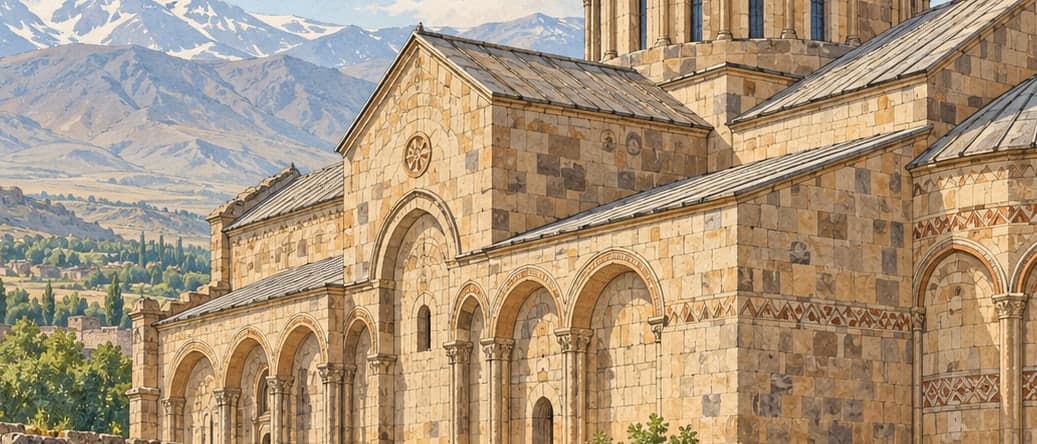
On the north-eastern side of the open ground within the castle lie the ruins of an old Georgian church. Known as the church of Oltisi or the church of Oltu Castle, it is known to have had six apses and a dome, and a Georgian inscription recorded there shows that it was built in the name of the Georgian saint George. Of the two towers to the north of the castle, which stand in relatively sound condition, the left-hand one was turned into a tomb and covered with a dome; it is dedicated to Kadı Zinnun, who died in the inner castle.