Guide
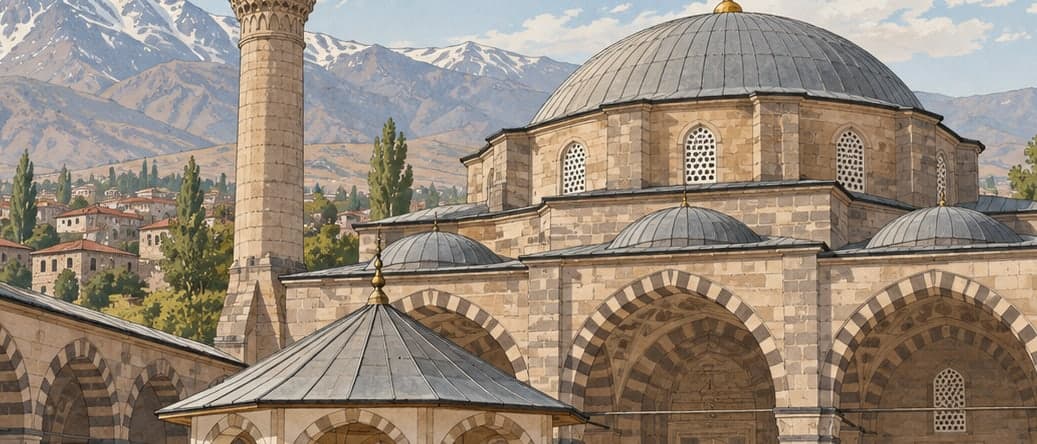
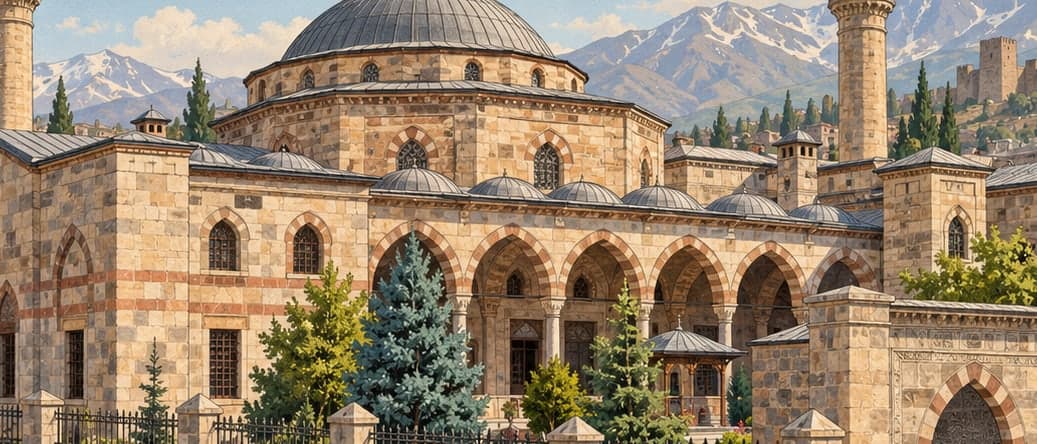
Also known as the Taşhan, this caravanserai was built in 1561 by Rüstem Paşa, grand vizier to Süleyman the Lawgiver, and counts among the finer examples of Ottoman caravanserai architecture. It held a public kitchen, a prayer room, a resting place, merchants' shops and sections where camels, donkeys, oxen, buffalo and horses were tied; some of these have not survived.
The inscription above the barrel-vaulted entrance on the west uses the word ribat for the building, because Erzurum was a frontier city. A ribat is a kind of forward post housing a raiding force of forty or fifty men. As the Ottoman frontier moved out in time toward Tiflis and the Caspian, the building took on the character of a lodging house, a shelter, a stable and a place of trade.
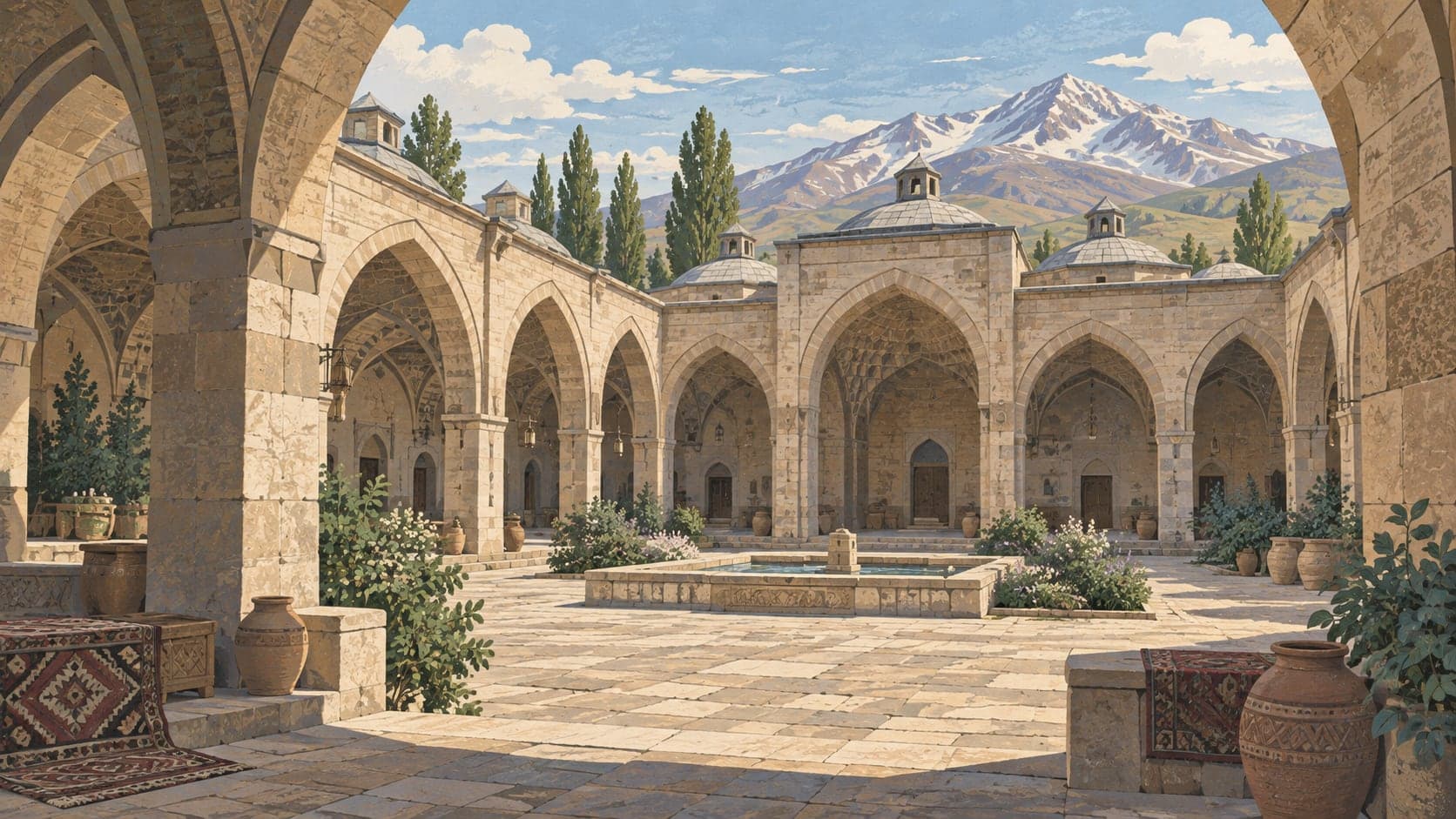
It is two storeys, built of cut stone, with rooms ranged behind arcades around a rectangular courtyard. The courtyard is entered through two pointed-arched, vaulted doors on the east and west, and thirty-two rooms surround it. Upstairs, rooms under depressed vaults are arranged along a corridor; the decoration there was added later. A significant restoration was carried out in 1965. The west front is pushed slightly forward, with a deep barrel-vaulted entrance below and, above it, a room that belonged to the keeper of the caravanserai.
The building is in use today by the oltu stone trade, as a place where the stone is worked and sold. Dozens of kinds of gift are made from it here, prayer beads, rings and necklaces above all.