Guide
This is the museum to start with in Mardin, because it explains the town before you walk into it. The upper floor sets out how Mardin was made and how it was lived in: the handicrafts the town lived by, jewellery, copperwork, weaving, soapmaking and stone carving, alongside the objects used in its houses, its villages and its places of worship, and the clothes people wore. Photographs, information panels and reconstructed scenes carry the daily life, and a group of gravestones belonging to the different faiths settled here makes the multi-religious character of the place concrete rather than asserted.
For people from Mardin the collection works differently, as a place to recover a version of the city they grew up in. The building also houses the Dilek Sabancı Art Gallery.
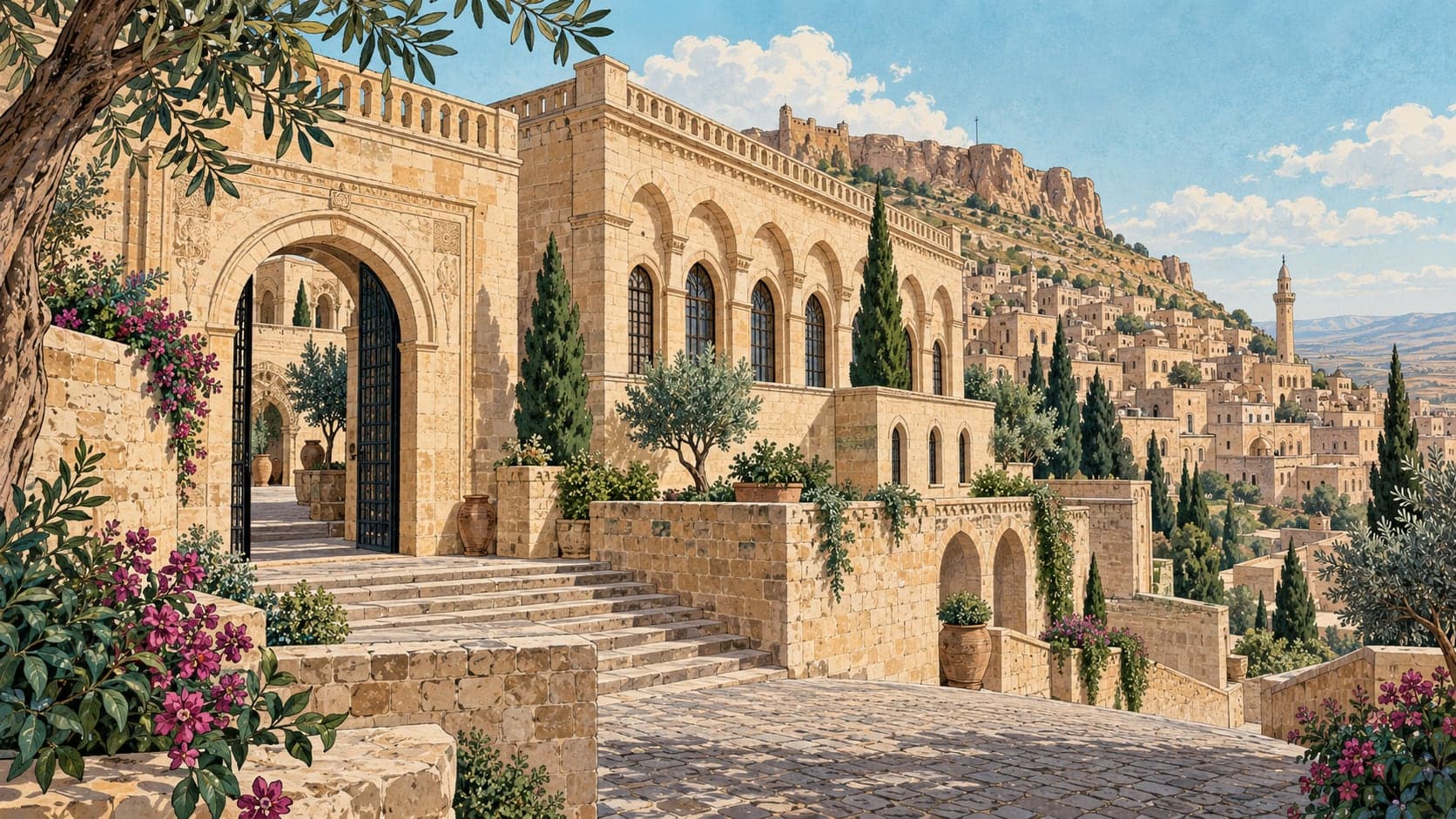
The building has a history of its own and it is visible in the plan. It was put up in 1889 as a cavalry barracks, commissioned by Hacı Hasan Paşa, governor of Diyarbakır, in the reign of Abdülhamid II, and designed by the architect Sarkis Elyas Lole. Two storeys; the lower one, entered through the south door, was the stable.
The army kept it long after the cavalry left. It served as the recruitment branch of the gendarmerie command and then as a gendarmerie station, and between 1991 and 2003 it was the tax office. The museum opened in 2006.
It is open from 09:00 to 17:00 and closed on Mondays. There is an entrance charge, with a reduced rate for students.