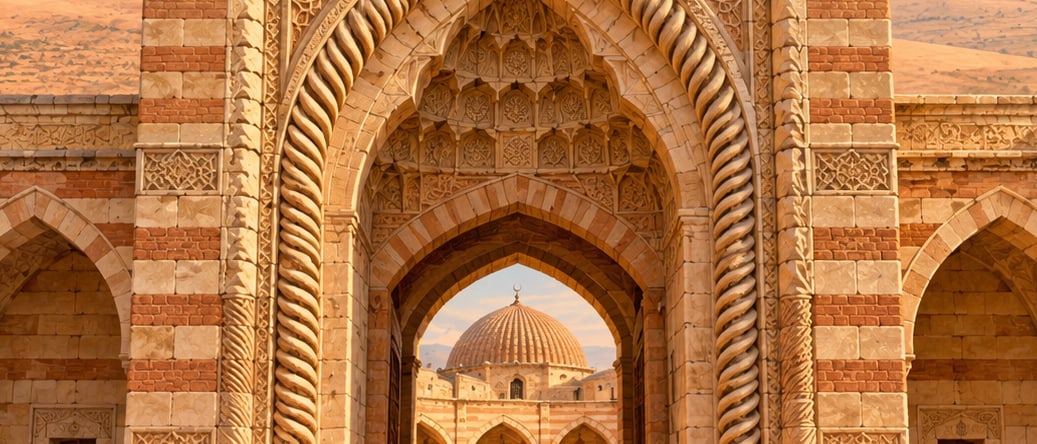
Mardin carries the traces of different civilisations stacked one on another. The raw materials that sum it up are stone and clay, and in the sheer number of its ancient works and stone monuments the city holds something no other civilisation holds in the same way. Across Mesopotamia clay was the decisive medium of writing — which is to say, of learning.
Settlement here is very old. Northern Mesopotamia counts Mardin as inhabited since the Mousterian, around 50,000 BC, and when an economy based on growing grain appeared the area took an important place among the permanently settled districts. In the Neolithic settlement at Jarmo, on the mountainous edge of Mesopotamia, three thousand years of transitional phases can still be followed one after another; the earliest pottery, domesticated animals and cultivated ground there date the start of continuous settlement to about 6750 BC.