Guide
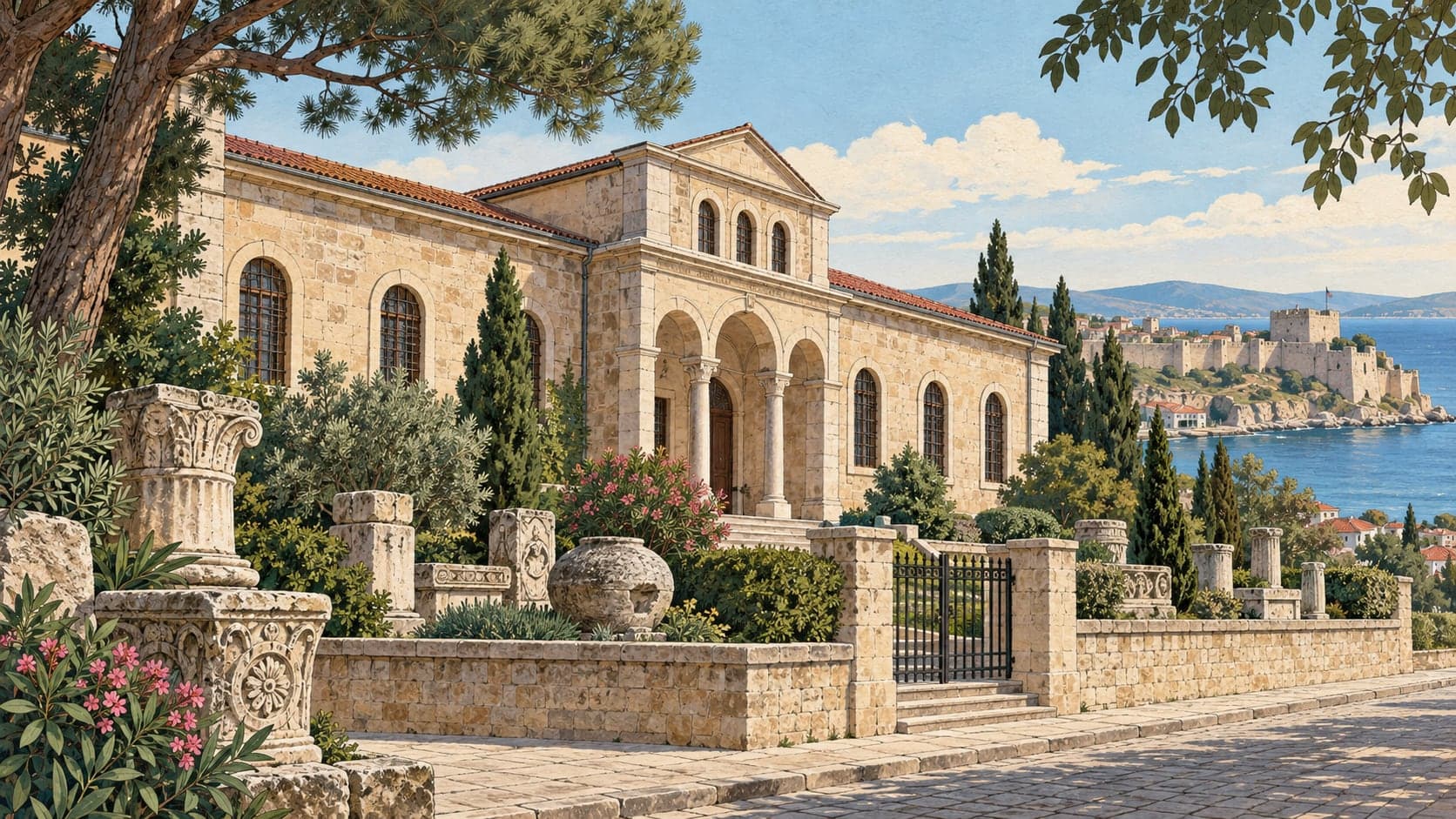
The garden is part of the museum, not an approach to it. The remains of a temple stand in it, uncovered in excavations in 1951: a rectangular building with its altar to the south. The dig produced terracotta material, architectural pieces and figures of Serapis, Dionysos, Herakles, Isis and Kore. Which god it was built for is not settled; the museum says an inscription is the reason it is thought to have belonged to Serapis. Architectural fragments, stelae, sarcophagi and their lids, altars, votive stones, milestones and lion sculptures from the Archaic through to the Ottoman centuries are set out around it, along with a large number of Islamic gravestones, and the monument to the Sinop naval dead of 1853 stands in the same garden.
Indoors the ground floor begins with prehistory. The material gathered from around Sinop includes finds from the 1953 excavation at Kocagöz Höyük near the village of Demirci, sixteen kilometres away, dating to the Early Bronze Age between 3000 and 2700 BC: terracotta vessels with and without handles and feet, bowls, cups, plates, jugs, spindle whorls, necklaces, bone tools, a polished stone axe, bronze needles and spearheads. Between the gallery and the first hall are coins of the Hellenistic, Roman, Byzantine, Seljuk and Ottoman periods, and then the amphorae recovered from the Black Sea, which the museum regards as one of the things that sets it apart.
The classical hall runs in chronological order from the Hittites and Phrygians through the Archaic period to the Hellenistic, Roman and Byzantine centuries. Painted and trefoil jugs, plates, strainer vessels, aryballoi and a kylix are shown with small grave finds of the fifth and fourth centuries BC, gold, bone and bronze ornaments, a cylinder seal, glass, and Seljuk and Ottoman coin hoards, together with the finds from the temple in the garden. Hellenistic and Roman sculpture is displayed in the same section.
The ethnographic hall holds the dress, embroidery, knitting and weaving of the Sinop region, along with ornaments, china and porcelain, firearms and edged weapons, writing sets, a chest inlaid with ivory and mother of pearl, and kitchen equipment. Upstairs, the carpet and manuscript section shows Kula and Gördes prayer rugs of the seventeenth and eighteenth centuries, woven covers, handwritten Qurans, examples of the calligraphic hands, binding covers and inlaid reading stands. A separate room holds a collection of icons in the Byzantine manner, images of Christ, angels, the Virgin and the saints in various sizes and heavy with gold leaf.
Museum work in Sinop is among the oldest in the country and began in 1921, when objects were first kept at the Mekteb-i İdadi; in 1932 they were brought together in the Süleyman Pervane Medrese, which formed the nucleus of a museum. The museum opened to visitors in 1941, became a directorate in 1947 and moved in 1970 to the building it occupies now.
It opens from 08:00 to 17:00, with the ticket desk closing at 16:30, and is closed on Tuesdays. The Turkish MüzeKart is valid here.