Guide
The Titus Tunnel was cut to solve a practical problem. Floodwater coming down off the mountains threatened the port city of Seleucia Pieria, and the emperor Vespasian ordered a tunnel that would carry the streams around the city and divert them. Work began in AD 69 and was finished in AD 81 by his son and successor Titus, using Roman legionaries and slaves. (The Ministry's page opens by dating the tunnel to the first century BC, which contradicts the construction dates it then gives; the AD dates are the ones that fit the account.) The channel is cut entirely through the rock and runs 1,380 metres, seven metres high and six metres wide.
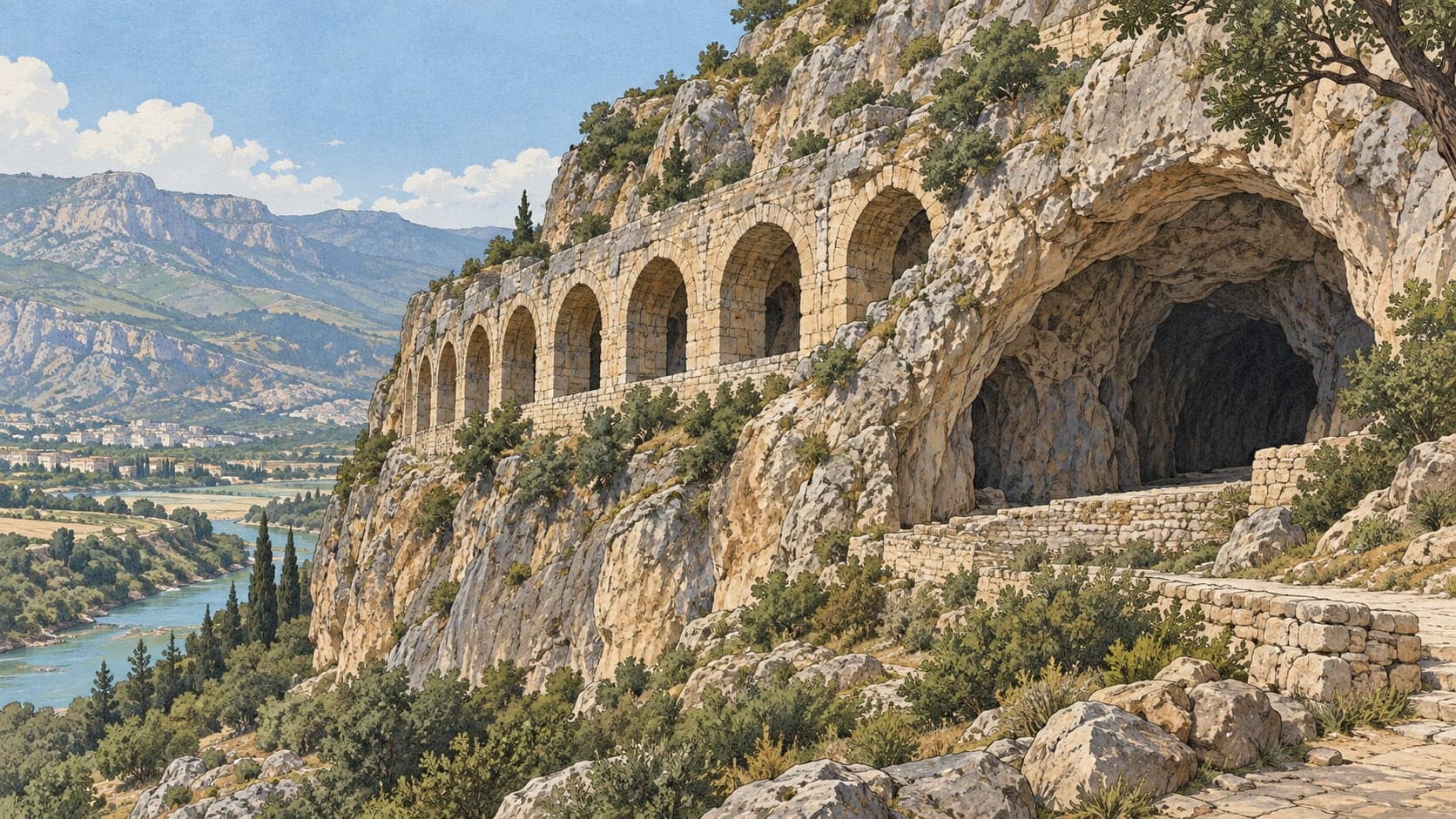
About a hundred metres to the right of the seaward entrance is the Beşikli cave, among the largest and best known rock tombs of the area, holding twelve graves in separate compartments divided from one another by walls. Stone columns and arches link the compartments, and stone stairs lead down into them from above. Doorways open here and there between the sections, and the columns, capitals, steps and the carved motifs partly decorating the covering were all made by cutting into the rock. The site is five kilometres from Samandağ, served by minibuses from the town, and signposted for drivers. Seleucia Pieria, the ancient port the tunnel was built to protect, can be seen on the same visit.