Guide
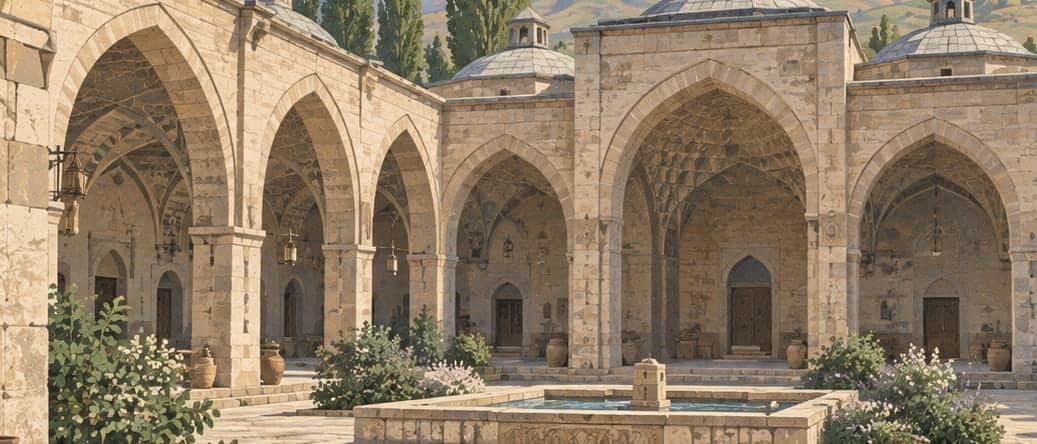
The Yakutiye Medrese in central Erzurum is a 1310 building — Hijri 710 by its portal inscription — put up by Cemalettin Hoca Yakut Gazani in the names of Gazan Han and Bolugan Hatun, under the Ilkhanid ruler Oljaitu. It is single-storey and rectangular, with a covered courtyard. The ministry describes it both as having three iwans and as built to a four-iwan plan, and does not reconcile the two.
The south iwan was planned as a prayer room, with marble endowment inscriptions set into both its walls; at the end of the east iwan is a tomb chamber, which holds no grave.
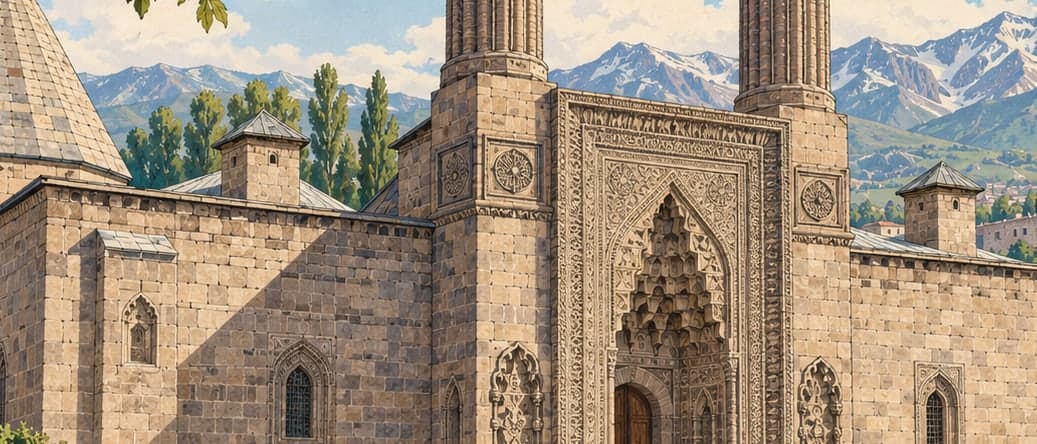
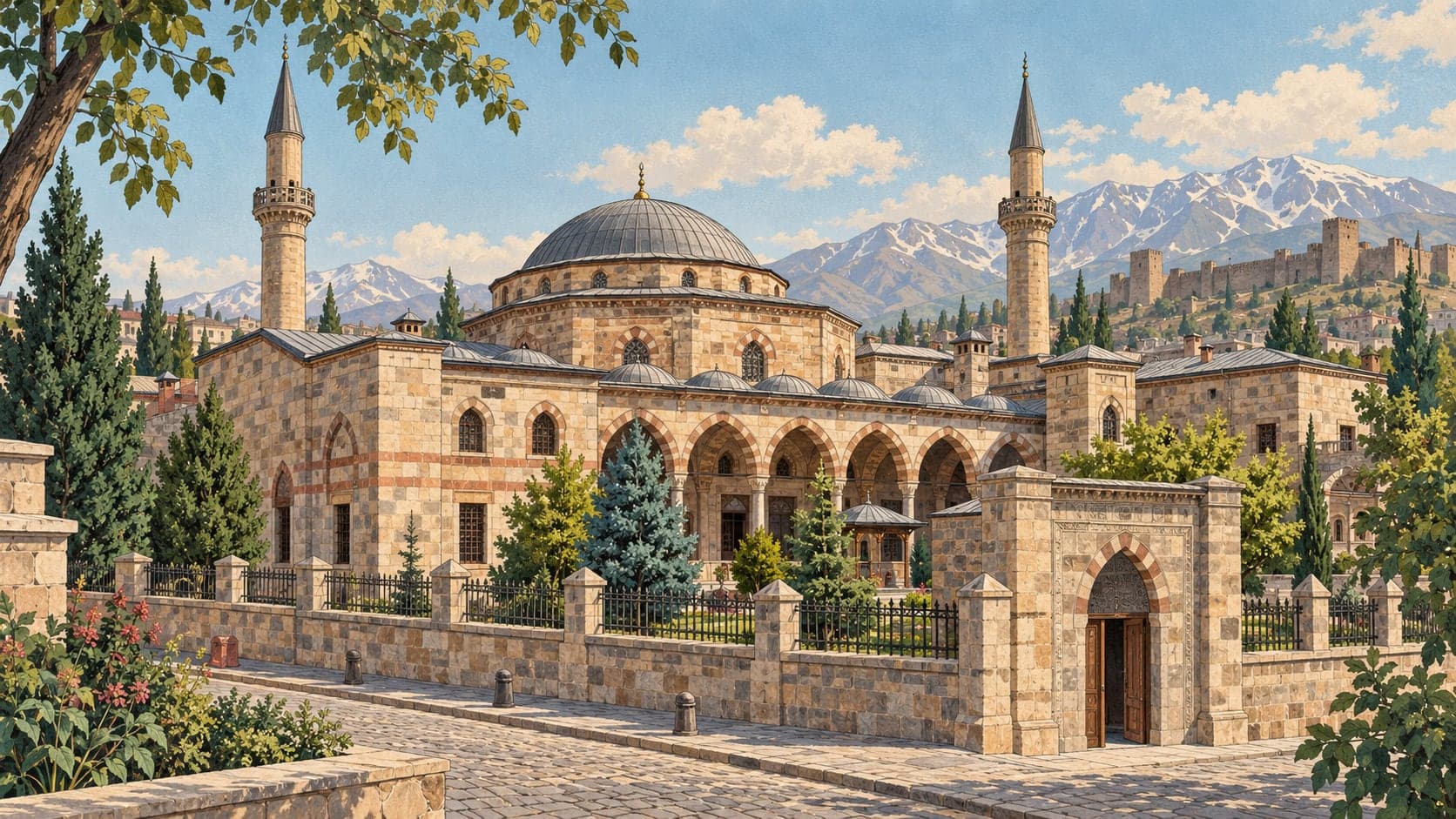
The west front, with the portal, is the face to look at. Its two corner minarets are both ruined — one down to the balcony, the other to its base — and each is now capped with a conical roof. The portal itself is worked in vegetal, geometric and figural ornament with bands of inscription. On both faces, inside moulded arches, there is a pierced sphere below, a tree of life above it with a pair of leopards facing each other beneath the tree, and at the top a panel carved with a double-headed eagle. The projecting portal and its minarets are balanced, across the building, by the domed tomb set against the opposite end.
The medrese spent recent history hemmed in: it was used as a barracks and surrounded by later buildings until those were cleared in the 1970s and 1980s and the site was landscaped. Repairs ran from 1984 to 1994, and it opened on 29 October 1994 as the Museum of Turkish-Islamic Art and Ethnography, a branch of the Erzurum Museum Directorate. What is shown inside is ethnographic — women's jewellery and dress, men's jewellery and accessories, belts, copperware, weapons, seals and coins — set against the architecture rather than against gallery walls.