Guide
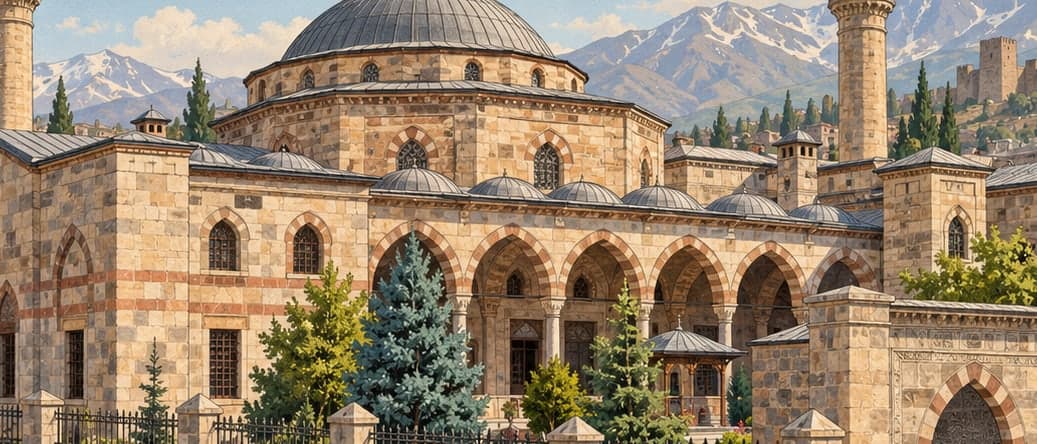
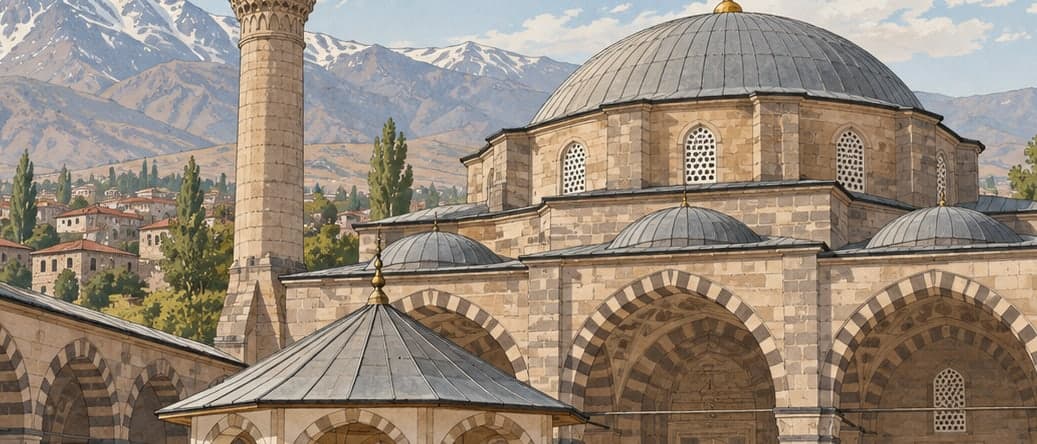
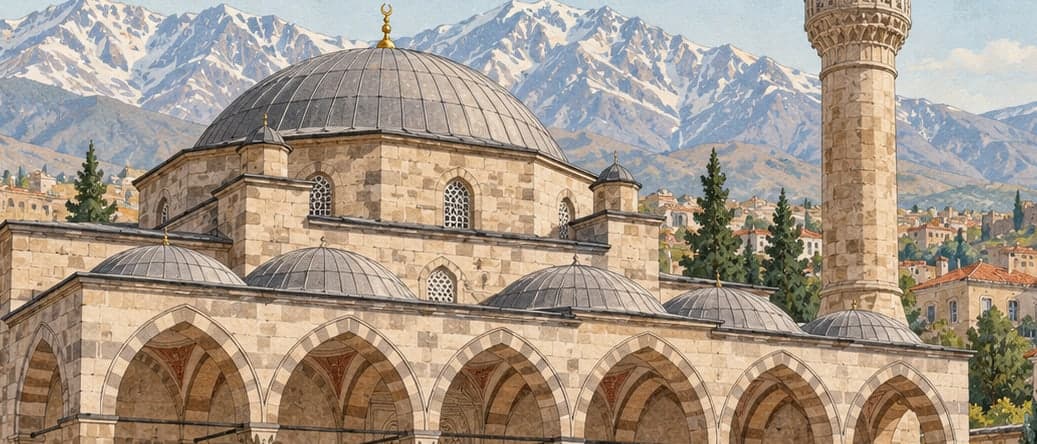
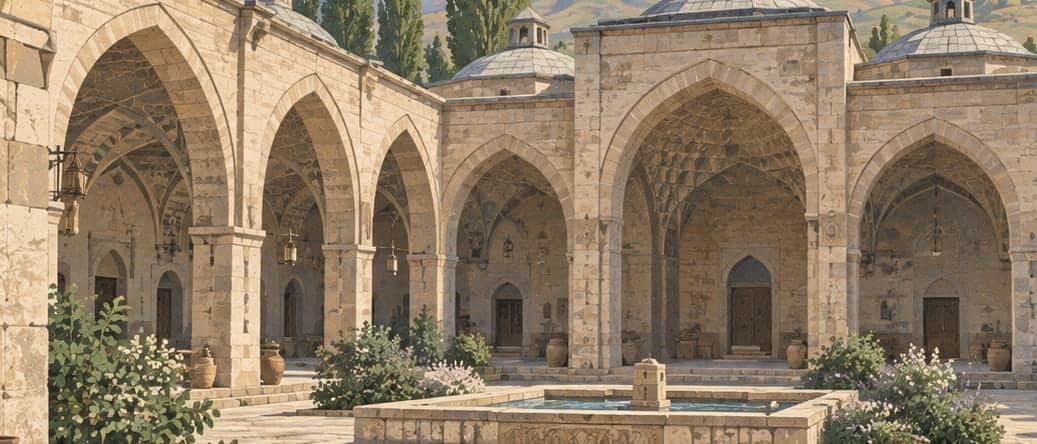
The Yakutiye Medrese was built in 1310 by Hoca Yakut Gazani, in the name of Gazan Han and Bolugan Hatun, during the reign of the Ilkhanid ruler Sultan Olcayto. It is the largest of the closed-courtyard medreses in Anatolia and one of the most striking buildings in Erzurum, as much for the balance of its plan as for the size of the motifs carved on it.
The crown portal projects from the front. Inside, the rectangular courtyard has four eyvans; its centre is roofed with a muqarnas dome and the rest with pointed barrel vaults. The niches flanking the portal carry leopards and eagles: palm leaves rising from a pierced sphere, two leopards and an eagle, a tree of life assembled from symbols that mattered to the Turks of Central Asia.
A brick tomb tower stands against the east wall, with three windows and a conical cap. Six barrel-vaulted rooms face each other down either side of the courtyard, and the minaret is reached from the one in the right-hand corner. Above the southern vault a marble slab carries the endowment deed in thuluth script, naming the six villages given over to the medrese. The rooms were assigned to students and teachers by rank, which is why the carving over each doorway is different.
One of the two thick corner minarets either fell long ago or was never built; its base is closed with a conical cap. The medrese was restored in 1995 and now holds the Museum of Turkish and Islamic Art and Ethnography. In 2014 it was added to the UNESCO tentative list, together with other major Seljuk medreses in Sivas, Konya, Kayseri, Erzurum and Kırşehir, under the heading of the Anatolian Seljuk medreses.