Guide
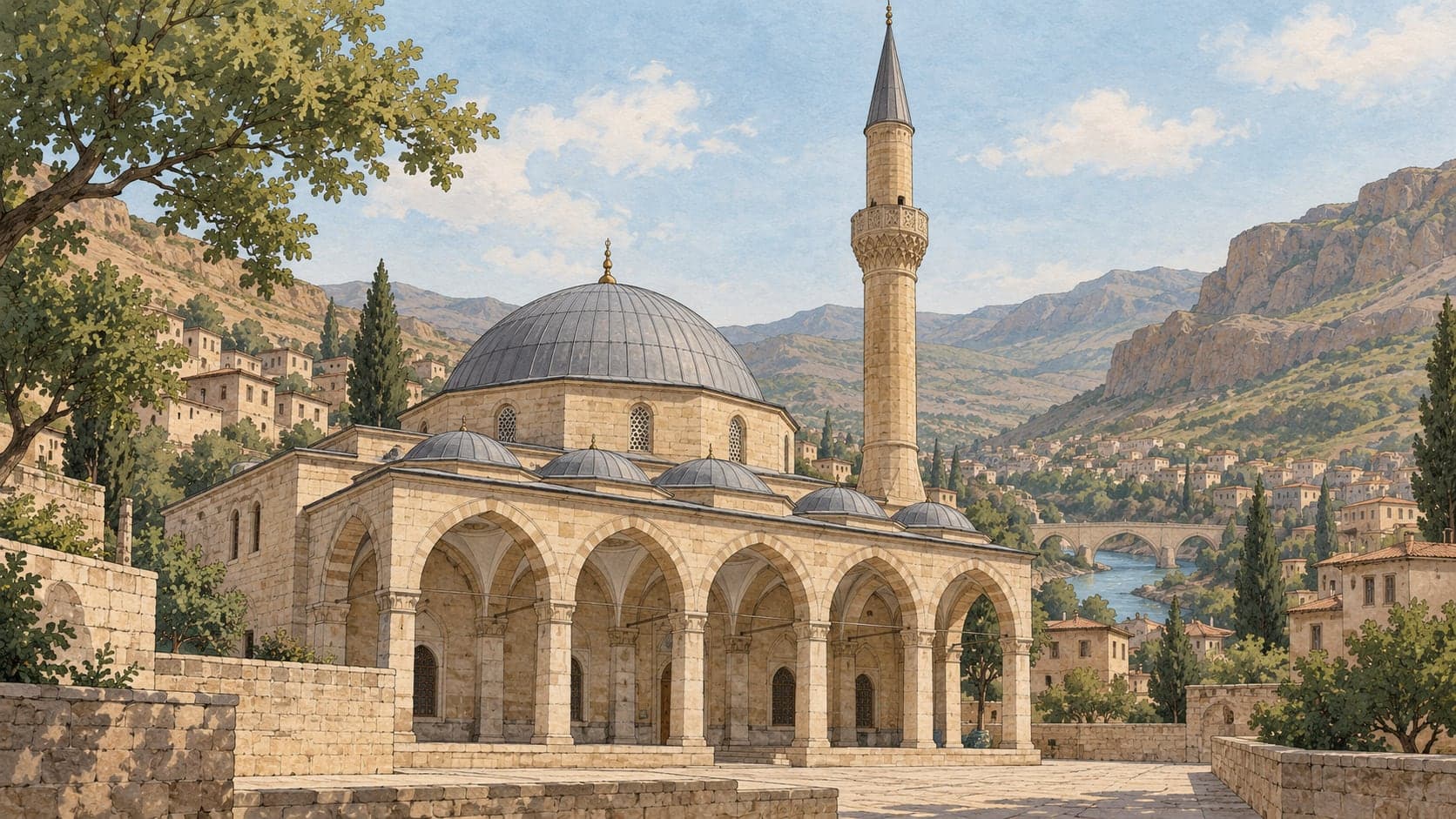
The Great Mosque of Siirt was built in 1129 by Muguziddin Mahmud, an emir of the Great Seljuk period. It has been repaired and added to at various times, and the outer walls show this plainly. The mosque belongs to the General Directorate of Foundations.
You enter the prayer hall through a door in the middle of the north front, and the north and south halves of the hall are built quite differently. The northern part consists of two aisles under barrel vaults. The southern part has three domed bays side by side, the middle dome larger and higher than the others, linked to one another by arched passages, and each domed bay has its own mihrab on the qibla side. One thing to know before you go: the mosque's thirteenth-century minbar is not here. Made of walnut in the kundekari technique and decorated mainly with plant motifs framed in pentagons and five-pointed stars, it is displayed at the Ethnography Museum in Ankara. The minaret is the other thing to look at — a cylindrical brick shaft on a square base, tapering as it rises, built in a technique especially common in Iran and Turkestan, with moulded decoration in the gypsum plaster known as cas and geometric patterns in glazed brick.