Guide
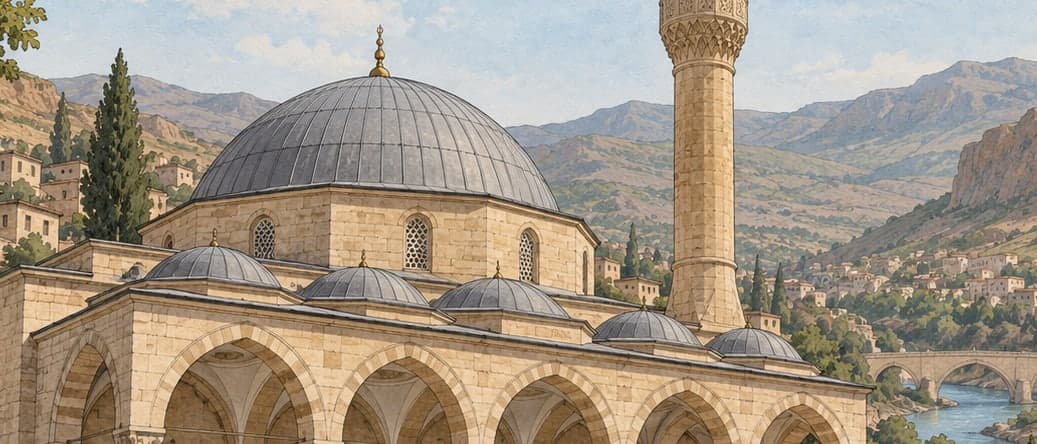
The tomb of Veysel Karani in the Baykan district of Siirt forms a complex together with the mosque beside it. When the buildings were first put up is not known. The place is mentioned in the tenth century in the works of the geographer al-Muqaddasi and the scholar Nasir-i Khusraw, and Evliya Çelebi refers to it in his Seyahatname as the mosque of Üveys el-Karani.
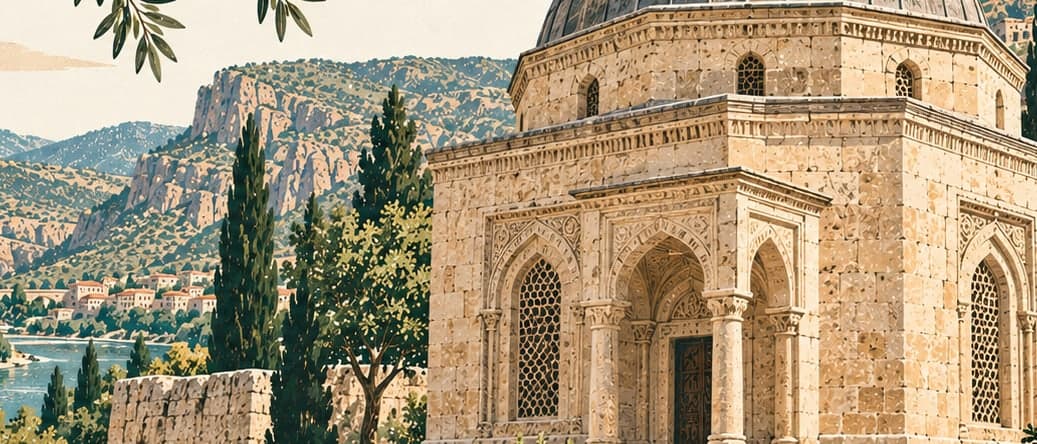
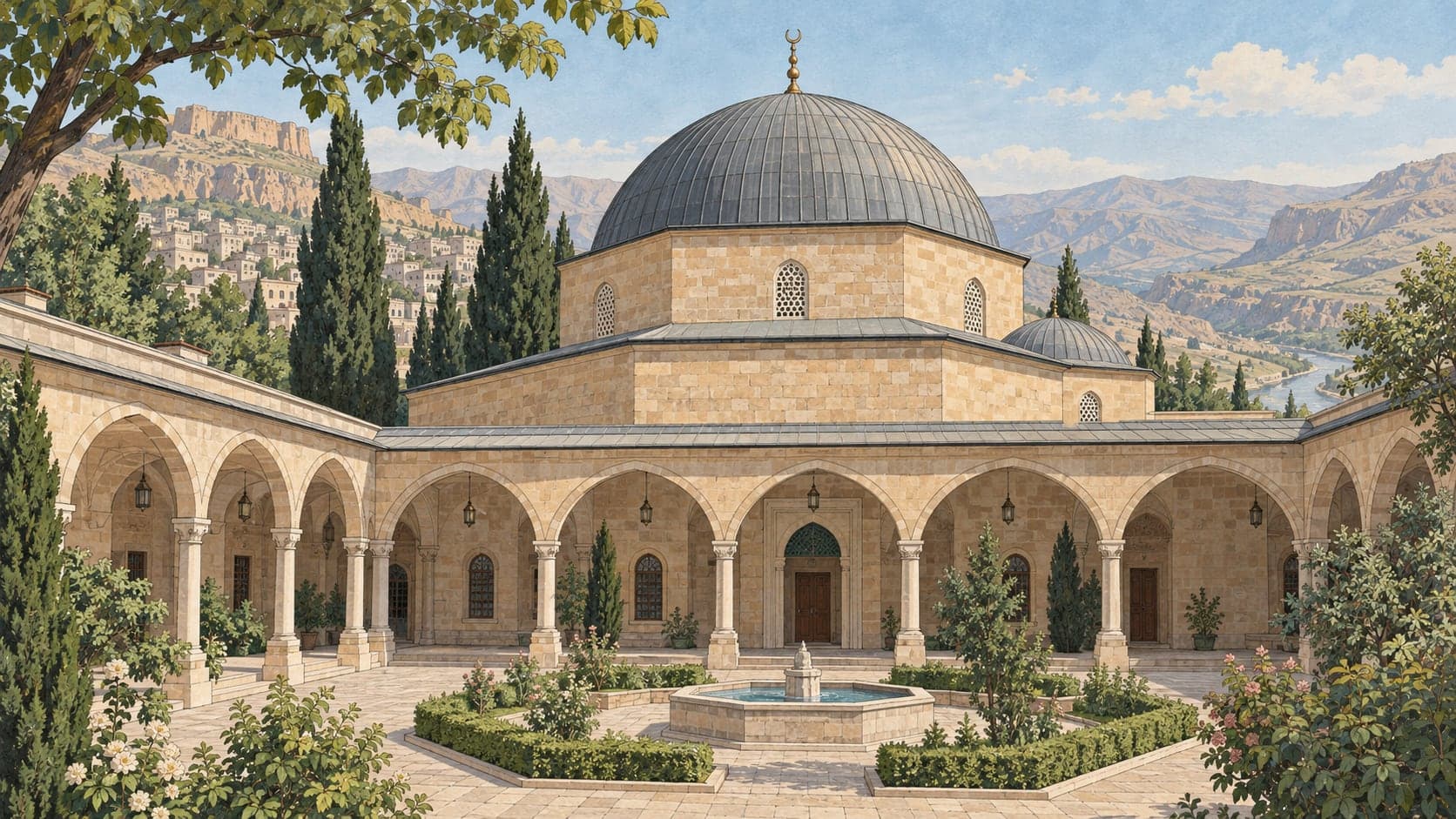
The tomb stands in the same courtyard as the mosque, the ablution fountain and the other buildings. It is a rectangle close to square, covered by a dome, with two doors on the north front. The wooden cenotaph, decorated with plant ornament, is enclosed by a wooden railing and set within a section under round and lobed pointed arches resting on columns — one at each corner worked in basketweave, two on each side with flower motifs. The walls are faced with new tiles up to the tops of the window openings, and above that, and on the dome, are painted plant ornament and calligraphy.
Üveys el-Karani, known in Anatolian folk culture as Veysel Karani, was born in the village of Karen in Yemen. For his ascetic life he was taken as a model by those who follow the mystical path, and it has been held that although he never saw the Prophet in the flesh he received inspiration from him in spirit. He spent his life as a shepherd, and the widespread belief is that he was killed during the caliphate of Ali.
The tomb is an important place of visit today, drawing a great many people from around the world, and commemorations of Veysel Karani are held here each year. Locally it is called simply the ziyaret — the visit.