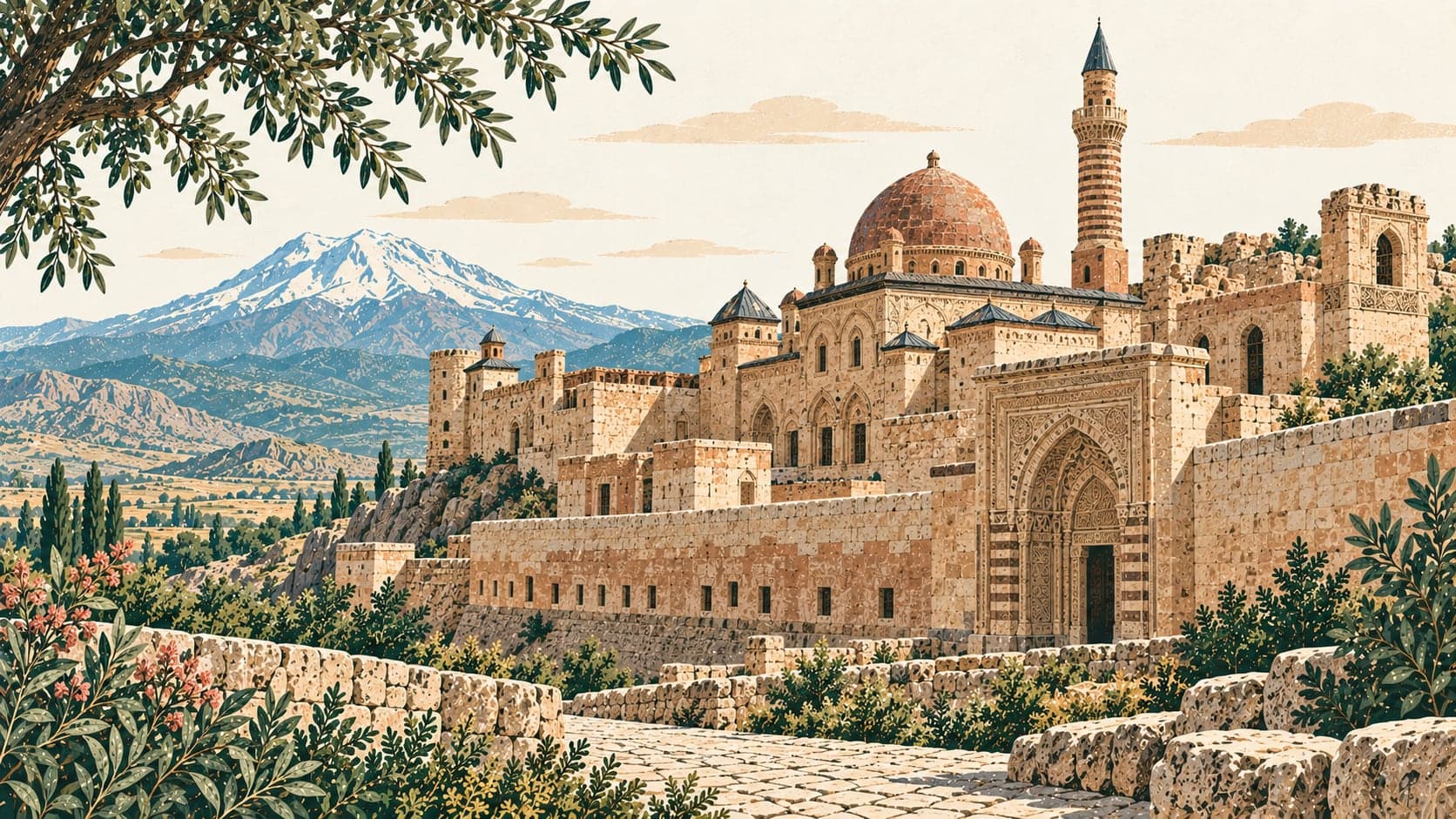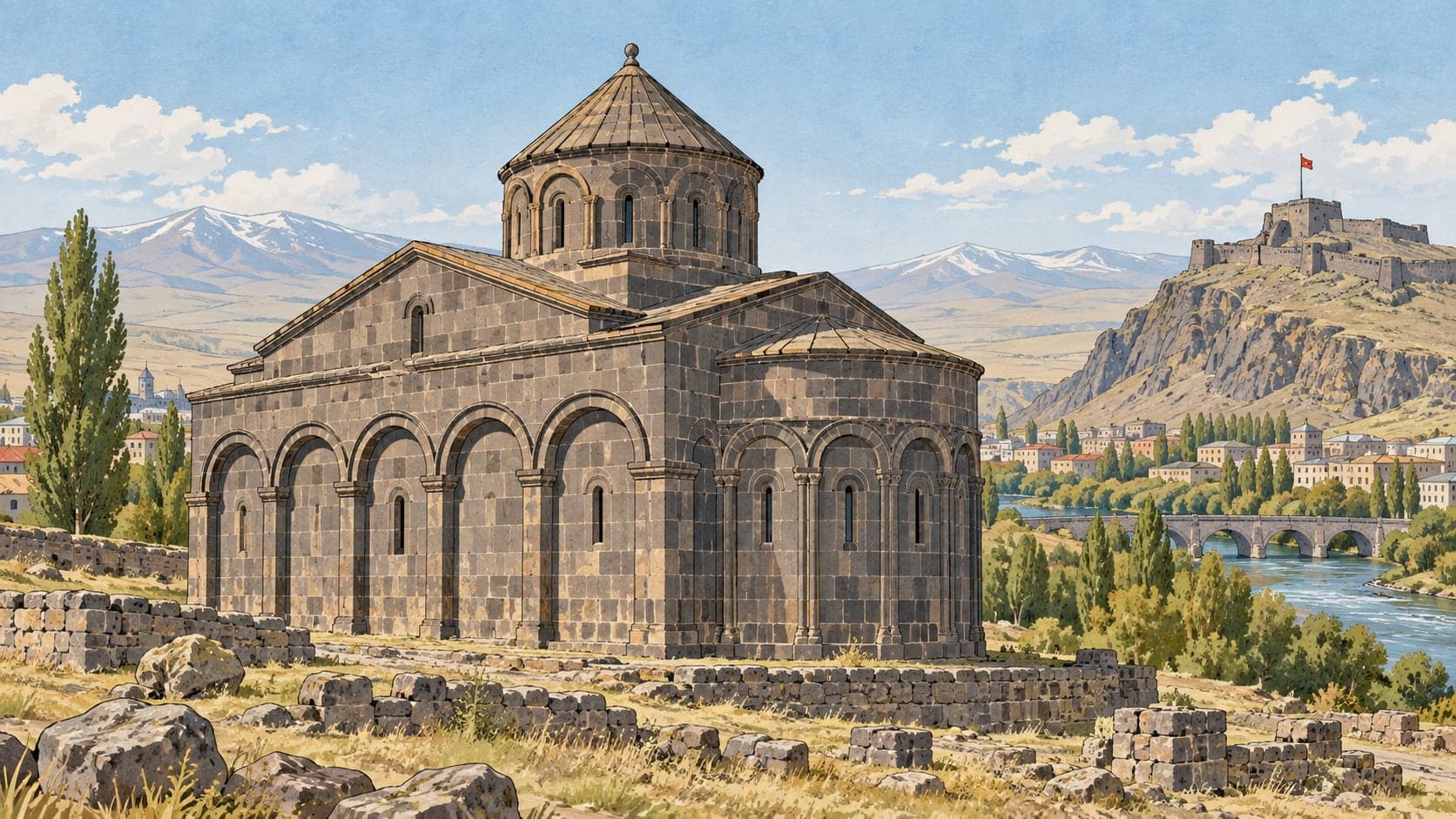
Our compilation for Ağrı, not an official route, and it divides cleanly in two. Doğubayazıt holds one half. İshak Paşa Palace is not a single building but a complex — mosque, tomb, library, cellars, harem and selamlık — begun under the Çıldır Atabegs and finished nearly a century later, and it has stood on UNESCO's Tentative List since 2000.
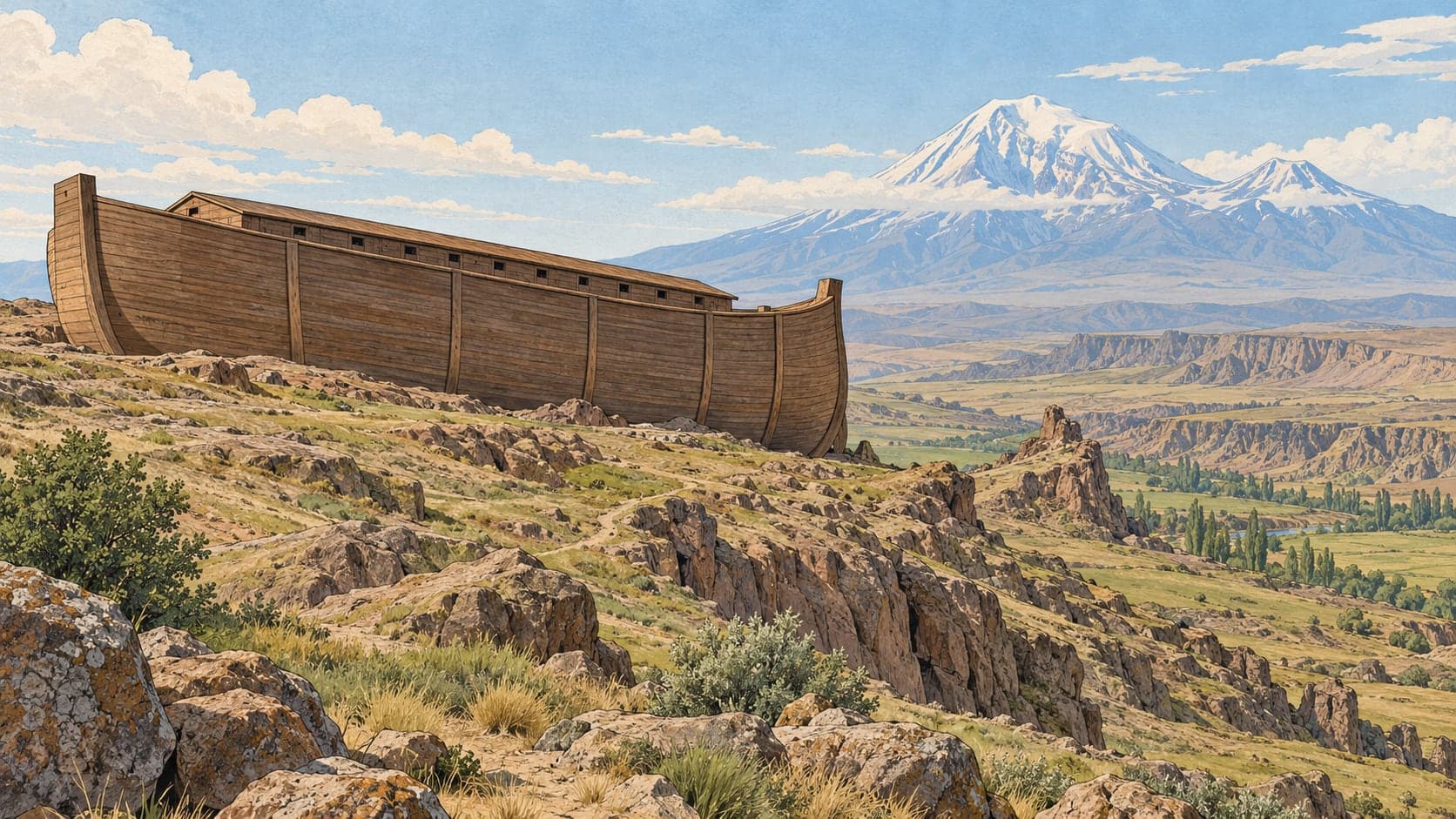
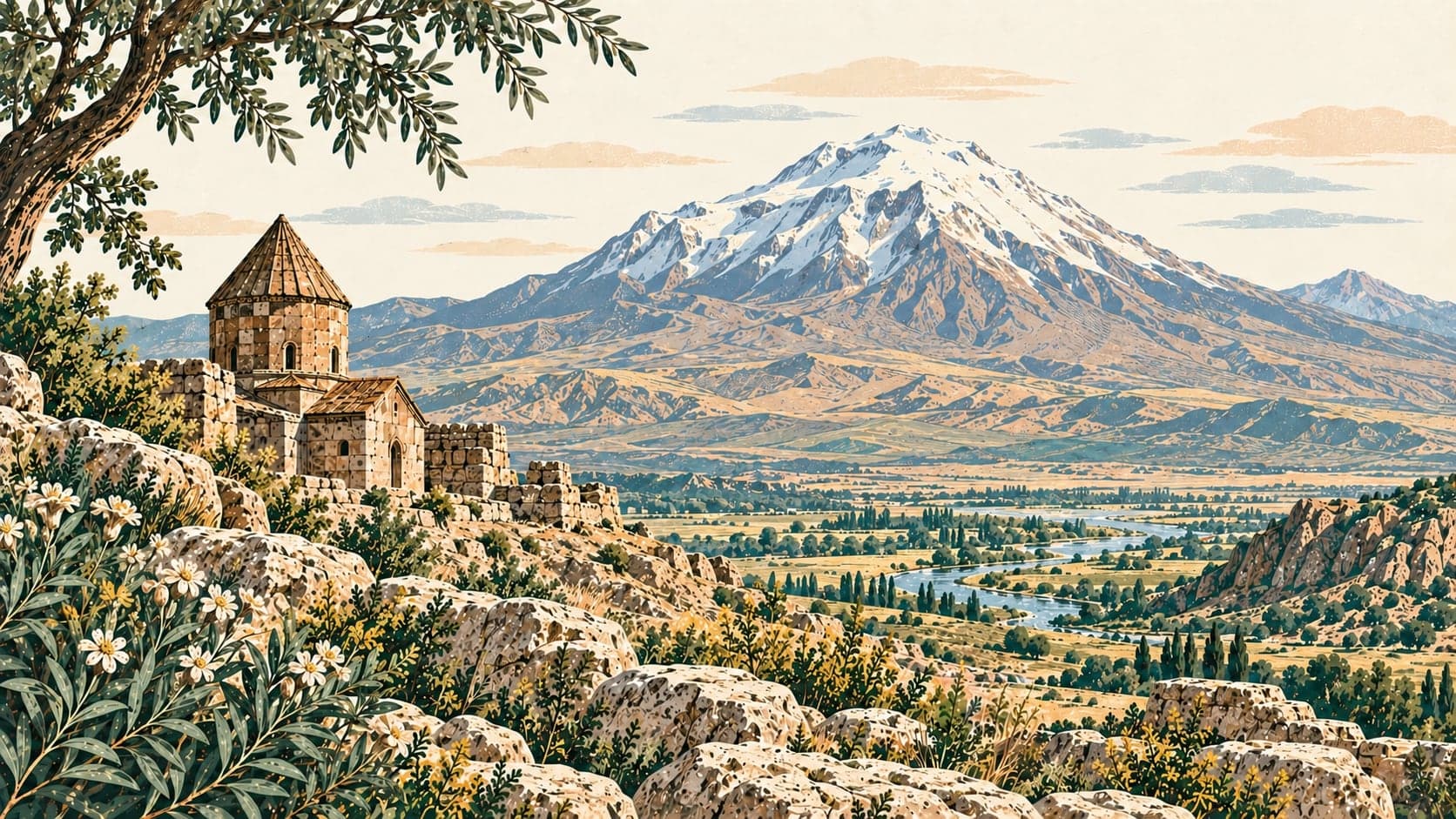
The mountain is the other fixed point of that half. Ağrı Dağı is the highest in the country and carries a different name in every language spoken around it. Nearby, on the slopes between Telçeker and Üzengili, the ground has taken the outline of a ship; the district authority is careful about what that is — a natural monument, a shape in the earth — and the source itself records the claim attached to it as disputed.
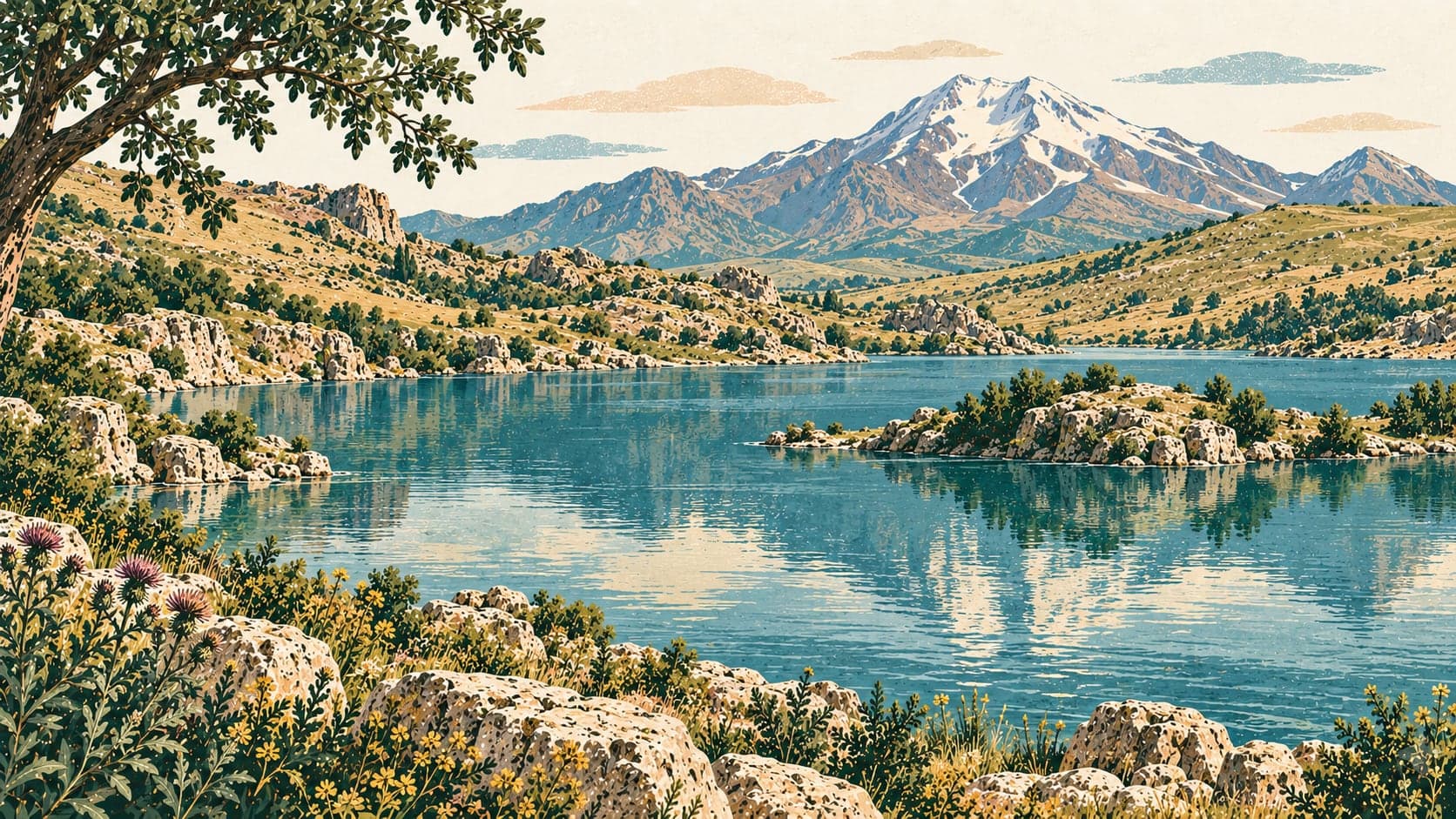
The other half runs west and north of there: the tomb tower at Hamur, standing in a cemetery above the valley and unlike anything else in Turkish-Islamic tomb building; Balık Gölü, a volcanic barrier lake high on the Aras mountains; and the four thermal springs at Diyadin, spread apart with the Murat river running through the middle of them. These are far enough from the Doğubayazıt group to be kept separate. What each place is, and who says so, is on its own page.