Guide
Amasra Museum grew out of a practical problem: portable antiquities kept turning up in and around this ancient settlement. Archaeological and ethnographic material collected from 1955 onwards was first shown in the municipal building, and from 1982 in the museum's present home.
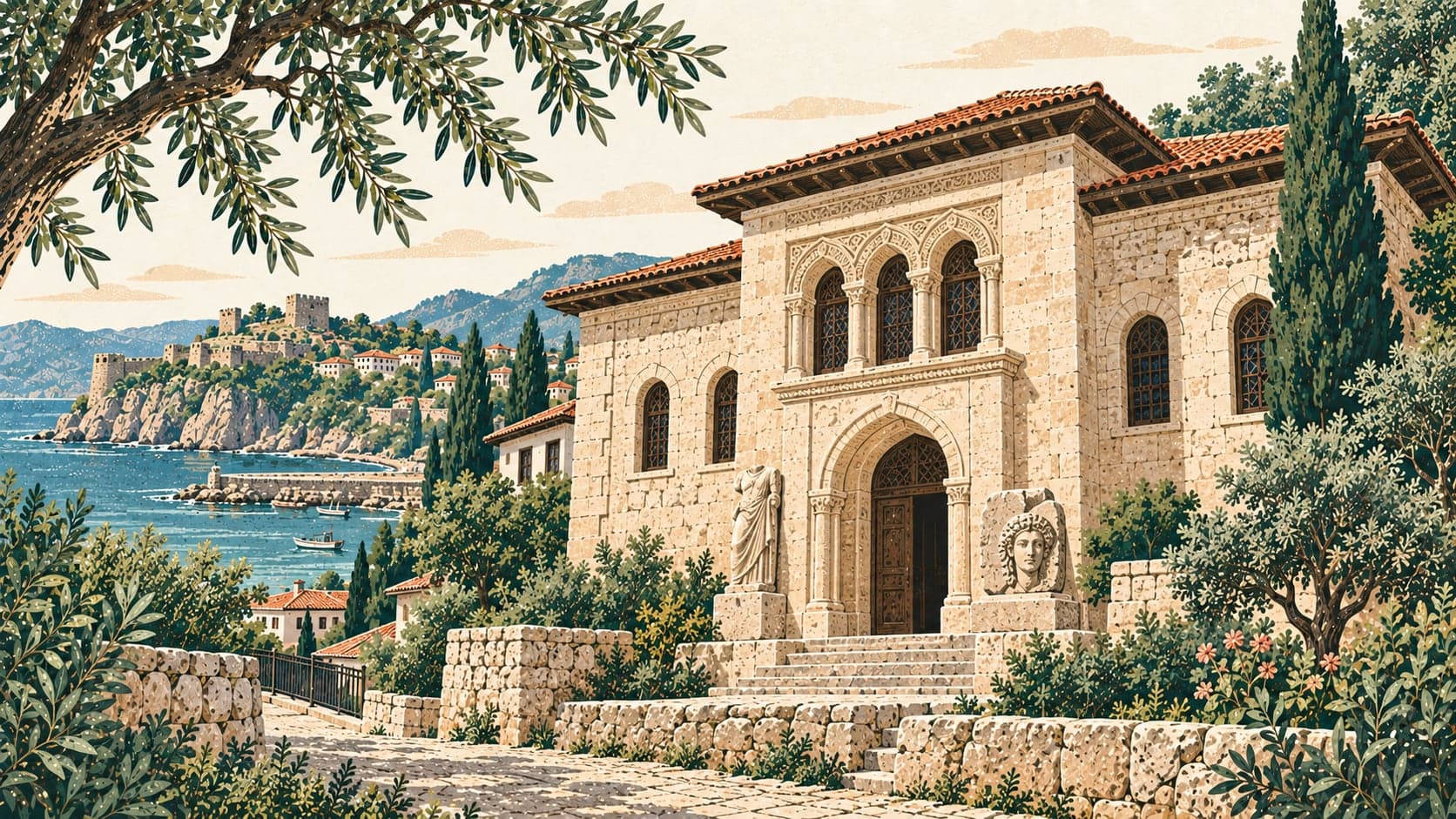
That building has a history of its own and is a registered historic structure. Work began on it in 1884 as a naval school but it was never finished; the Ministry of Culture bought it in 1976, restored it, and opened it as a museum in 1982.
There are four halls. The first holds terracotta and glass scent bottles, gold and bronze ornaments, amphorae and jugs, bronze figurines, bracelets, crosses, weapons, lamps and vessels from the Hellenistic, Roman and Byzantine periods, together with gold and bronze coins running from the Hellenistic to the Ottoman. The second is the sculpture hall, showing Roman imperial statuary, and at its centre the armoured torso of the emperor Hadrian, which the ministry describes as a unique piece among Turkish museums.
The third hall carries marble work of the Hellenistic, Roman, Byzantine and Genoese periods — statues, heads, grave stelae, altars, column capitals and bases. The fourth is ethnographic: Ottoman-period clothing reflecting local dress, silver ornaments, bed and pillow covers and carpets. Stone work from the Hellenistic, Roman, Byzantine, Genoese and Ottoman periods stands in the museum garden.