Guide
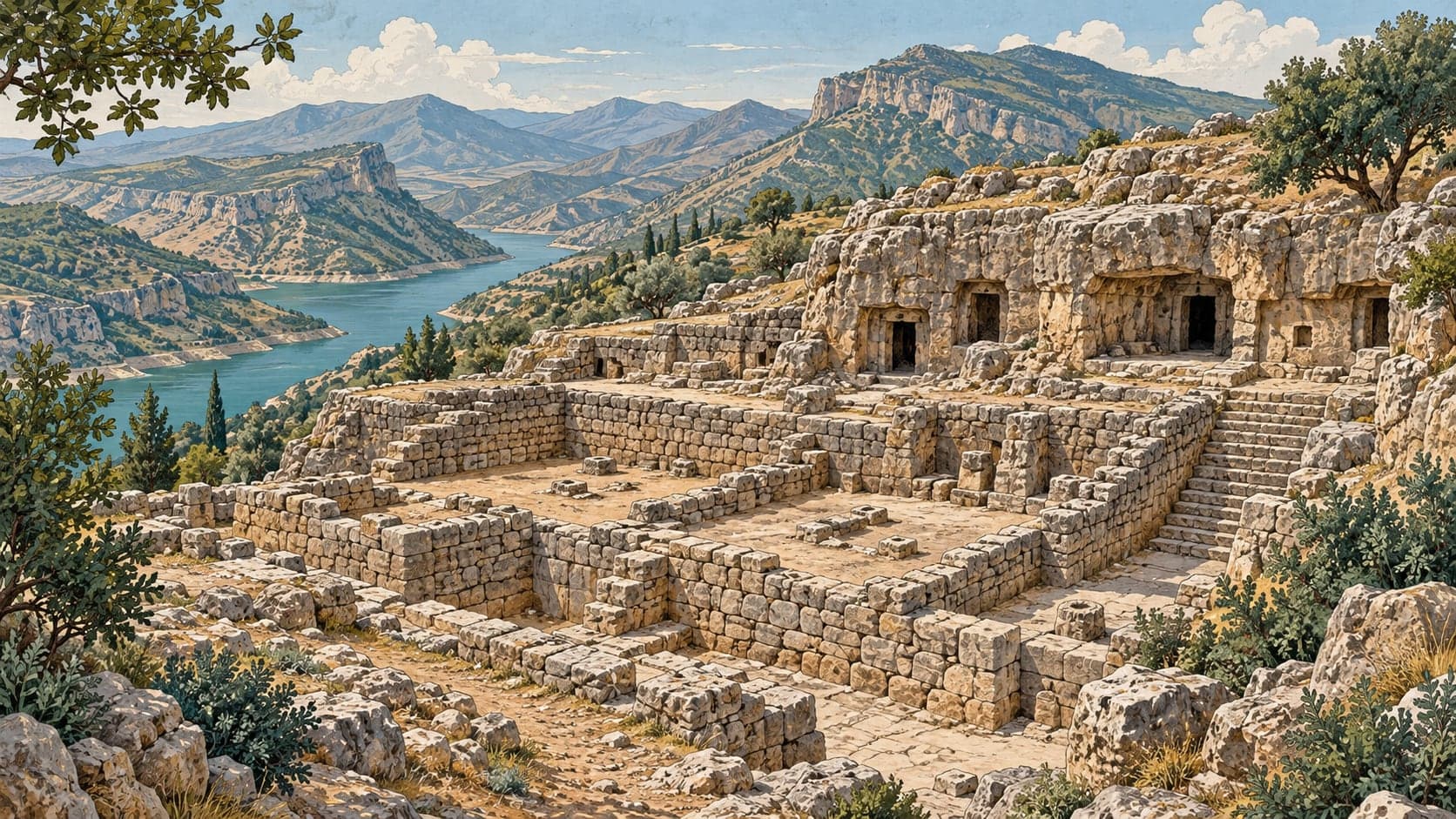
Arsameia sits above the Kahta stream, opposite the old Kahta castle, 26 kilometres from the town of Kahta in Adıyaman. Also known as Arsameia on the Nymphaios, it was founded — according to the inscriptions of King Antiochus I — in the early 2nd century BC by Arsames, ancestor of the Commagene line, as the kingdom's summer capital and seat of administration. Most of what survives, however, is the work of Antiochus I himself.
The hill carries the remains of the summer palace, and on the platform above it the burial place Antiochus built for his father, King Mithridates I Callinicus. A relief stele of Mithridates stands on the ceremonial way that climbs from the south to the tomb. The site also holds what the Ministry describes as the longest Greek inscription so far found in Anatolia and the longest of its own age: a text that sets out the founding of the city, the building Antiochus carried out here, the architecture and reliefs of the region, its religious structures, the laws of the Commagene kingdom, the royal line, and what was to be done during religious ceremonies.
Above the inscription stands the best-known relief on the site, Antiochus I shaking hands with Heracles. Below it a stairway drops steeply into a rock-cut tunnel some 158 metres long, whose purpose has never been established — it remains an open question rather than a solved one. Access is by private car or on an organised tour; the Ministry's directions place it at the 60th kilometre of the Adıyaman–Kahta–Nemrut road.