Guide
Nemrut Dağı National Park lies across the provinces of Adıyaman and Malatya, taking in Mount Nemrut and the country around it. Within the park, in the Kâhta district, is an archaeological site holding an ancient city of the kingdom of Commagene. The park is reached by the road from the centre of Adıyaman to Kâhta, there is access from Adıyaman airport, and services run from both Adıyaman and Kâhta to the mountain and the other historic places.
The tumulus and sanctuaries of Antiochos, king of Commagene, on Mount Nemrut are what the park is chiefly known for. The other cultural remains within it are Arsameia, also called Eskikale, along with Yenikale, the Karakuş tumulus and the Cendere bridge.
In this region, known in antiquity as Commagene, an independent kingdom was founded by Mithradates I, and it rose in importance in the years when his son Antiochos I ruled, between 62 and 32 BC. The kingdom's independence came to an end in AD 72 with a war against Rome that it lost.
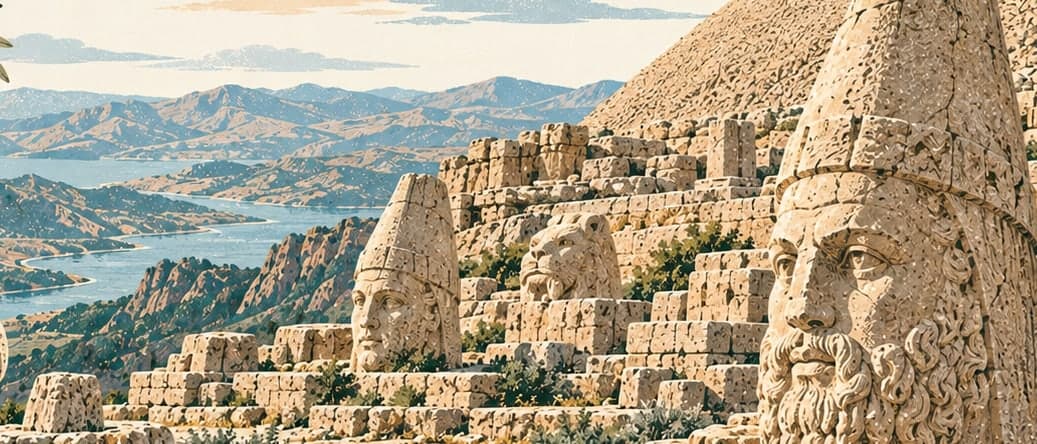
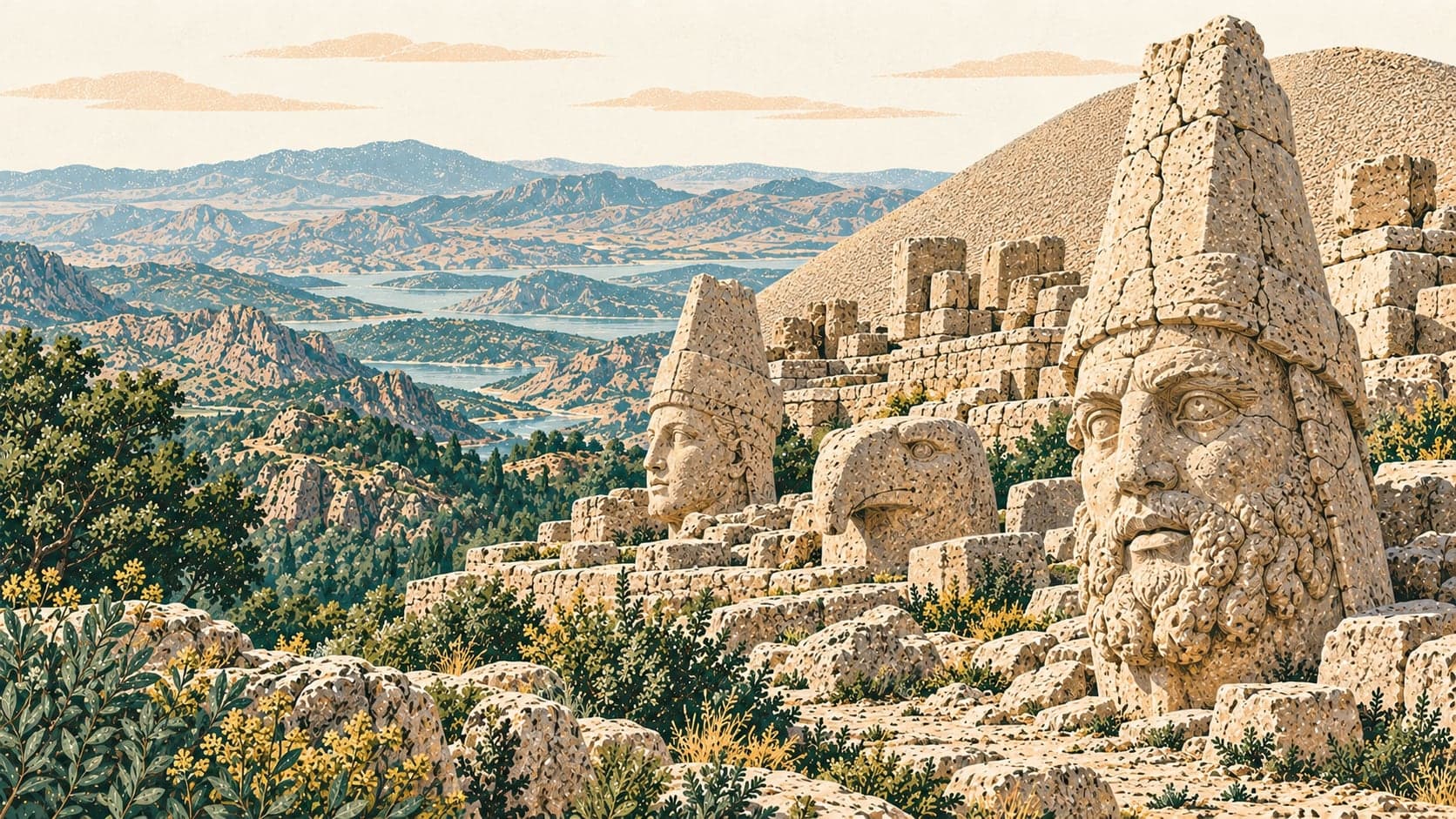
The remains on the summit of Nemrut are not a settlement but the tumulus of Antiochos and his sanctuaries. The tumulus stands at 2,150 metres on a peak commanding the passes and plains of the Euphrates. The king's bones or ashes are thought to have been placed in a chamber cut into the bedrock and covered by the tumulus, which stands fifty metres high and 150 metres across. The approach is from the north, with terraced courtyards to east and west where the religious ceremonies were held.
On both terraces, colossal seated figures reaching seven metres in height are ranged between statues of lions and eagles, framed by orthostats — large stone blocks set upright — carrying inscriptions and reliefs.
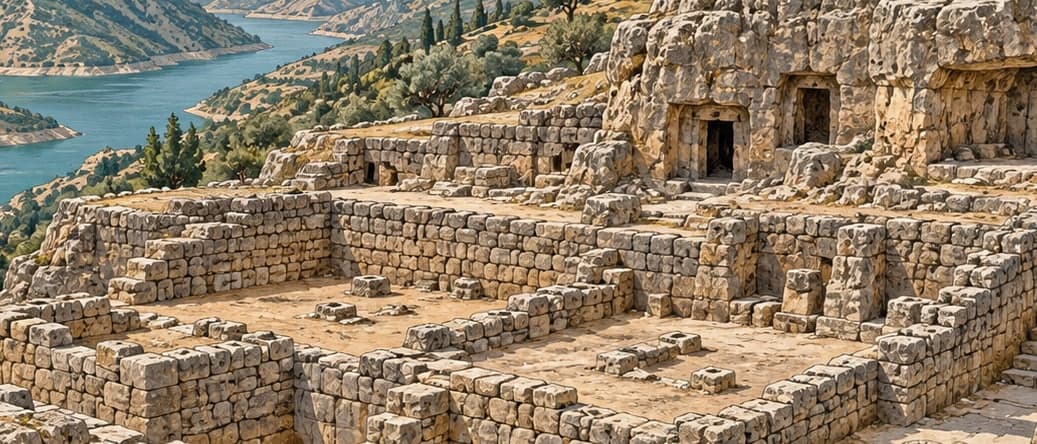
Near the village of Eski Kâhta lies Arsameia, the capital of Commagene, where the sanctuary of Mithradates stands. The Cendere bridge crosses the Cendere stream, a branch of the Kâhta stream, at a narrow point, built as a single arch resting on two outcrops of bedrock; according to the inscription on its piers it was built by the cities of Commagene in honour of the Roman emperor Septimius Severus, who reigned between AD 193 and 211, and of his wife and sons. Ten kilometres south-west of Arsameia stands the Karakuş tumulus, twenty-one metres high, where the women of the royal house were buried.
- Designated
- 7.12.1988
Entry fee
- Black Sea group 3 · category 1 · Per person
- 65 ₺
- Southeastern Anatolia group 1 · category 1 · Per person
- 50 ₺