Guide
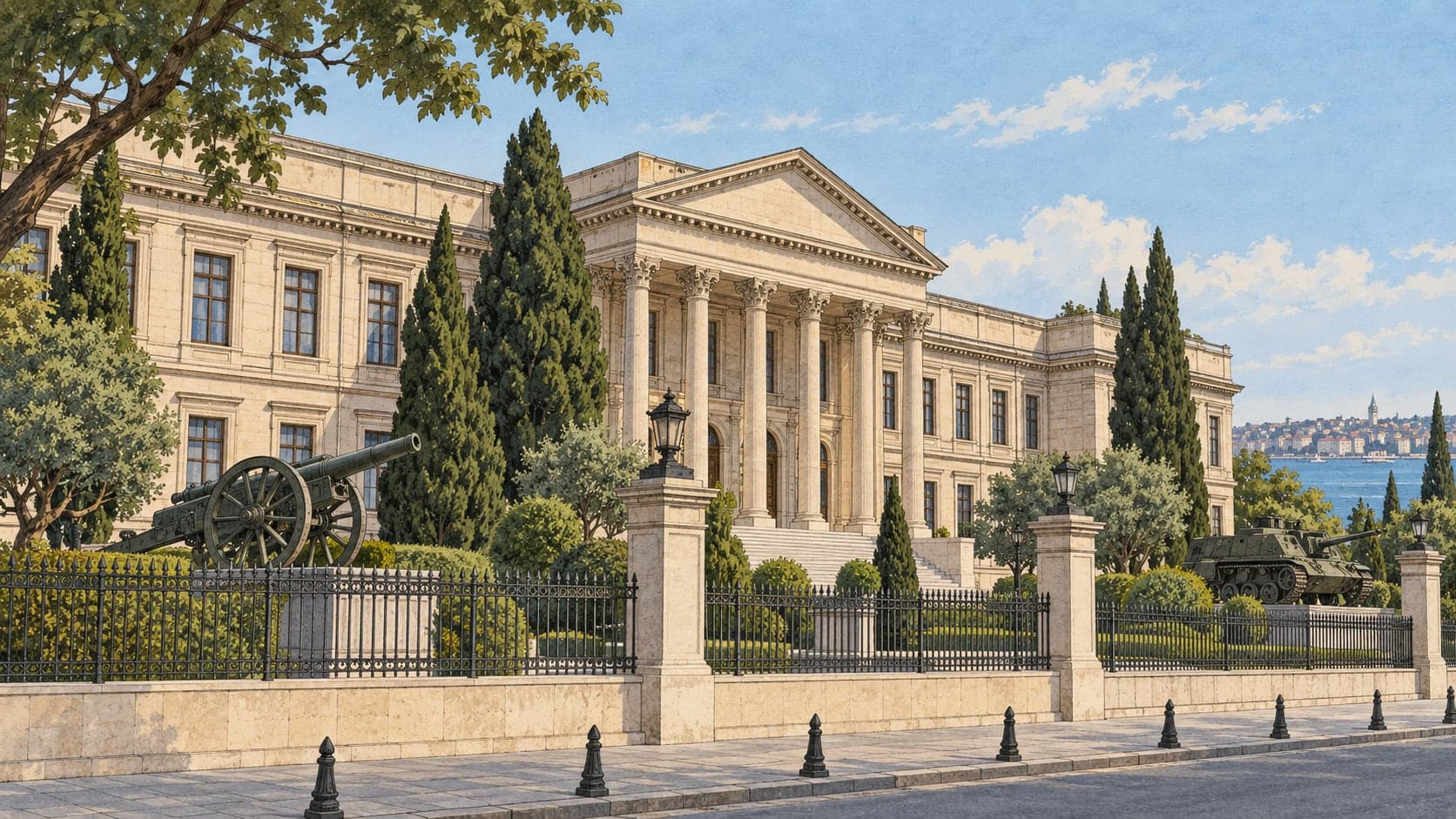
The Military Museum at Harbiye in İstanbul traces its origins to the fifteenth century. After the conquest of 1453 the church of Hagia Eirene was arranged as the Cebehane, where valuable weapons, arms and equipment were gathered. In 1726 everything in it was reorganised and a new institution created under the name Dar-ül Esliha.
Museum-keeping in the modern sense began here through the efforts of Damat Ahmet Fethi Paşa, marshal of the arsenal, in 1846 — the date the portal treats as the real founding both of Turkish museum practice and of this museum. Shortly after him the collections at Hagia Eirene took the name of a museum for the first time, as the Müze-i Hümayun. Once the museum organisation existed and the number of archaeological objects in particular grew, those objects were moved to the Çinili Köşk, which is how the İstanbul Archaeological Museums began.
Ahmet Muhtar Paşa enriched the arms collections through public notices and official correspondence. With its library, its cinema, its shooting range, its publications, its costume collection and its mehter band, the museum was brought into line with what a museum was expected to be.
It carried on at Hagia Eirene until 1940, when work was suspended for a period out of concern that the Second World War might reach Türkiye. After that danger passed, the objects stored at the Maçka arsenal from 1949 began to be displayed again from 1959 in the gymnasium building of the military academy. That building proved too small for the collections and left no room for development, so from 1966 restoration work was carried out on the old academy building with a view to using it as the museum, and it opened in a new arrangement on 10 February 1993.
Visit status for this record: open to visitors.