Guide
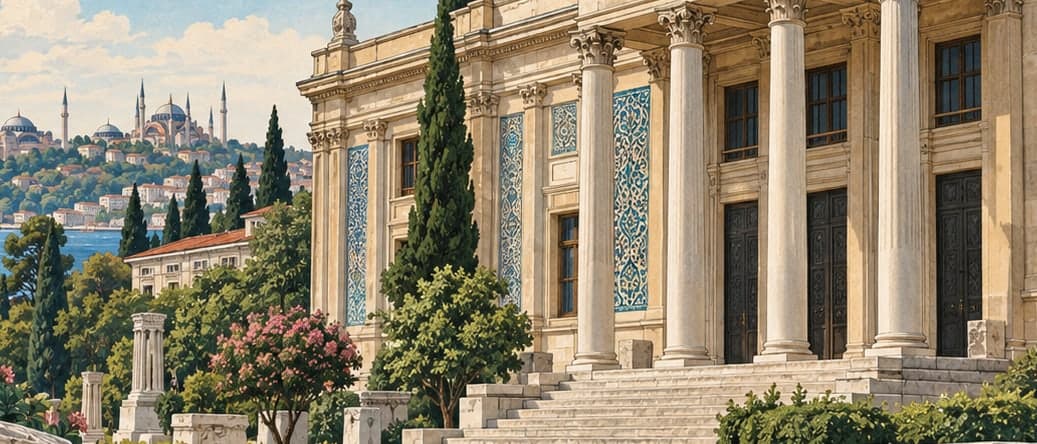
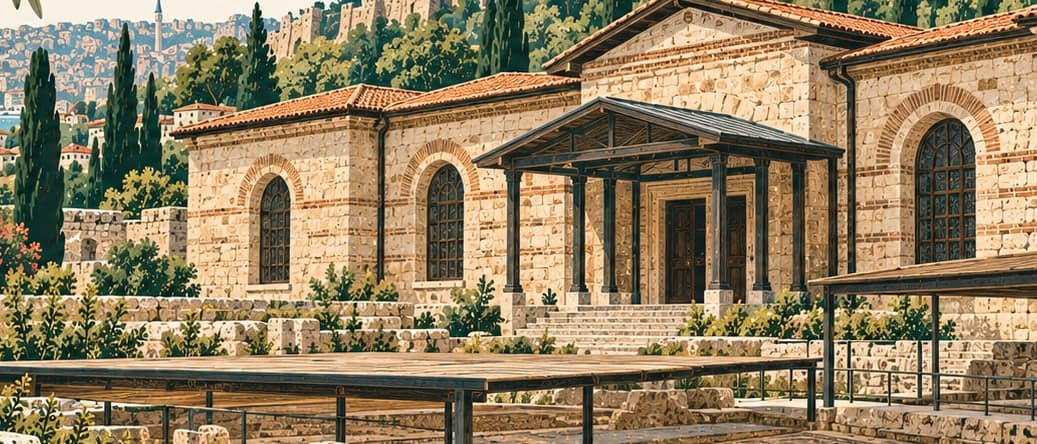
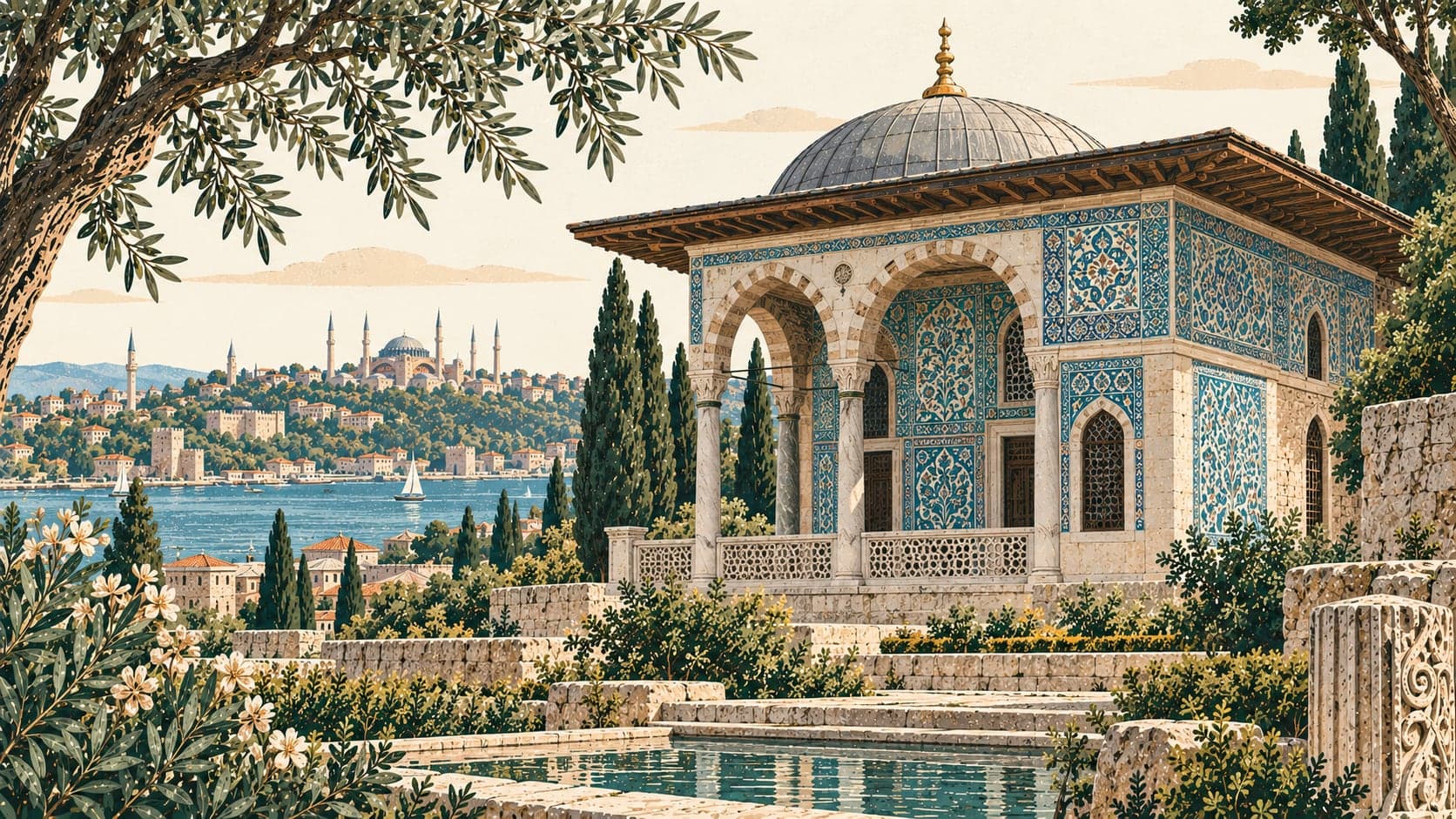
The Tiled Kiosk stands within the outer walls of Topkapı Palace and is dated to 1472 by the tiled inscription above its main entrance. Mehmed II had three kiosks built in the outer gardens of the palace, each reflecting a different architectural tradition — Persian, Byzantine and Ottoman — and of these only the Tiled Kiosk, the one where Persian influence is plain, has come down to us.
It was built as a summer palace or kiosk for the sultan. The architect is not certainly known, though some accounts name Atik Sinan. The building is also called the Glass Kiosk or Glass Palace. Between 1875 and 1891 it served as the Imperial Museum, and in 1953 it opened to the public as the Museum of Turkish and Islamic Arts; later it was taken into the İstanbul Archaeological Museums. What is shown here today is İznik tile and ceramic work of the Seljuk and Ottoman periods.
The kiosk was built in a Timurid manner of Persian and Central Asian origin, which was not common in Ottoman building. The plan runs out equally from the centre in four directions, and the building has two floors, though only one is visible from the main entrance because the ground slopes. The glazed brick on the outside carries Central Asian influence, associated in particular with the Bibi Khanum mosque in Samarkand. The square, axial plan stands for the four quarters of the world and, in architectural terms, for the universal authority of the sultan.
The brickwork set in stone frames on the front and the polygonal columns are typical of Persian architecture. A grilled door opens into the basement, and two flights of stairs above it climb to a covered colonnaded terrace, the arcade of which was rebuilt in the eighteenth century. The large door in the middle passes through an arch framed in green tiles into an entrance space and then into a courtyard under a high dome, and behind that lie three royal chambers, the middle one laid out as an apse.
Franz Babinger suggested that the building may be the work of craftsmen from Konya and Larende brought to İstanbul after the defeat of the Karamanids in 1465 and 1466. Angiolello, who was in the retinue of Prince Mustafa, governor in Karaman, between 1471 and 1474, described the building as made in the Persian manner and decorated in the Karamanid style, which points to an architectural circle connected with the Karaman region.