Guide
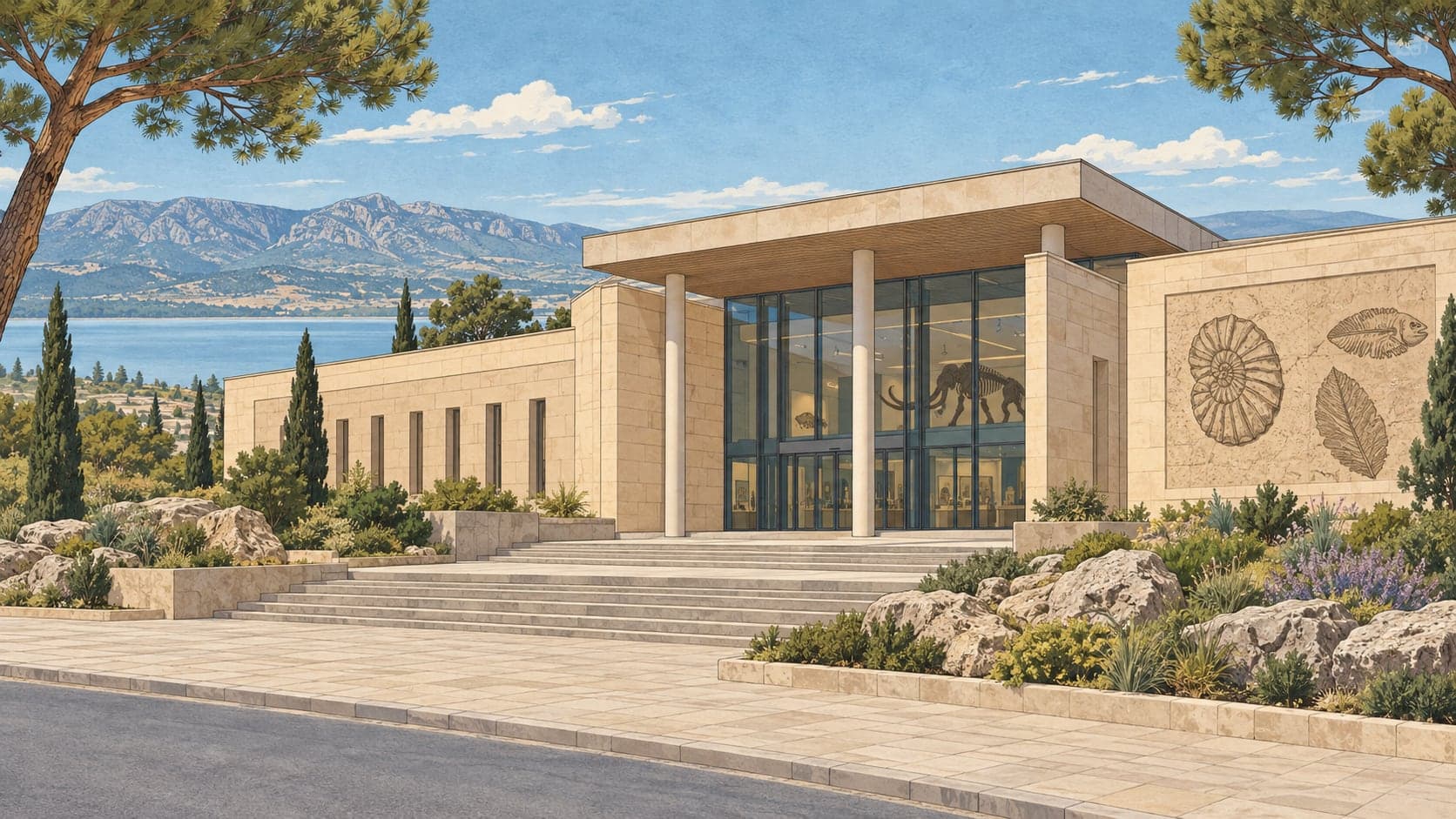
Burdur's natural history museum is built on one fossil bed. The Burdur basin — the largest closed basin in southwest Anatolia — is floored by the lake sediments of the Burdur Formation: tectonic movement turned marshland into a lake, known as the Burdur Pliocene Lake, and the Elmacık vertebrate fossil bed on its southern side is one of the richest in the Lakes Region.
The collection came out of that bed directly. When the Elmacık irrigation pond was built on the Elmacık stream at Elmacık village in the Kemer district in 1998, fossil beds of vertebrate mammals were exposed around it. Scientific excavation followed, run by the Burdur Archaeological Museum Directorate with the permission of the ministry's Directorate General of Cultural Heritage and Museums, and four seasons of work produced the animal fossils that the museum now displays.