Guide
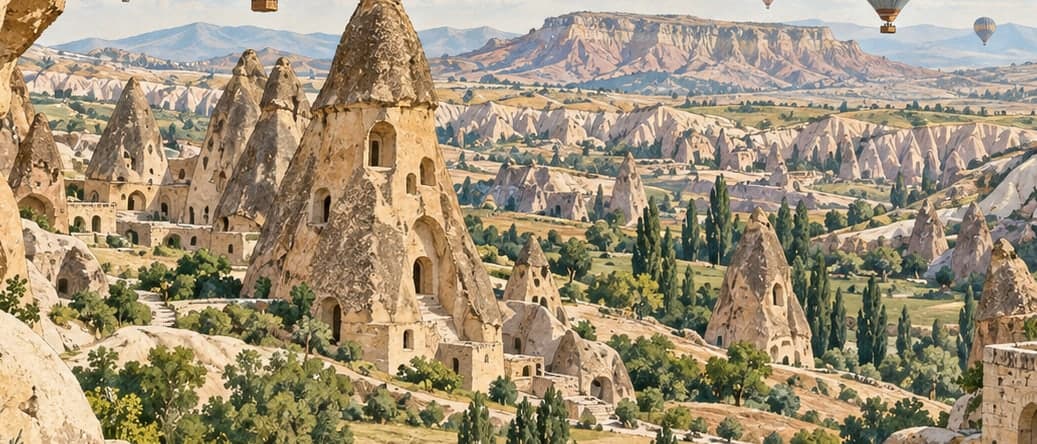
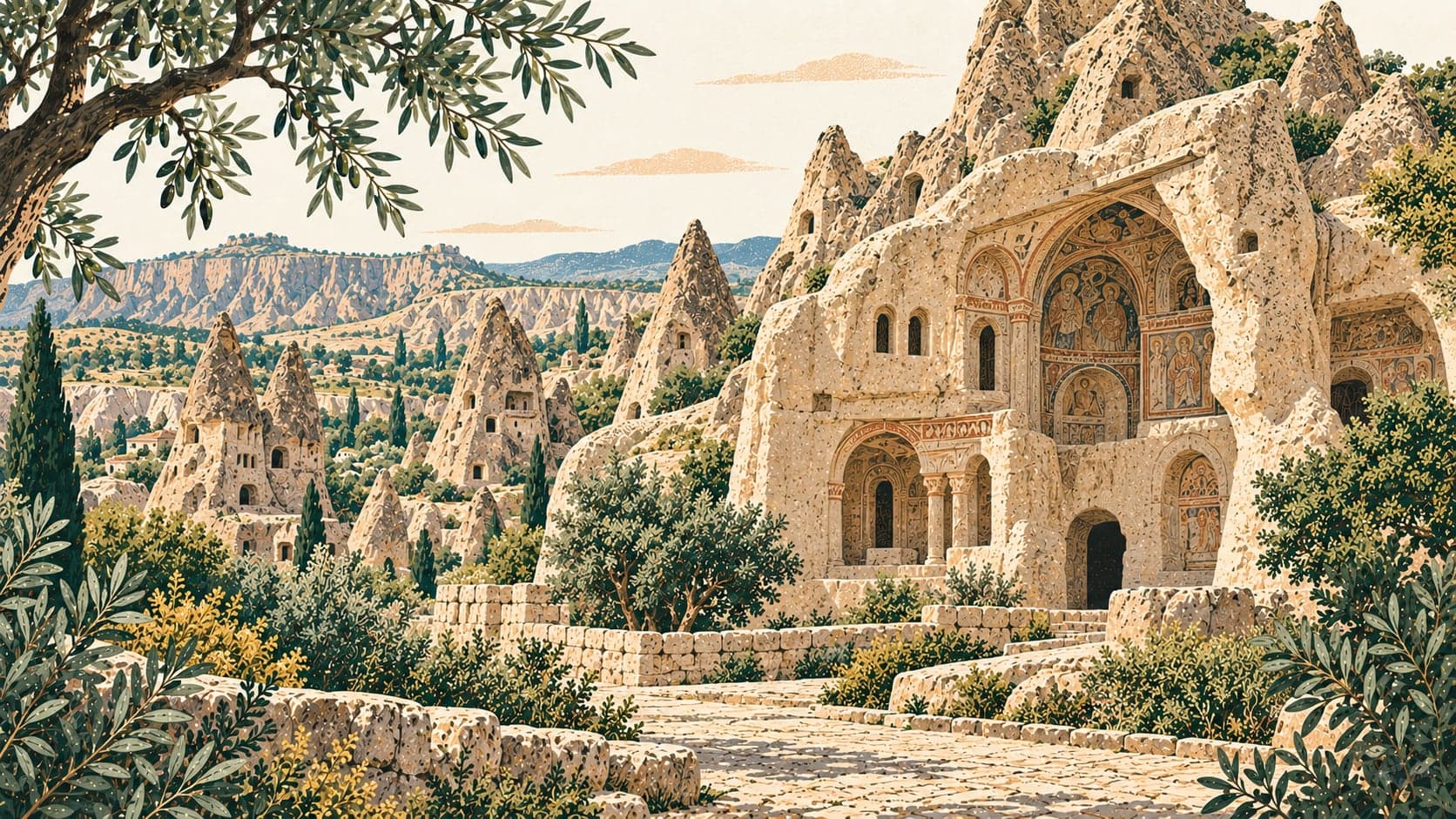
Göreme owes its shape to the geology around it. The rock here is soft enough to be carved with ease, and that single fact opened the area to human settlement: people did not build on the land so much as cut into it.
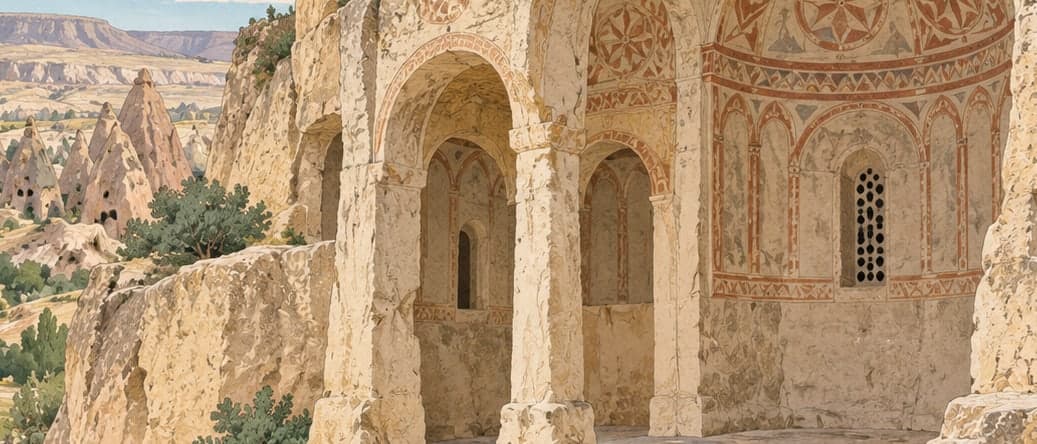
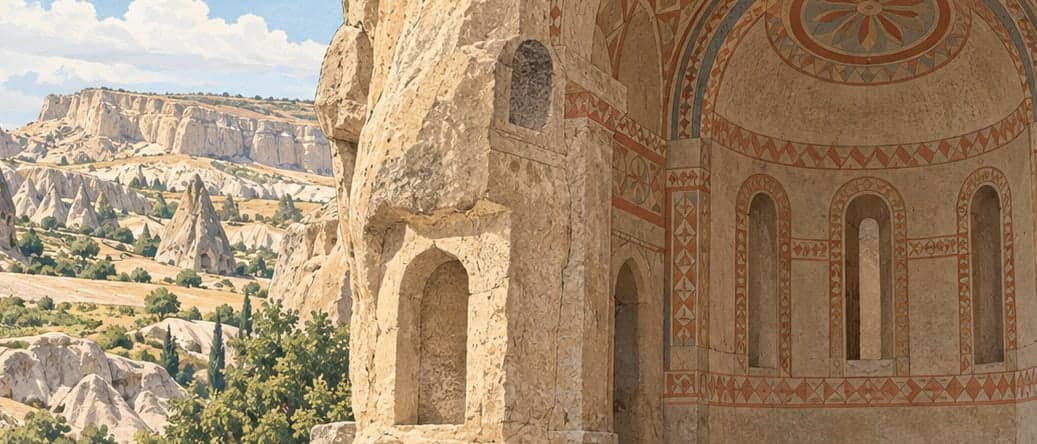
The place is one of the important centres in the history of Christianity. Basil the Great, bishop of Caesarea, came to the region in the fourth century, began the life of the hermit monk here and spread his teaching. The broken terrain offered natural shelter to those seeking seclusion, and above all to Christians fleeing Arab raids. Between the seventh and thirteenth centuries they settled here, cut into the rock and built monasteries and churches. After the end of iconoclasm, from 842 AD onward, the churches were decorated with frescoes showing scenes from the Gospels.
Within the bounds of the Göreme Open Air Museum stand the principal structures: the Nunnery and the Monastery, the Church of St Basil, the Apple Church, the Church of St Barbara, the Snake Church, the Dark Church, the Sandal Church and the Buckle Church. All are visited on the museum ticket. The Buckle Church lies about fifty metres below the museum entrance but belongs to the complex.
Just inside the entrance, on the left, a mass of rock six or seven storeys high is known as the Nunnery. It contains a refectory, a kitchen, a chapel and monks' cells linked by tunnels. Because of the danger of erosion the upper floors are closed, and only the refectory on the ground floor can be seen today. The Monastery stands to the right of the entrance, but it has worn away so badly that it is closed to visitors.