Guide
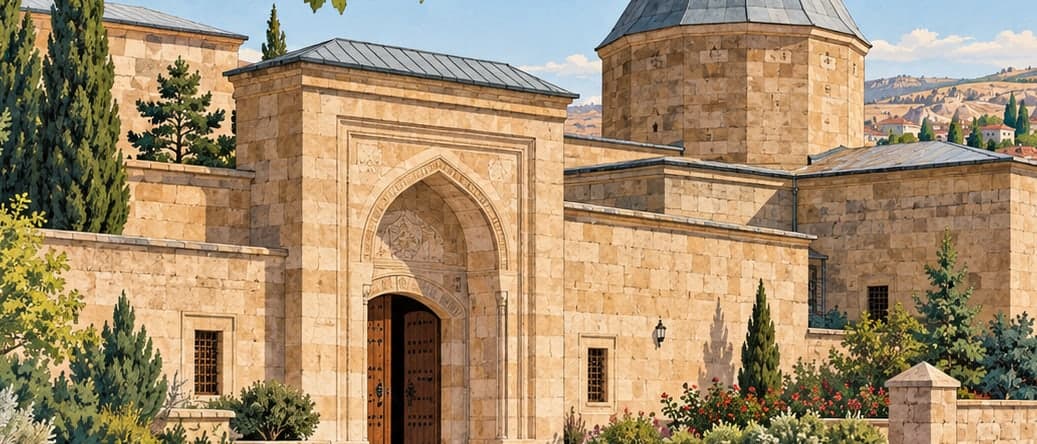
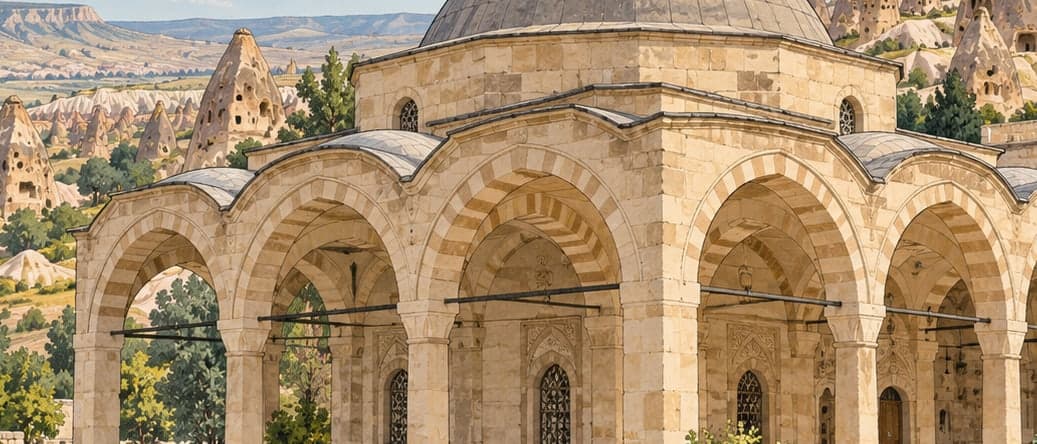
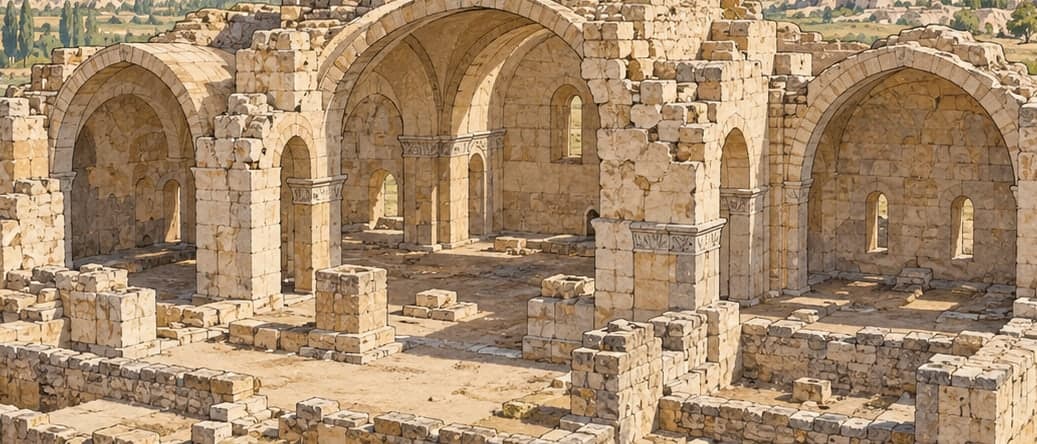
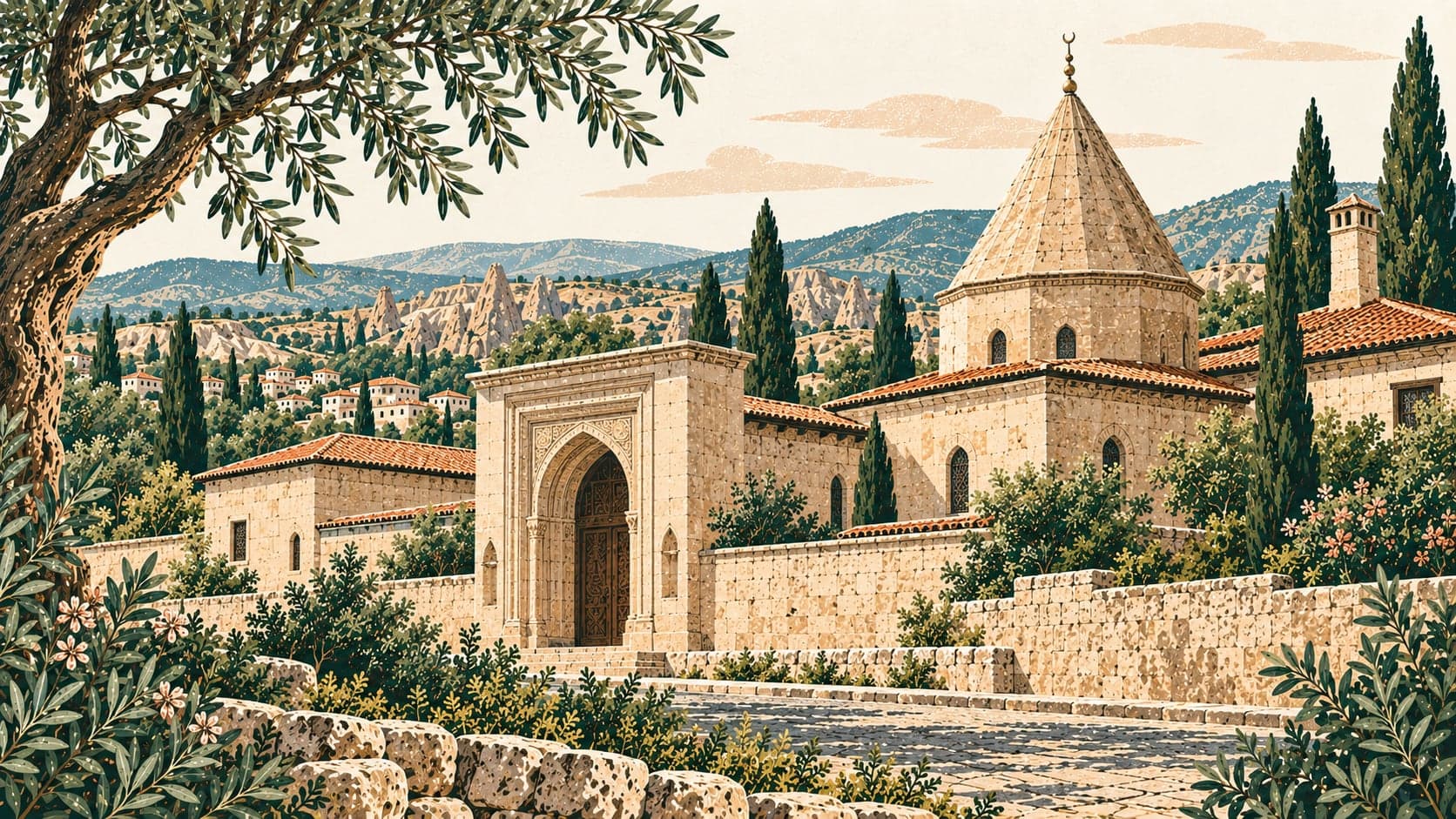
The complex of Hacı Bektaş Veli was founded in the thirteenth century by the Turkish mystic of that name and took its present form through later additions and repairs.
He is held to have been born in Khorasan in 1248 and to have died in 1337 at the place then called Sulucakarahöyük, the modern Hacıbektaş. He was trained in the tradition of Hoca Ahmet Yesevi and came to Anatolia by way of Iran, Iraq, Arabia and Syria. His road through Anatolia ran first to Antep and Antakya, then through Maraş and Sivas, on to Tokat and Amasya, and by way of Çorum and Yozgat to Kırşehir before he settled at Sulucakarahöyük. It was here that he spread a philosophy resting on tolerance, love of people and social equality.
The lodge was closed on 30 November 1925, together with the other dervish lodges, under law 677 of the Grand National Assembly. It was restored between 1957 and 1964 under a project prepared by the directorate general of foundations, and opened to visitors as an ethnography museum on 16 August 1964.
The tomb is regarded as the centre from which the teachings of the Bektaşi order emerged and spread through the world. Because it is bound up directly with a belief system of international importance, and because the rituals and symbols of that system are worked into the architecture and the interior of the tomb itself, it was put forward for the UNESCO World Heritage List in 2012.
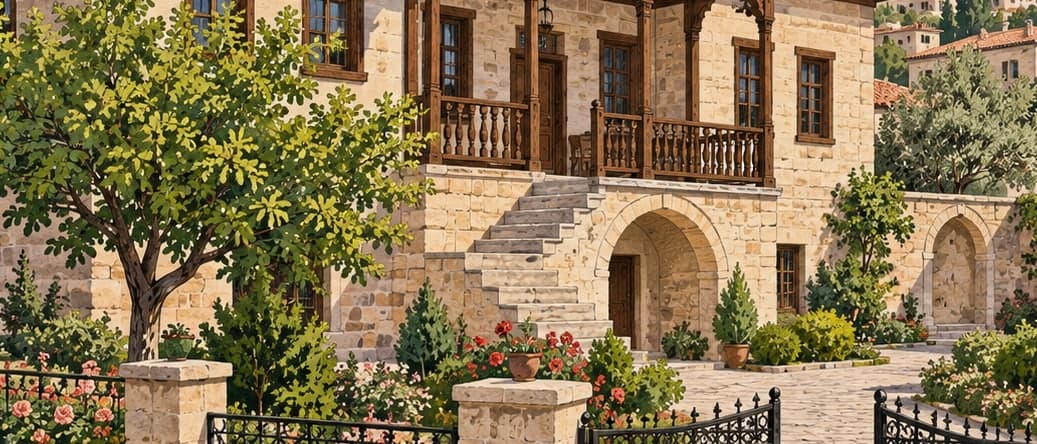
The complex is laid out around three courtyards, in the manner of the old Turkish palaces, and its parts are placed around those courtyards according to what each was for. The order inside the pîr evi, the house of the master, was close to military: a unit was provided for every need, each named in the vocabulary of the order — the guest house, the horse house, the bread house.
Each unit was organised as an ocak, a hearth, headed by a baba — the father of the guest house, of the horse house, of the bread house — with dervishes under him, and all the babas answered to the dedebaba who held the post at the pîr evi. Those who wished to enter the order first served at the Hanbağı and Dedebağı farms attached to the house; if they passed the first trials there, they could rise to service within the pîr evi itself, beginning at the horse house.