Guide
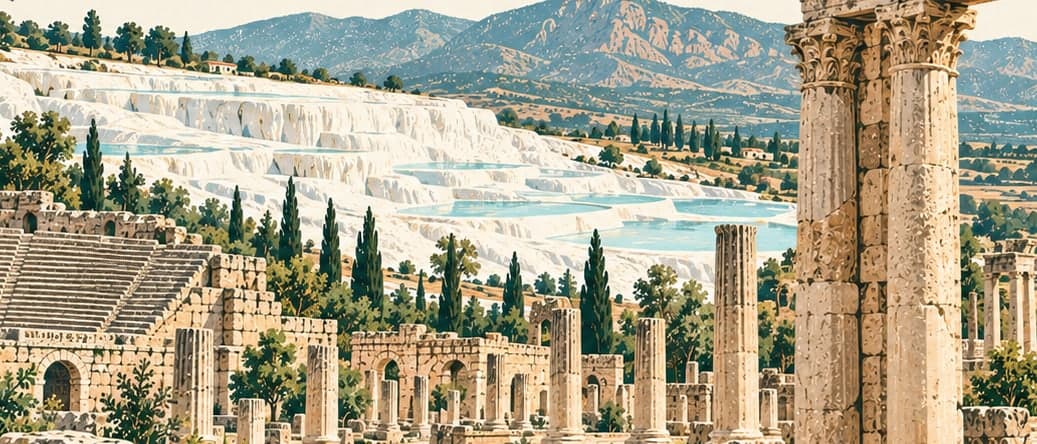
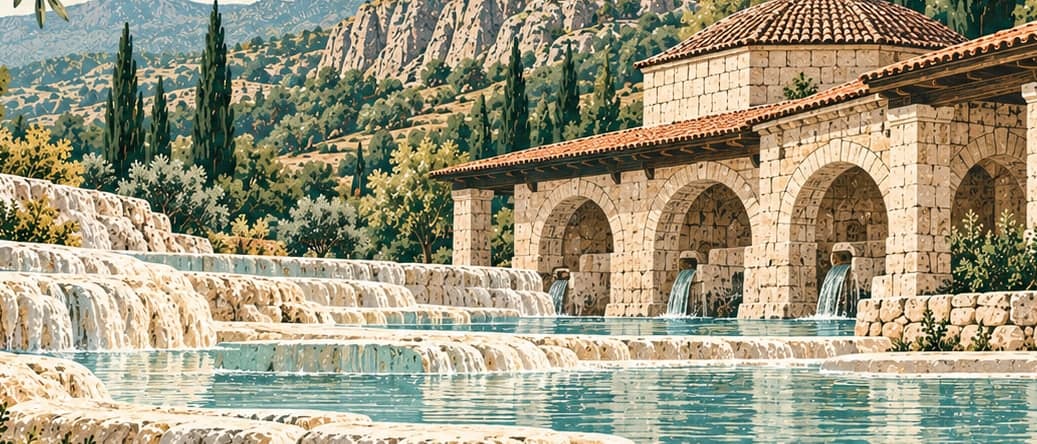
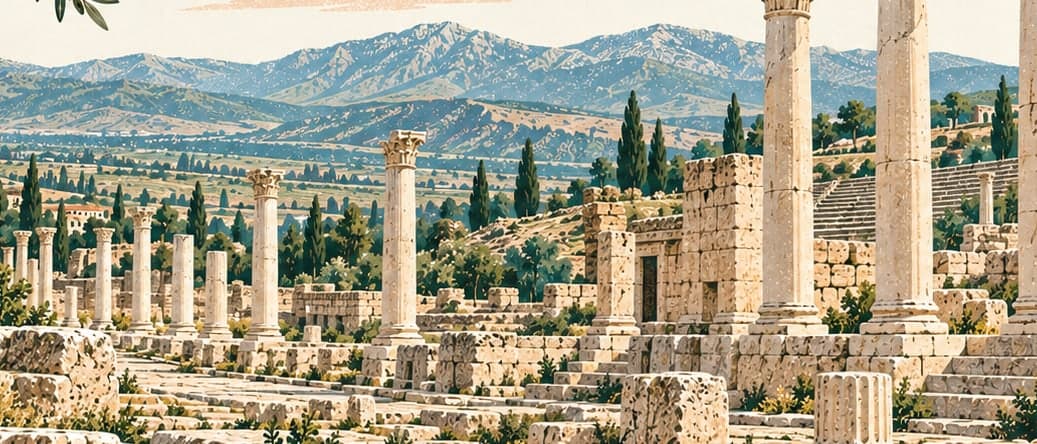
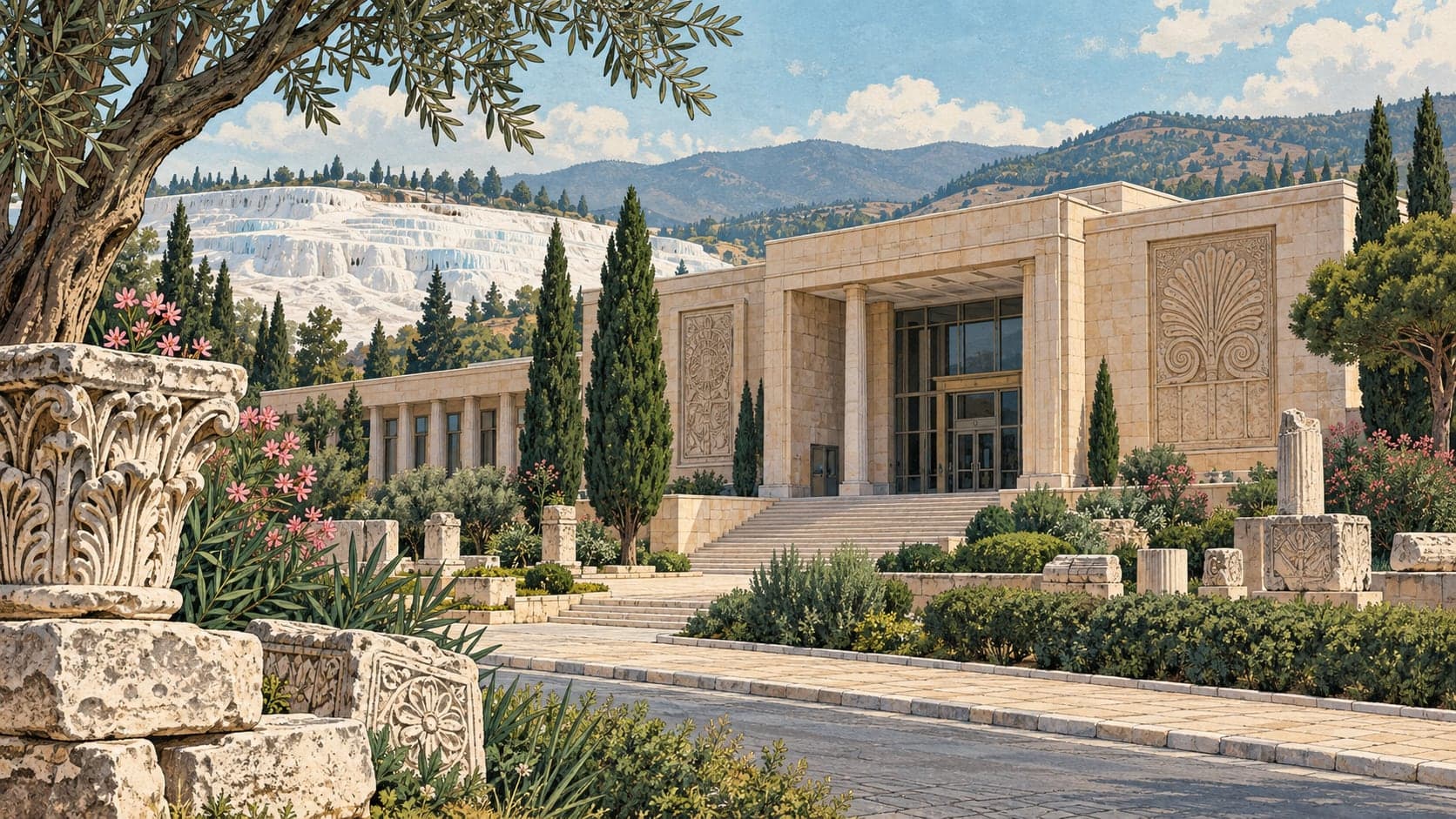
The museum is inside the ancient city, in the Roman baths: a group of buildings that also held the gymnasium and the library, covering about 14,000 square metres. The bath was restored in the 1970s, and the museum opened on 1 February 1984 with material from the Hierapolis excavations together with pieces brought from Laodikeia, Tripolis and other sites nearby. A second restoration begun in 1999 reopened it in its present form on 24 April 2000.
The three galleries are the vaulted halls of the bath itself, built of travertine blocks. The first holds sarcophagi and sculpture, mostly from Hierapolis and Laodikeia.
The second is arranged chronologically and covers a much longer span, from the fourth millennium BC onward. It includes the terracotta vessels, idols and stone objects found at Beycesultan, near Çivril, in the excavations run by the British Institute of Archaeology between 1954 and 1959, alongside Phrygian, Hellenistic, Roman and Byzantine lamps, glass, necklaces and metal jewellery. The coins are laid out in the same order, beginning with the first struck in the sixth century BC and running through the Hellenistic, Roman, Byzantine, Seljuk and Ottoman periods.