Guide
Pamukkale appears on nearly every list of places to see before you die, and the directorate puts the number of visitors at around two million a year. What draws them is a piece of country where nature has taken the part of the artist.
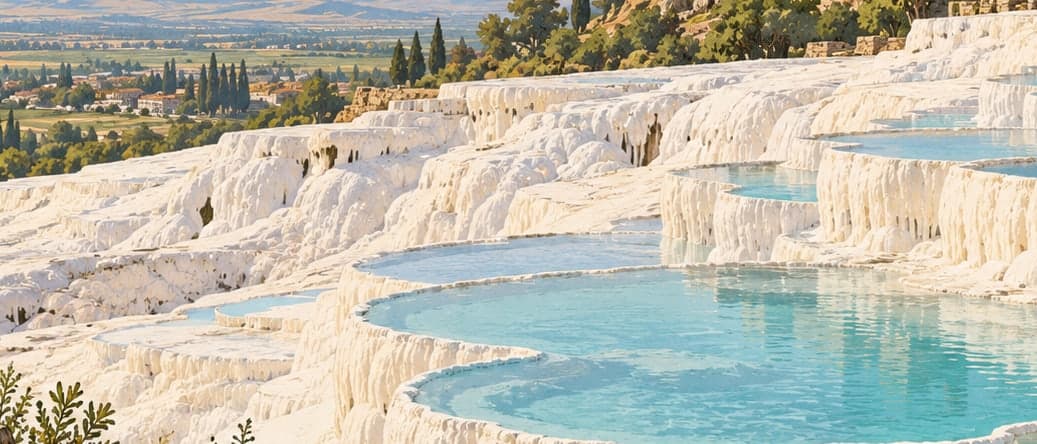
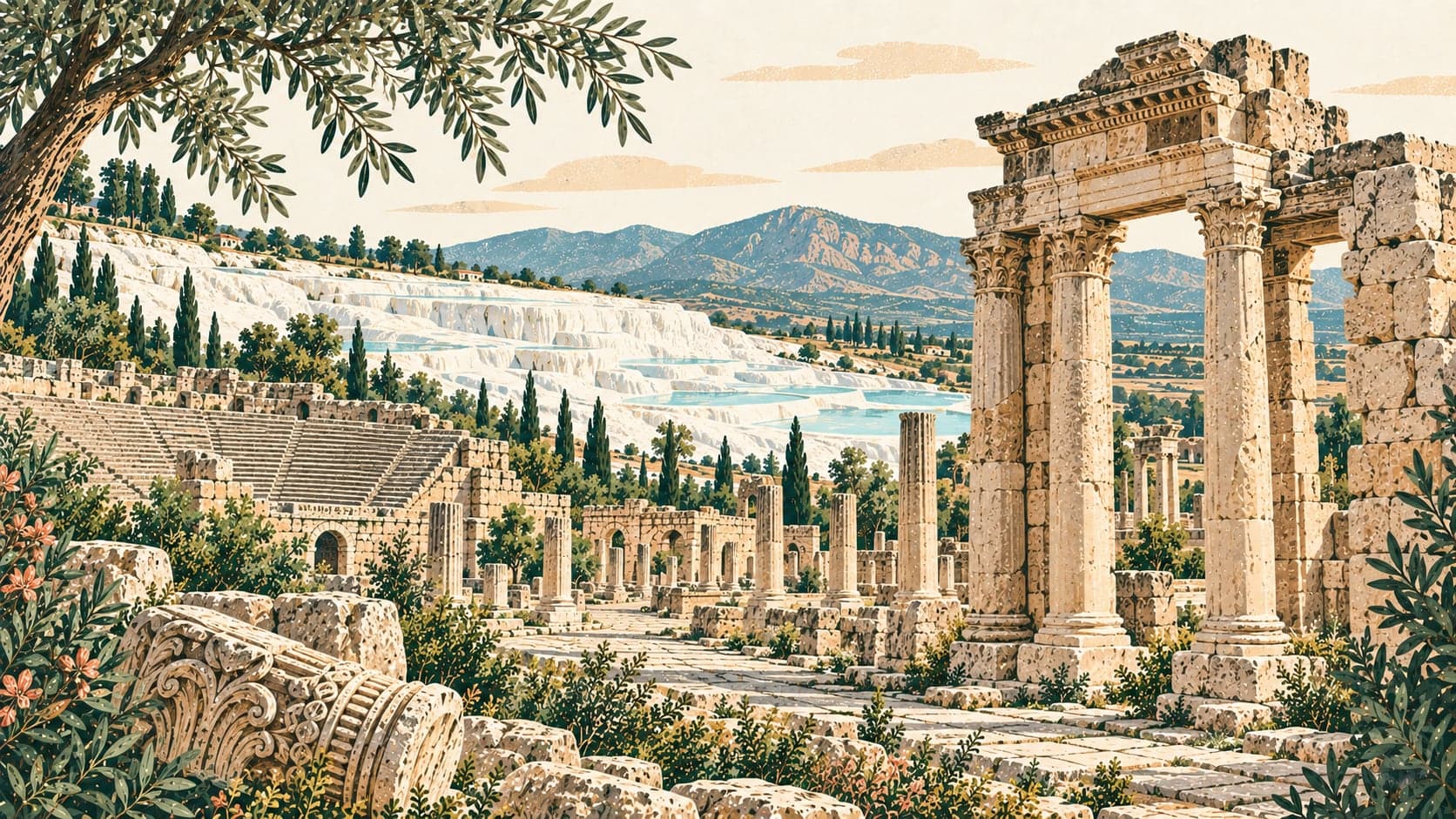
The white travertines form where thermal water meets the air: the deposits build up in stepped shapes like a frozen waterfall, and in places they hold terraced pools. The appeal of the site is not a modern discovery — it goes back to the Roman period, and beside the travertines the ancient city of Hierapolis still stands in its full extent, most of what survives there belonging to that same period. The travertines and the ruins together are inscribed on the UNESCO list of world cultural and natural heritage.
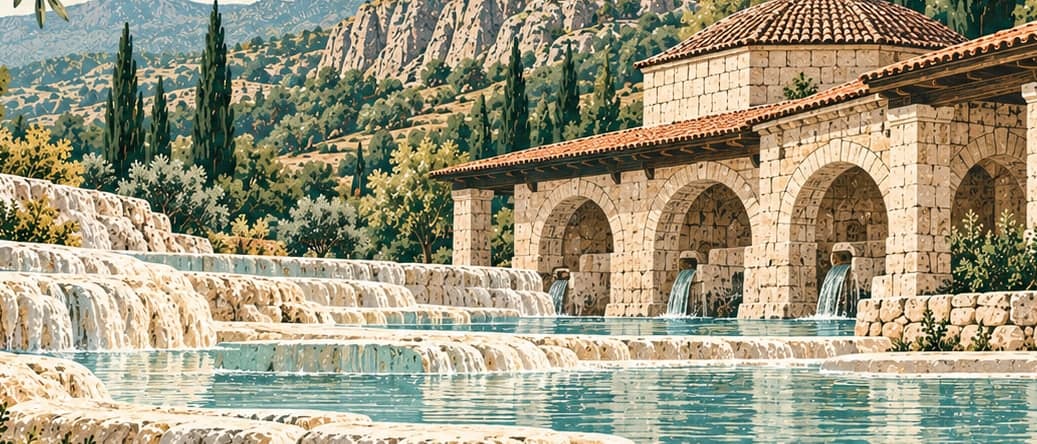
Two thousand years ago the kingdom of Pergamon could not resist the place either, and built Hierapolis beside the terraces. The city worked as a thermal health centre: for thousands of years people came from all over Anatolia to springs believed to heal, looking for health and for beauty. They still come. You can swim in the same water and look out over the terraces — but the formation took thousands of years to build and is fragile, so only certain stretches are open to walk on and to bathe in. Those who want to stay longer can use the thermal establishments near the ancient city, where there is lodging along with massage, thermal water and mud baths.
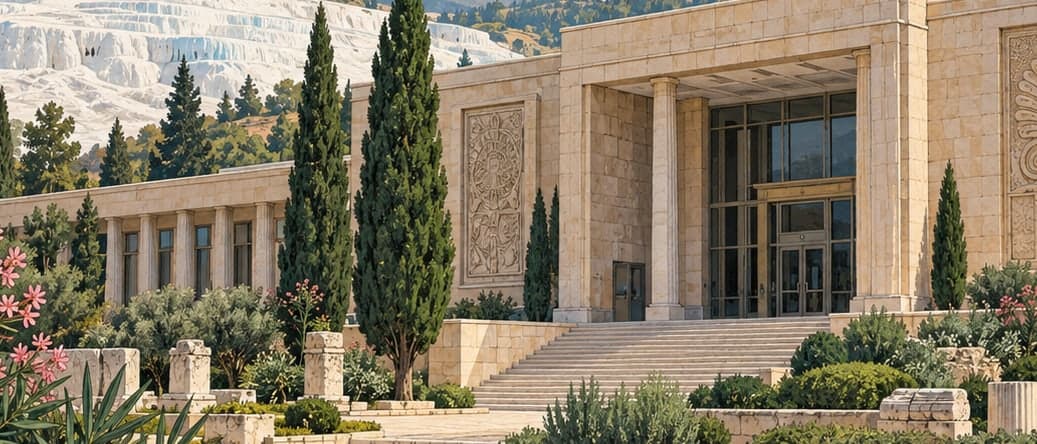
Hierapolis has come down to us remarkably well preserved. The Roman bath — certainly much used in the days when this was a thermal centre — serves today as the archaeological museum, and the statues and other finds from the excavations at Hierapolis and its surroundings are displayed there.
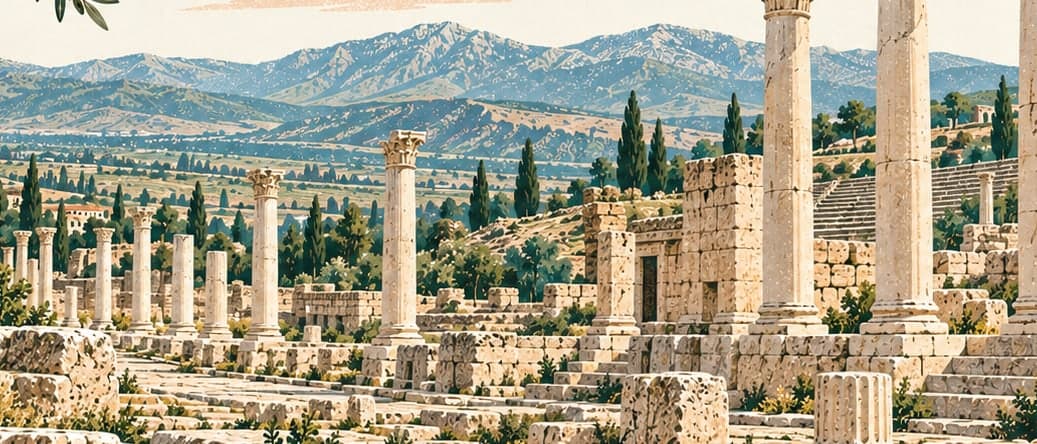
The theatre, the temples, the monumental fountains, the tombs, the agora and the gymnasium are all in good enough condition to make you feel you are standing in a city of two thousand years ago. Among them is the place that in the Roman period was believed to be the entrance to the underworld.