Guide
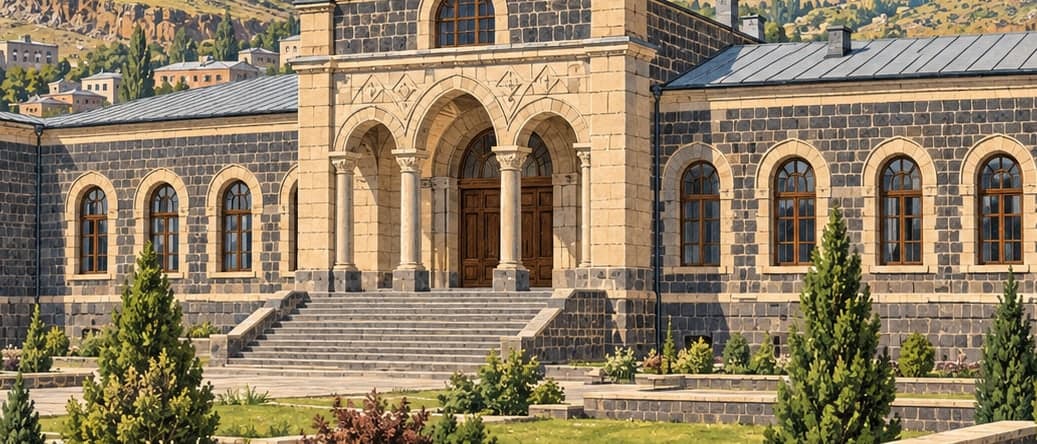
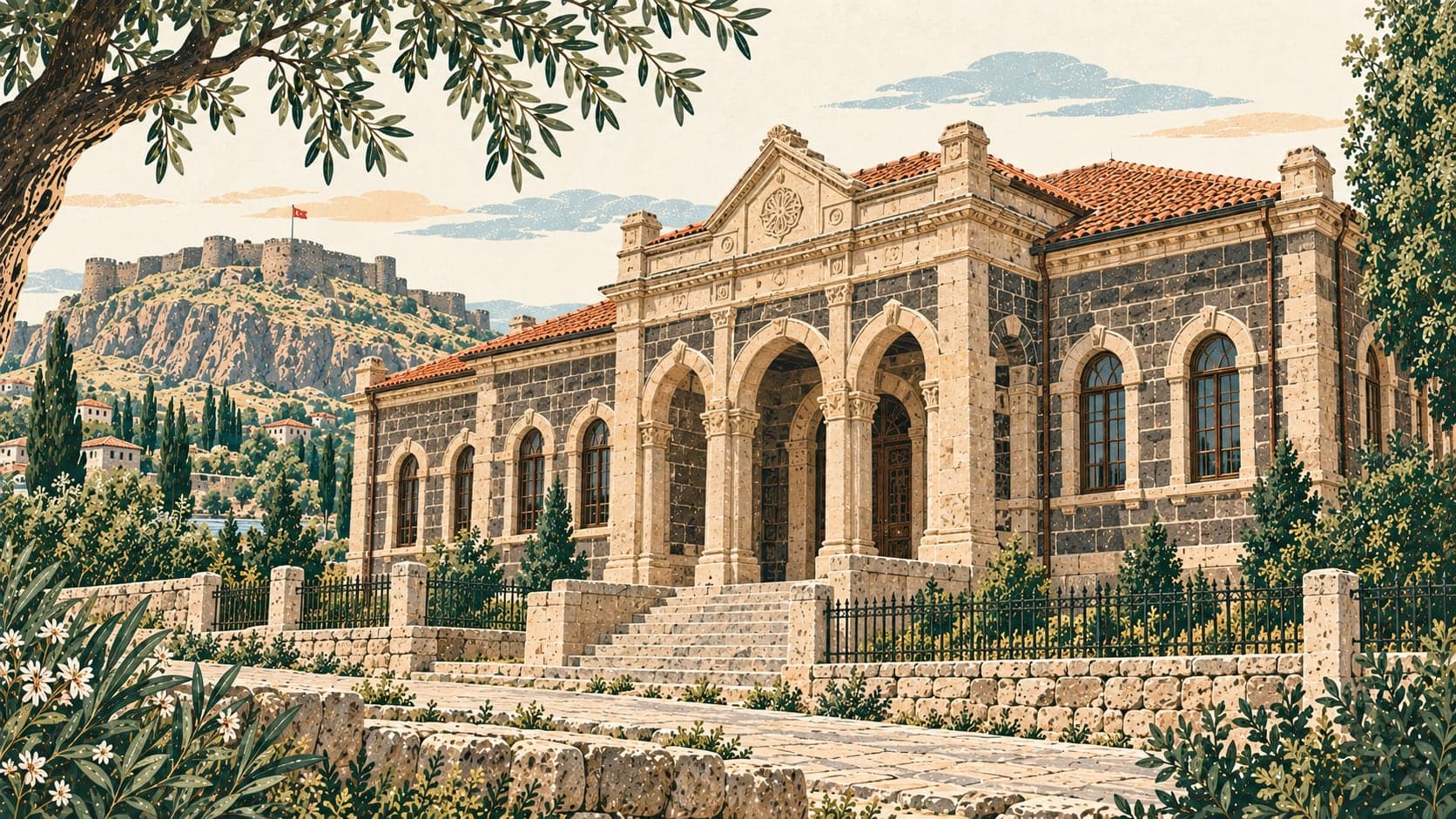
Kars Museum is the largest museum in the province, holding more than 3,600 objects. It grew out of a museum office set up in the governor's building in 1959 to meet the need to protect the movable and immovable cultural property produced by the ancient site of Ani on the Silk Road and by the dense archaeological settlement of the region. As the objects gathered from the region multiplied, the Church of the Apostles, also known as the Kümbet Mosque, was turned into a museum and used for display from 1964 to 1978. A larger museum was then judged necessary, and a modern building was put up in the İstasyon quarter in 1978; the source gives both 1980 and 1981 as the year it came into service.
Objects are displayed on two floors. The ground floor holds the store of antiquities, the offices and the archaeological gallery; the first floor the ethnographic gallery and staff quarters. There are historical works in the museum garden as well. The building has 1,400 square metres under roof, of which the administrative and storage parts take 500 and the galleries 900.
The archaeological gallery begins in the Palaeolithic. Stone hand axes, flint, microliths, scrapers and cutting tools found in the excavations carried out at Kağızman in 1971 by the Turkish archaeologist Kılıç Kökten are shown here; the cave at Kağızman, occupied in the thirteenth millennium BC, has been established as one of the oldest settlement sites in Anatolia. From the third millennium BC, the Early Bronze Age, come the black burnished terracotta works of the Hurrians, who came into Anatolia from the Caucasus, found at Ani, along with axes, needles, fibulae, rings, piercing tools and spindle whorls of the same period.
Among the most important pieces in this gallery are two bronze Urartian swords found at the village of Micingirt near Sarıkamış, together with a bronze war belt, bronze bracelets, agate beads and painted terracotta vases — from the kingdom the Urartians built over a great area reaching from Lake Van to Lake Çıldır. The coins on display are Greek, Roman, Parthian, Byzantine, Anatolian Seljuk and Ottoman, struck in gold, silver, copper and lead and arranged chronologically; the collection holds 415 of them. There are also grain jars and many objects of the Roman, Byzantine, late Christian and Seljuk periods, and a good deal of stonework: animal figures, a Seljuk mythological carving showing a figure with two lions gathered in its arms, gravestones of various civilisations, and inscribed panels of the Seljuk and Ottoman periods thought to have come mostly from buildings.
The ethnographic collection upstairs runs to 1,254 objects, mainly Ottoman work of the eighteenth and nineteenth centuries. It holds weaving gathered from Kars and the country around it — carpets, kilims, saddlebags, horse cloths, cushion faces and prayer rugs — and kitchenware of copper and bronze: cauldrons, trays, bowls, ewers, small pots, roasting vessels, skimmer basins, pans, mortars and spoons. There are weapons, among them daggers, poniards and swords worked in gold and silver, flintlock and revolving pistols, iron and bronze axes and powder flasks; written material including hand-copied and printed old books, decrees, newspapers, bags and writing sets, and manuscript Qur'ans. Among the clothing are the local kaftan, short jacket, three-panelled dress, waist sash, headscarf, breast piece, hair ties, shawl belt and stockings, and among the household pieces the çadır çıtı — rods wound with threads of different colours and patterned like a kilim, used to divide the inside of a tent. Silver-worked saddlery, camel trappings, canes, whips, carriage lamps, silver watches and chains, amulet cases and cigarette cases, prayer beads and mouthpieces of amber, jet, coral and mother-of-pearl, water pipes, candlesticks, lamps, samovars, milk sets, sugar bowls, tongs, silver belts, bracelets, crown pieces, necklaces and headdresses complete it.