Guide
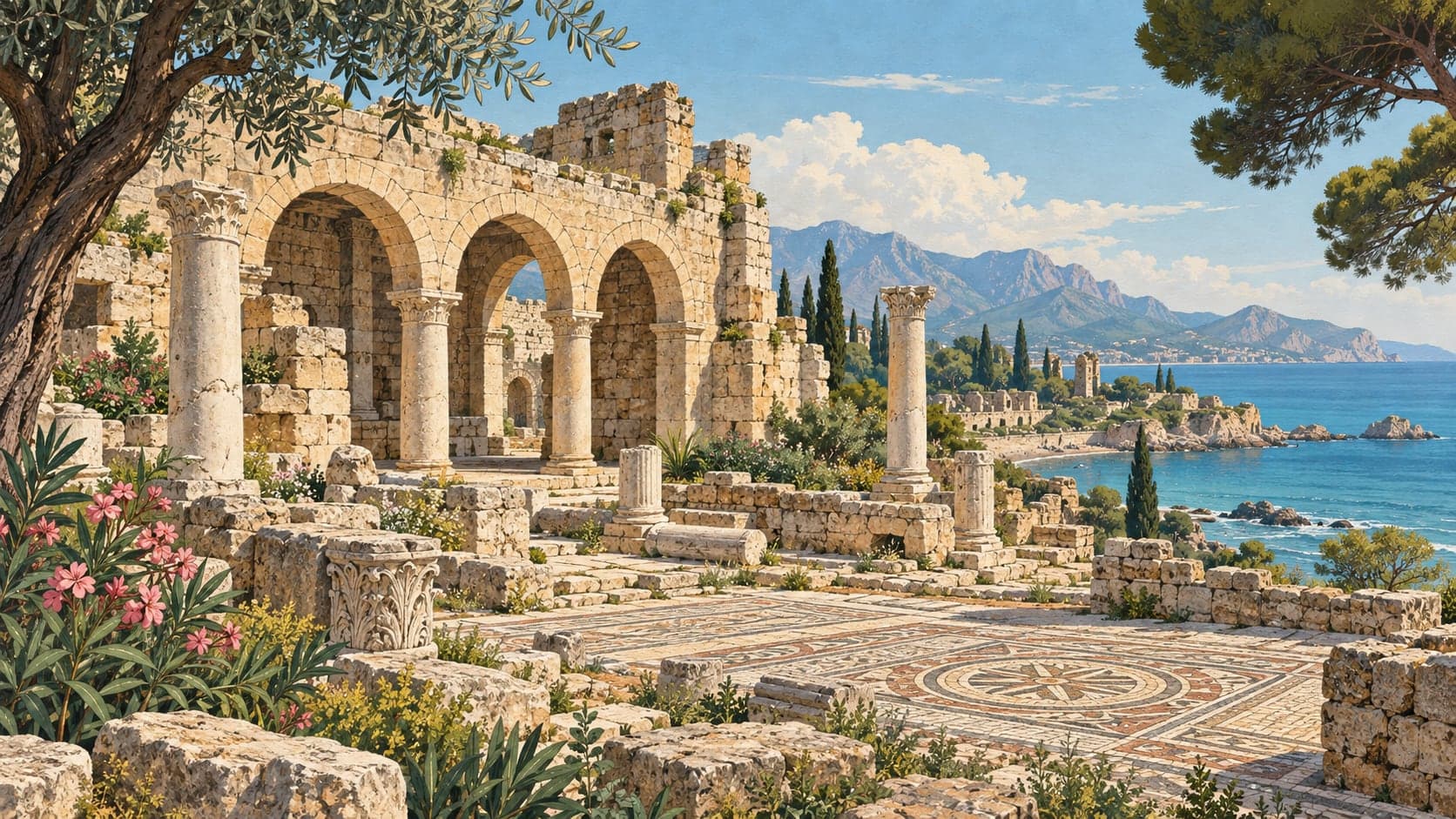
Kelenderis lies in the Aydıncık district of Mersin and has gone by other names — Celenderis, and later Gilindire. Apollodoros credits its founding to Sandokos, who came from Syria; Sandokos is taken to be the same figure as the Luwian-Hittite god Šanta, whose cult carried on into the first millennium BC, and who was also counted a founder and chief god of Tarsos, appearing on some of that city's Hellenistic and Roman coins. P. Mela records that the place was colonised from Samos.
Excavation has run here since 1986 and has produced material going back to the sixth century BC; the finds are shown in the museums at Silifke and Anamur. Towards the end of that century Ionians from western Anatolia and the islands nearby set up trading stations at Kelenderis as they did at Nagidos.
The city's first good period came in the fifth and fourth centuries BC, when it was the easternmost member of the Delian League formed under Athens against Persia. The rich graves found in the excavations show both sides of its position: connections running west, and a culture that had not let go of the east. Under the Hellenistic kings it was politically aligned with Ptolemaic Egypt, and in the first century BC pirate raids left it in a bad way. Its people joined the Roman campaign against the pirates, and once Rome had secured the Mediterranean trade route the city had a second good period.
In the Middle Ages it passed first to Byzantium and then to the Seljuks. From the Ottoman period into the early twentieth century it was an important harbour on the sea route between Anatolia and Cyprus, and the point where İstanbul's road through Konya met that crossing. It began to lose that work from the middle of the nineteenth century, not least because the harbour at Mersin was rising.