Guide
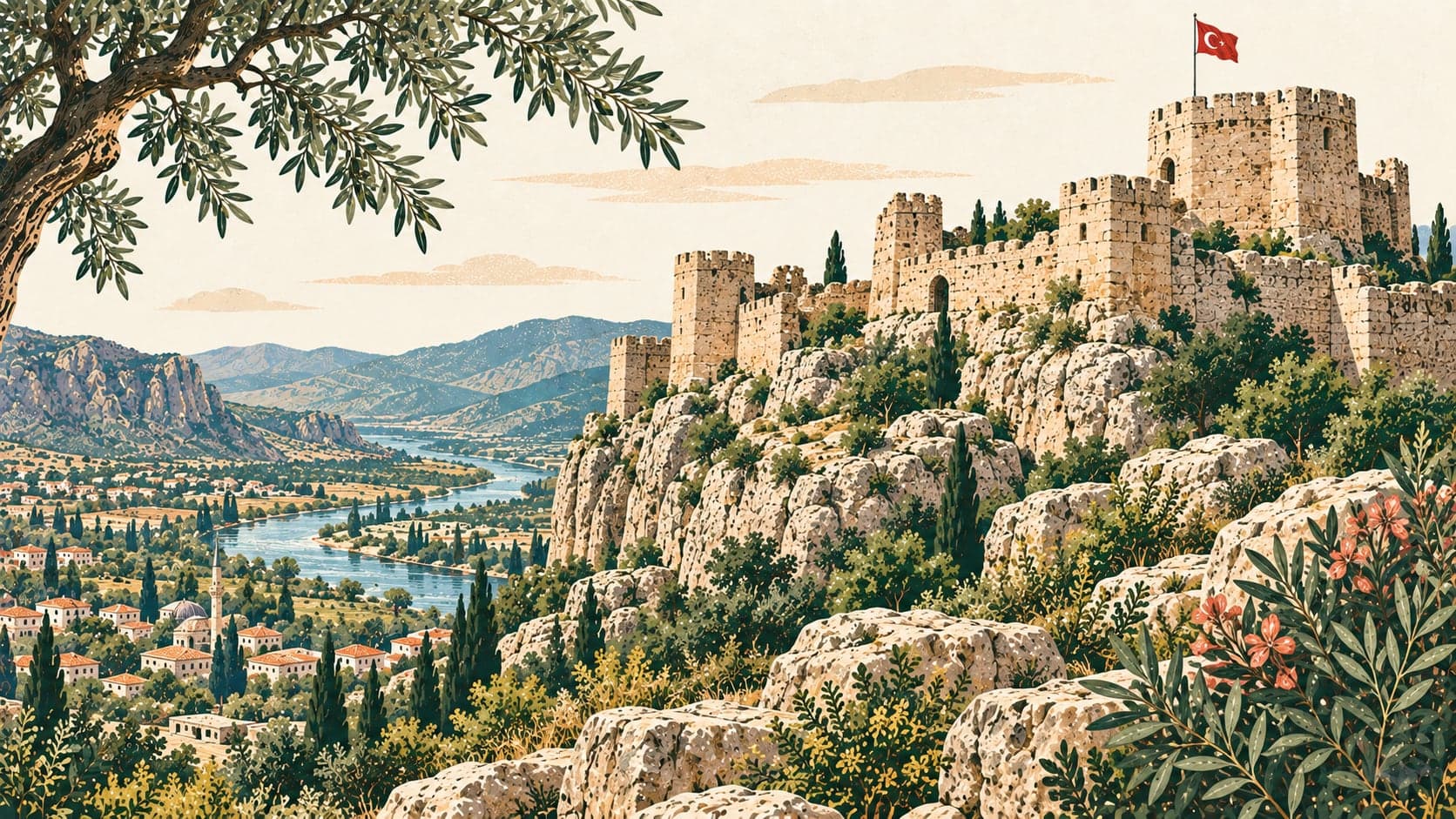
Silifke Castle stands west of the town of Silifke in Mersin, on bedrock running east to west at a height of 185 metres. It is ringed by a ditch, strengthened with sixteen towers, and covers 29,000 square metres.
From what has been established, the castle belongs to the Hellenistic or early Roman period, though the repairs and changes it has undergone have left it looking today like a medieval castle.
Its position is a strategic one, commanding all the roads: it controlled both the trade route and the harbour. It was an important part of the defensive line covering the Silifke–Mut–Karaman road, the route from Anamur to Silifke, and the castles of Anavarza and Yılanlı.
Excavation has shown that the castle was in use from antiquity onwards and served as a fortified town through the Greek, Roman, Byzantine, Seljuk and Karamanid periods and into the last years of Ottoman rule.
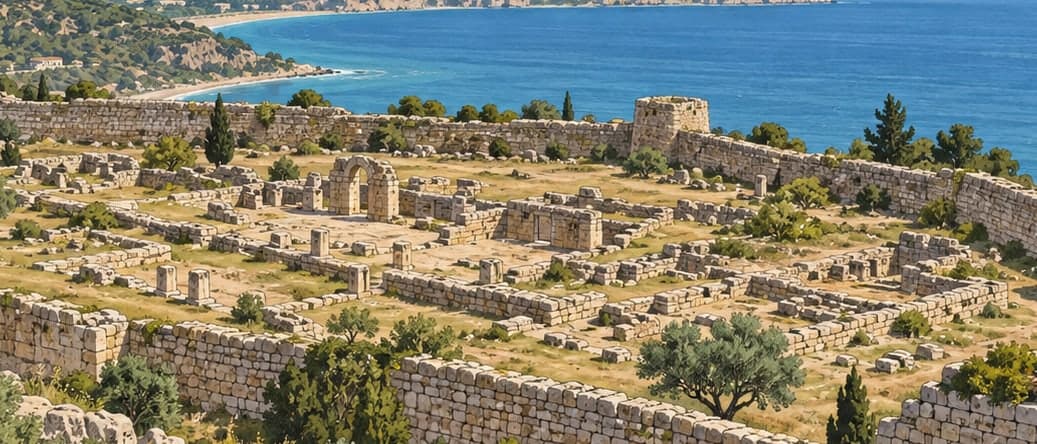
The plan is oval, running about 250 metres from west to east and about seventy-five metres across. Within the castle, which is ringed by a dry ditch, are arched galleries, water cisterns, storerooms and the remains of other buildings.
According to the seventeenth-century traveller Evliya Çelebi, the castle held twenty-three towers, sixty houses and a mosque; because some of the towers and the whole of the interior are now ruined, it is hard to establish this exactly. Ten towers stand today, most of them with vaulted ceilings, some of those vaults pointed, and about ten finely worked cellars survive. Most of the stones of the outer face are well-prepared cut blocks. An official survey of the castle was carried out in 1979.