Guide
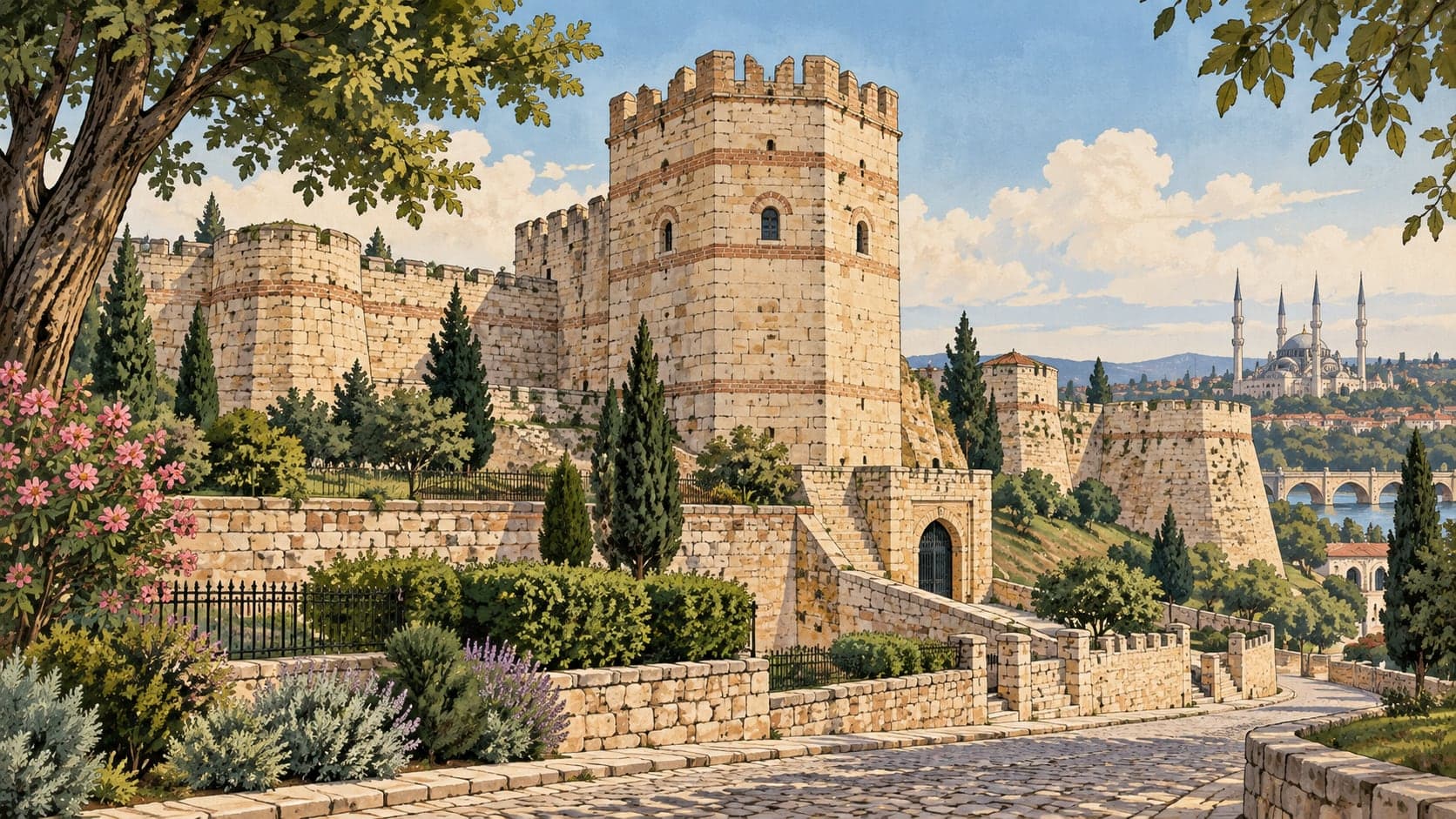
The Macedonian Tower is the most substantial surviving piece of Roman Edirne. The emperor Hadrian, who travelled widely and left building works behind him, raised what had been a small market place to the status of a city on his first eastern journey in 123-4; he walled it on a near-square plan and turned it into a Roman military camp. The city took his name, Hadrianopolis, and under Diocletian it became the capital of Haemimontus, one of the six provinces of Thrace.
The tower survived Byzantine and Ottoman repairs and additions into the 19th century. In 1884-85 the governor of Edirne, Hacı İzzet Pasha, had a wooden clock tower built on top of it, and at some point it also served as a fire watchtower. The Ottoman defences did not survive the occupations that began in the 19th century, and the city walls went with them.
Two inscriptions are on the tower itself: a Byzantine one in brick that runs the full width of its upper section, and an Ottoman repair inscription on the face, recording that damaged parts of the fortress were rebuilt.
Excavations by the Edirne Museum Directorate in 2002-03 and again in 2024 turned the surroundings into an archaeological site in their own right, uncovering stretches of wall, an icehouse, a chapel and ovens from the Roman, Byzantine and Ottoman periods.