Guide
Sagalassos stands on the slopes of Akdağ in the Ağlasun district of Burdur, at between 1,500 and 1,700 metres above sea level and seven kilometres north of the town. It was one of the most important cities of Pisidia in the Roman period, and most of the buildings here belong to those centuries. Traces of the first settlement on the site go back twelve thousand years; life ended when the Seljuks removed the last Byzantine military fortress settlement at the start of the 13th century.
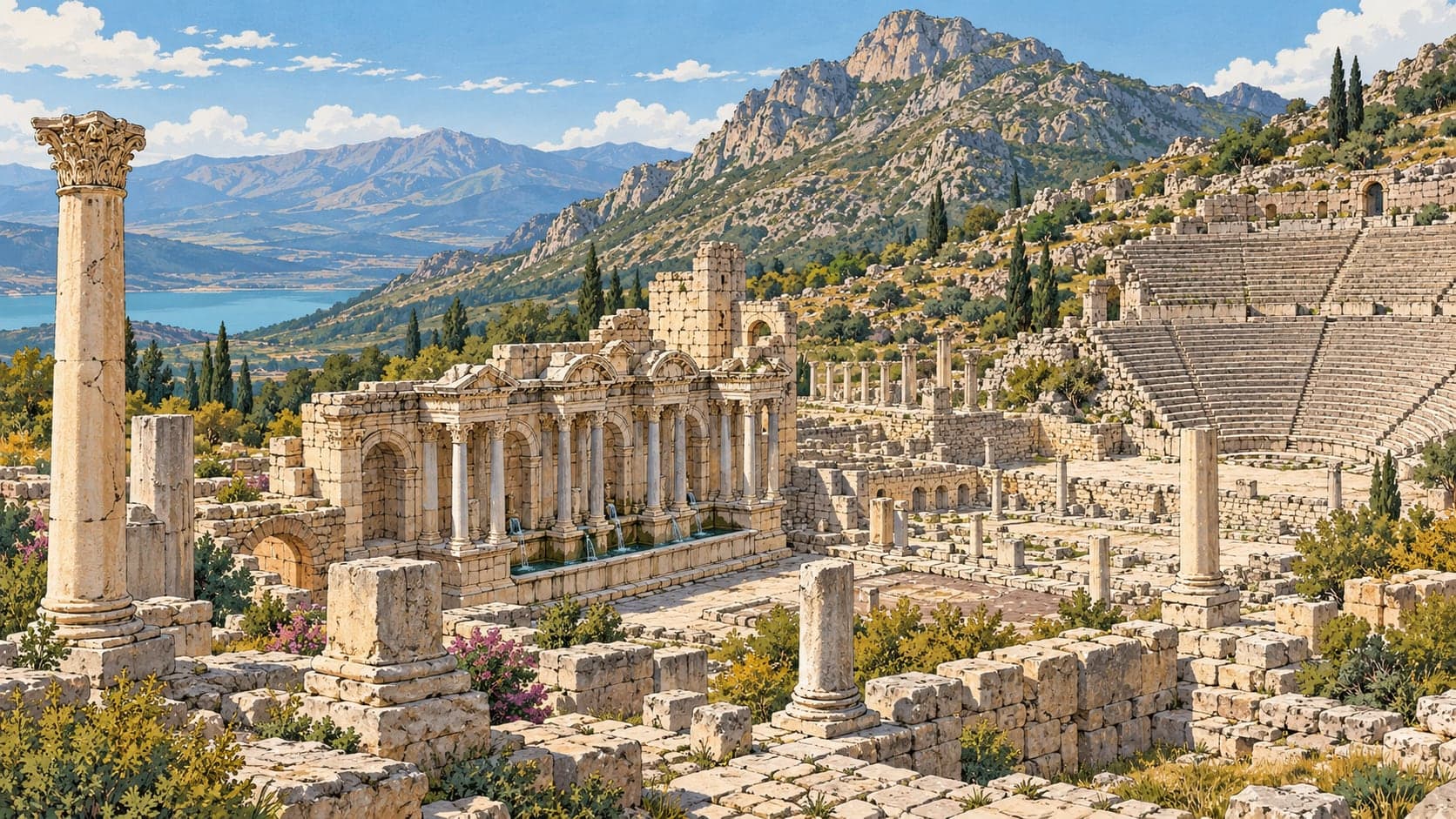
The Ministry counts it among the best-preserved ancient cities in Anatolia, and the sequence of buildings bears that out. At the entrance lie the courtyard and halls of a townhouse the size of a palace. The lower part of the city is dominated by the great Roman imperial bath. Around the lower agora stand the agora fountain and the remains of the temple of Apollo Klarios and the fountain of Hadrian. Around the upper agora a great many monuments have been uncovered, restored and raised again.
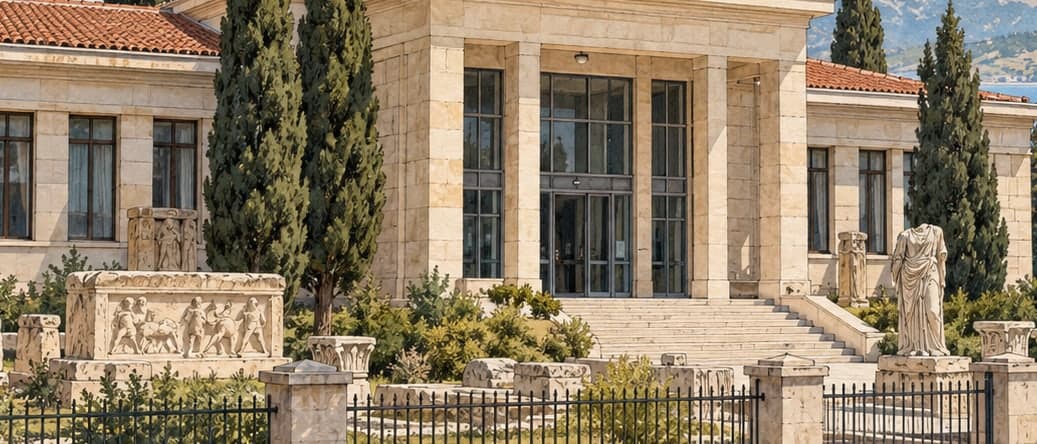
The most striking single structure is the Antonine fountain, whose water still runs today. Among the other remains are two monumental arches opening onto the city square, honorific columns at the four corners of the agora, the municipal building, the council house, a church, and the heroon known for its relief of dancing girls. The ancient library and the theatre also survive in part. Finds from the excavations are displayed in the Burdur Museum.
The city was proposed for the World Heritage list as the longest-running centre of ceramic production in antiquity, and was placed on the UNESCO World Heritage Tentative List in 2009. The address is Kıraç, 15800 Ağlasun, Burdur.