Guide
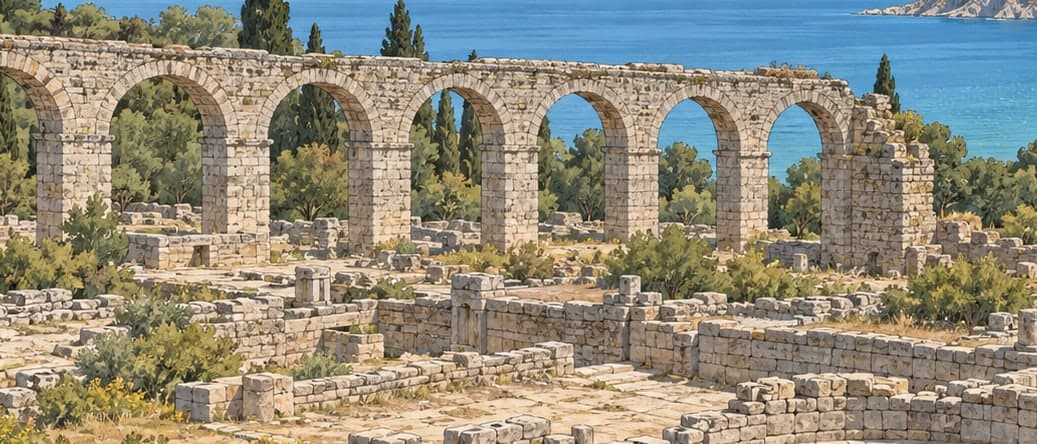
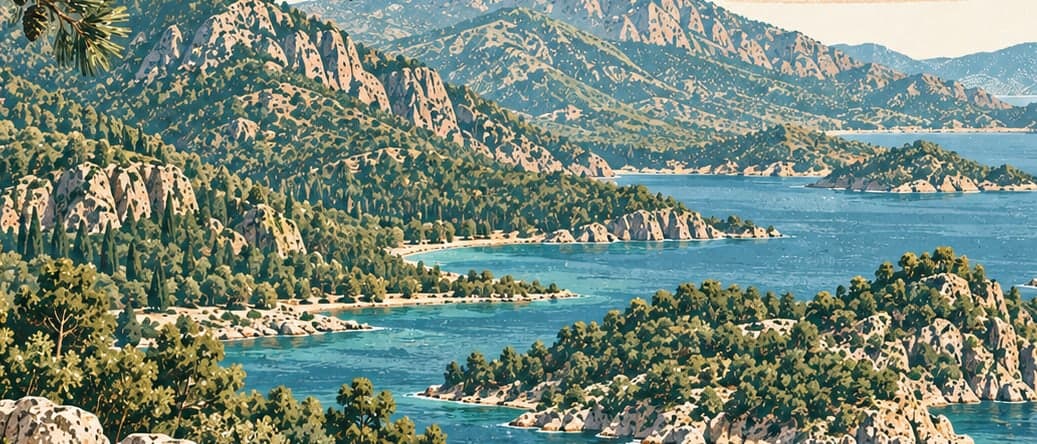
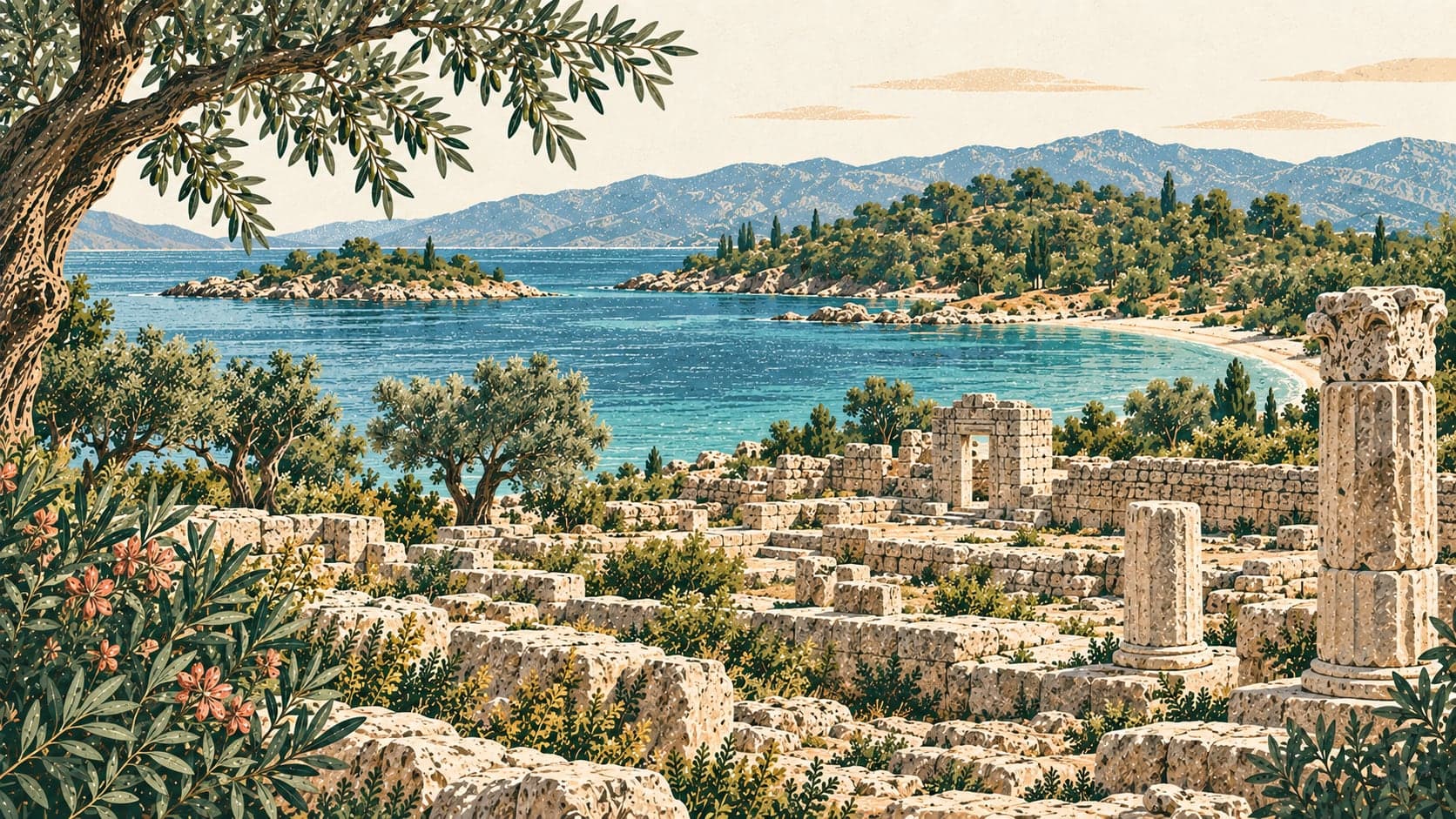
Sedir Island lies in the Gulf of Gökova within the Marmaris district of Muğla. It is the largest of a group of three islands, full of ancient remains and of striking beauty. Its name in antiquity was Cedrae, and the ruins of the city of that period stand on it.
Hekataios of Miletos speaks of a settlement here, and the development of Kedrai can be followed from the sixth century BC onwards; it was one of the important cities of Caria. According to some accounts the royal families of Caria spent their summers on the island. In later centuries it appears as one of the notable towns of the Rhodian Peraia, the mainland territory opposite Rhodes.
Kedrai joined the Carian league between 454 and 428 BC and later entered the Delian League, paying three thousand drachmas a year in tribute at first and two thousand later; the payment fell to that figure in 439 BC. Xenophon records that during the war between Athens and Sparta in 405 and 406 BC the Spartan commander Lysander besieged Kedrai and took the city, which had sided with Athens.
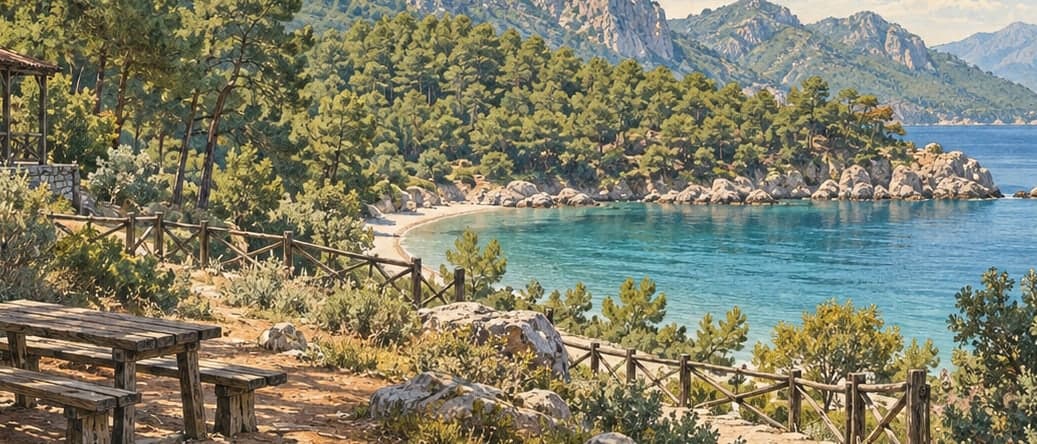
The island is thickly covered with maquis, olive and pine. In the official treasury records it appears as Şehroğlu or Şehroğlan Island. The writer known as the Fisherman of Halicarnassus gave it the name Gülen, and others have called it Cleopatra's Island, the Island of Poetry, the Island of Love and the Honeymoon Island.
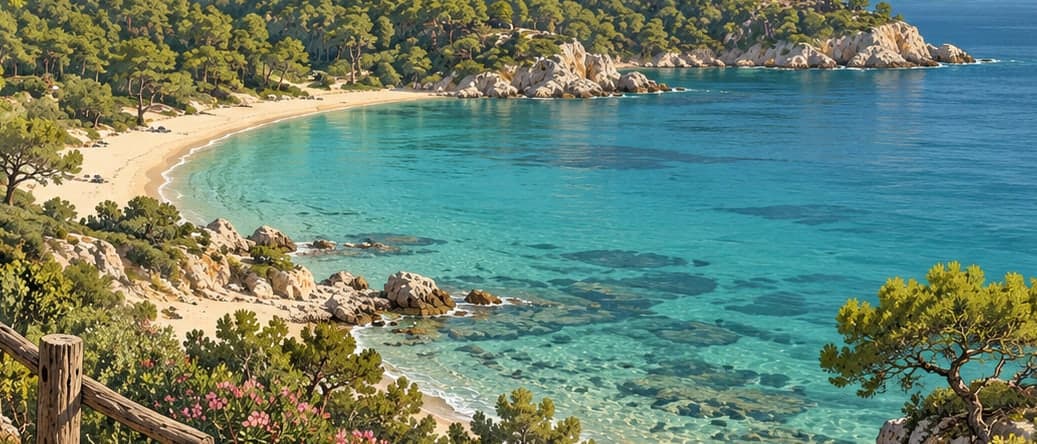
The sand on the northern shore is made up of calcareous grains formed in a particular way, found in the Aegean and the Mediterranean only here and on Crete. These sands, the product of geological processes, are protected. There is also a belief in the region, which the source calls uncertain, that the sand was brought specially from Egypt for Cleopatra.
Among the things visitors come to see are the city walls with their many towers of neatly cut stone, the temple of Apollo and the church built later in its place, the theatre, which still stands well preserved, the agora and the remains of the ancient harbour.
The island is reached by boat from Akyaka on the Muğla–Marmaris road, or from the village of Çamlı in the Marmaris district, reached by turnings further along.