Guide
Tlos lies within Yakaköy in Seydikemer district and is one of the oldest settlements in Lycia. Three languages have called it three things: Hittite texts name it the land of Dalawa, Lycian inscriptions Tlawa, and it comes down to us as Tlos.
Occupation ran without a break from the Neolithic to the Iron Age, and the city kept its importance long afterwards — it was one of Lycia's leading bishoprics, and remained so into the twelfth century. It carries Ottoman traces too: in the eighteenth century it stood where the region's trade routes crossed.
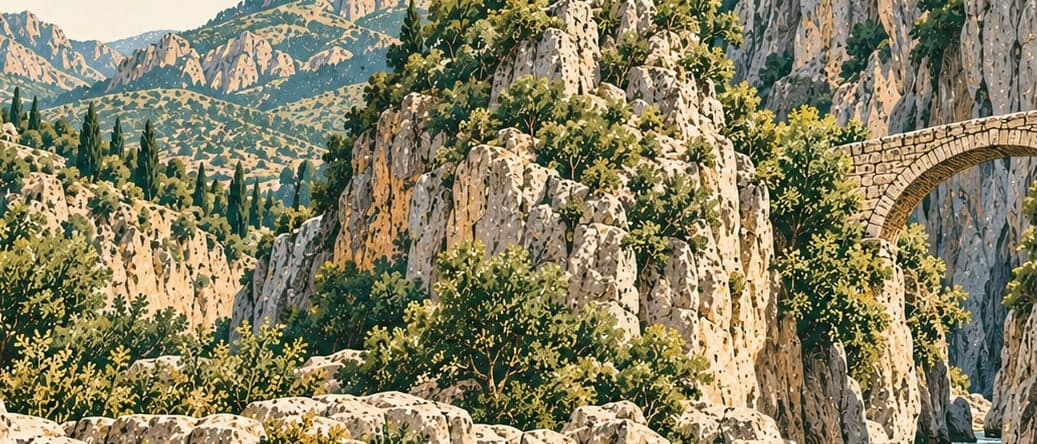
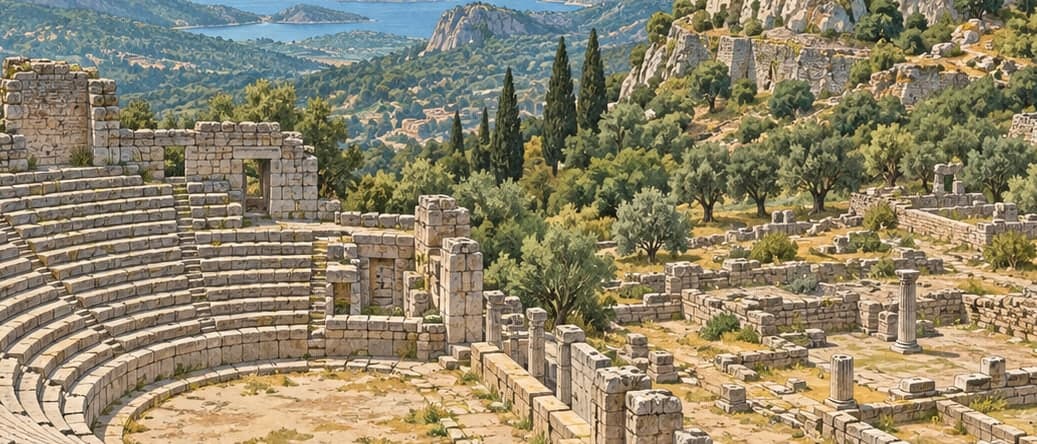
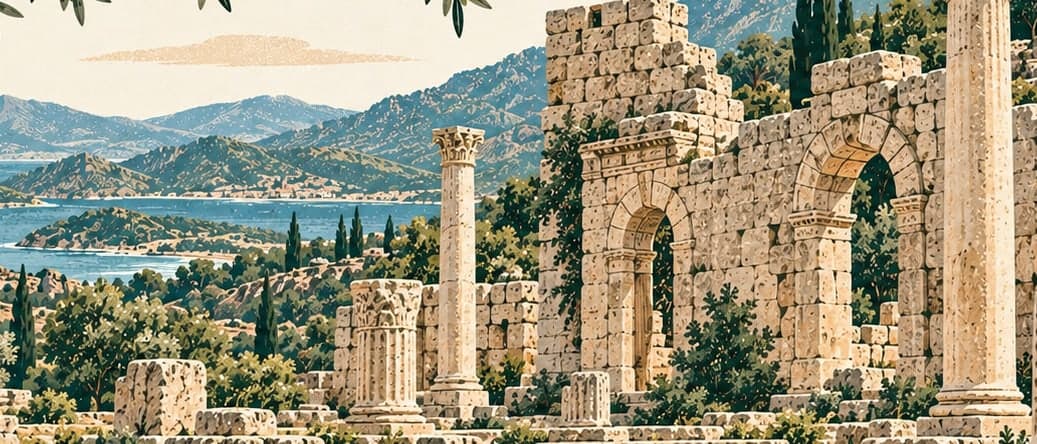
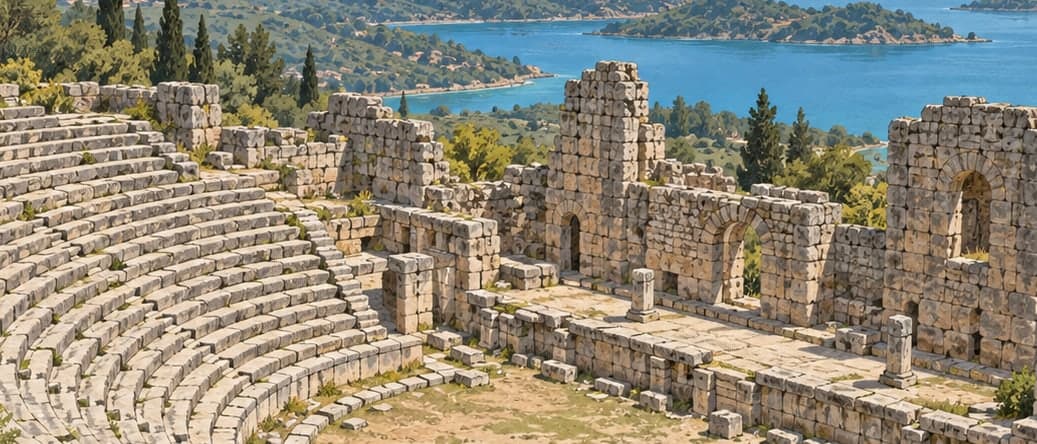
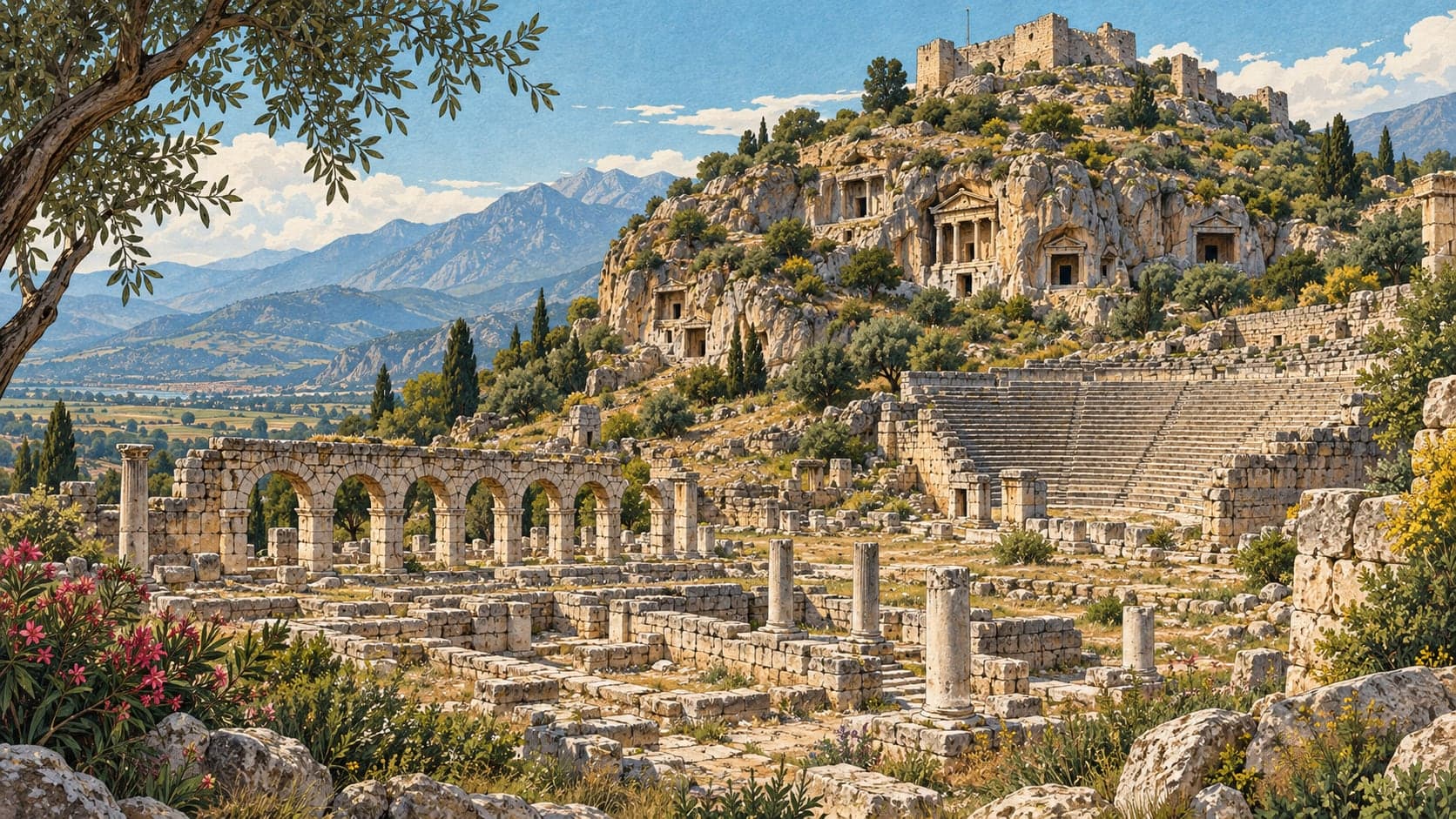
The acropolis at the entrance dominates the landscape, naturally defended by slopes of about five hundred metres and reinforced in places with walls. Below it lie a few rows of seating, the stadium, the baths, the theatre and church remains; the theatre is the most substantial building still standing. On the flat below the castle are Lycian walls nine metres wide, and south of the agora, whose six-arched gate survives, stand Roman-period walls. The ministry also calls Tlos the sports city of Lycia, which is why the stadium remains matter here.
Temple-type tombs cut into the rock line the climb to the castle, and the finest of them is the tomb of Bellerophon, on the Titan rock north of the acropolis. Set on a levelled terrace, its front reproduces the facade of a four-columned Ionic temple; inside are two burial chambers side by side with an antechamber at the entrance and klinai, funerary couches, within. It takes its name from the relief showing the hero on the winged horse Pegasus fighting the three-headed Chimaera.