Guide
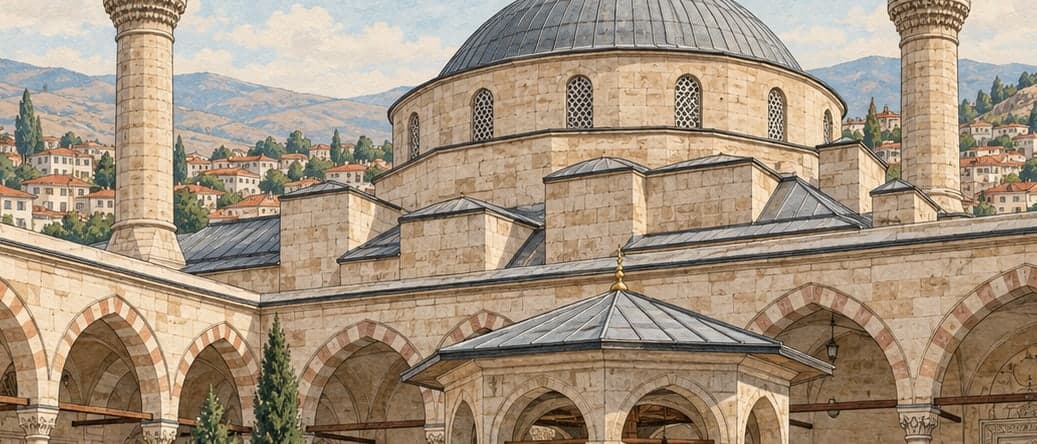
The tomb of Şeyh Çoban in the Kaleardi quarter of Sivas holds a man whose real name was Şeyh Hüseyin Rai. He probably lived in the twelfth century. The tomb is square in plan with an octagonal drum, built of cut stone, and holds two cenotaphs, his own and his wife's. When it was built is not known: the fountain beside it carries the date 1323, and on the strength of that the tomb is estimated to date from the fourteenth century. It was renewed in 1457-58 by Yusuf bin Abdullah and repaired in 1902.
Şeyh Çoban was the seventh successor of the great mystic Ebul-Vefa, who died in 1102, and a sheikh of the Vefai order. He spent years in Ebul-Vefa's company, rose through the degrees of the order, and began teaching with his permission. He is said to have been one of the warrior-dervishes who came from Khorasan to Sivas to spread Islam and win hearts. According to the local tradition, Şeyh Çoban and Şeyh Merzuban, who lies at Tekke village in Zara, were companions on the road: they set out together from Khorasan, and each settled where his camel halted — Şeyh Çoban at Sivas, Şeyh Merzuban at Tekke.