Guide
Ayatekla, also called Meryemlik, lies in the Silifke district of Mersin and is described by the Ministry as one of the oldest and most important centres of Christianity in Anatolia. Its history begins with the arrival of Thekla herself. At seventeen she was moved by the preaching of St Paul and gave herself to the new faith; sent by him to spread it, she met pagan hostility while campaigning around Konya and Yalvaç, and on learning she was to be killed she came to Seleucia — today's Silifke — and hid in a cave.
From that cave, according to the tradition the Ministry records, she went on preaching against the many gods of the region, working miracles and healing the sick. She is believed to have vanished inside it at the moment she was to be killed, and after her disappearance Christians held the cave sacred. Until Christianity was permitted in AD 312 it served as a secret place of worship; in the 4th century it was converted into a church. Meryemlik was then built up with one structure after another, reaching its height under the emperor Zeno in the 4th and 5th centuries.
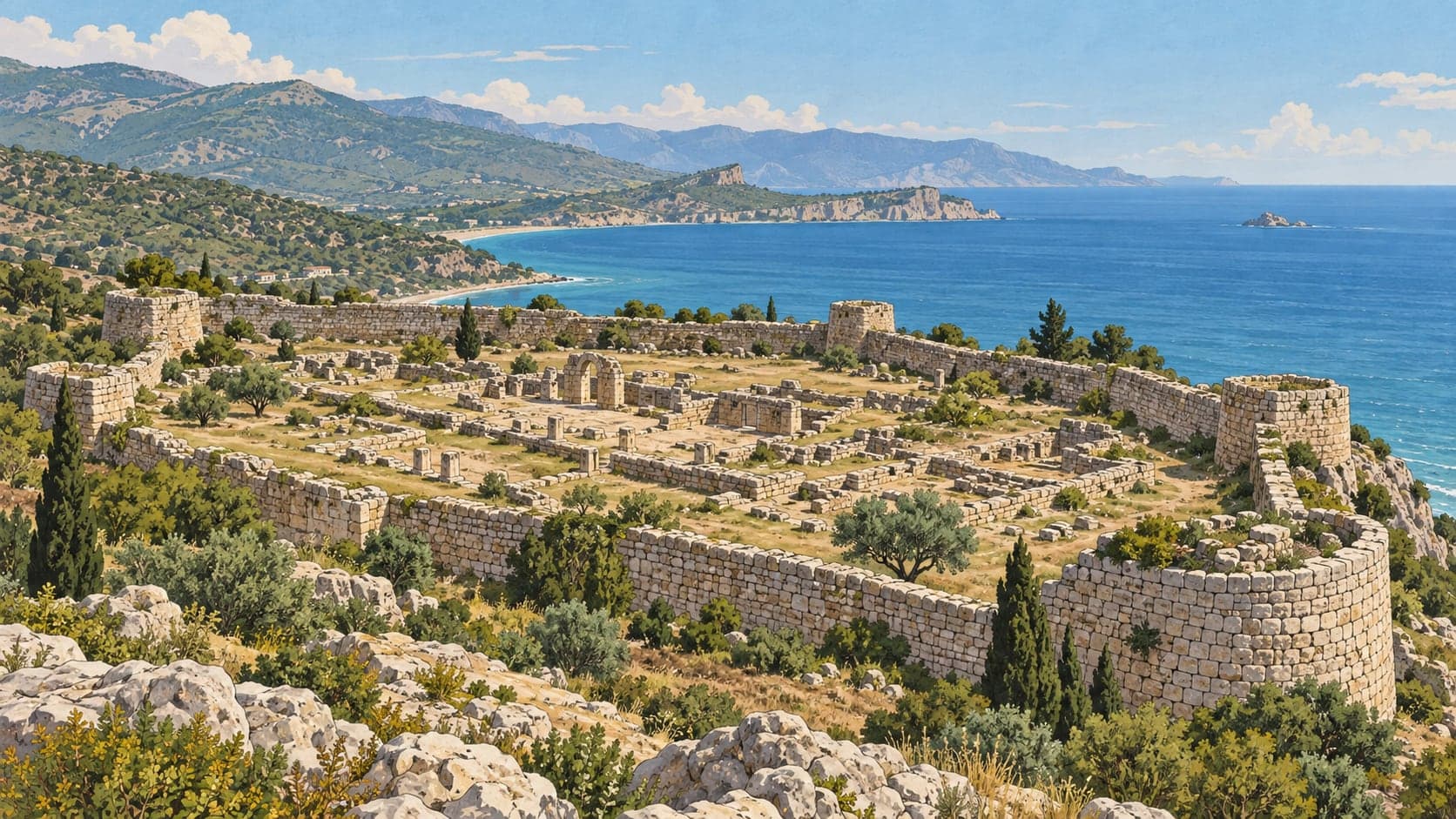
What a visitor sees today is a spread of ruins rather than a single monument. Besides the underground cave church of St Thekla there is the church that stood above it, of which only part of the apse survives; the church Zeno had built in her honour; a north church; a bath; a number of cisterns; a cemetery; and stretches of the city wall. Known as the first and only female martyr of Christianity, Thekla draws pilgrims to the cave in large numbers, and she is commemorated each year on 23 September by the Catholic church and on 24 September by the Orthodox. The site is at Mukaddem Mahallesi, Aya Tekla Sokak, in Silifke, and is reachable on local town transport.