Guide
The Üç Kümbetler, the three tombs, are taken to be among the important works of tomb architecture built in Anatolia for statesmen or scholars, and are thought to have been built between the twelfth and fourteenth centuries. When the other two tombs and the square building near them were built, and by whom, is not known.
The three differ from one another in the form and manner of their building, but they stand close together, which suggests that each was built for a particular person. The similarity of their roofs strengthens the view that they were raised as monumental tombs for statesmen who lived in the same period. The largest of the tombs, built in the twelfth century, is held to have been made for Emir Saltuk; on the others, built in the fourteenth century, no agreement has yet been reached.
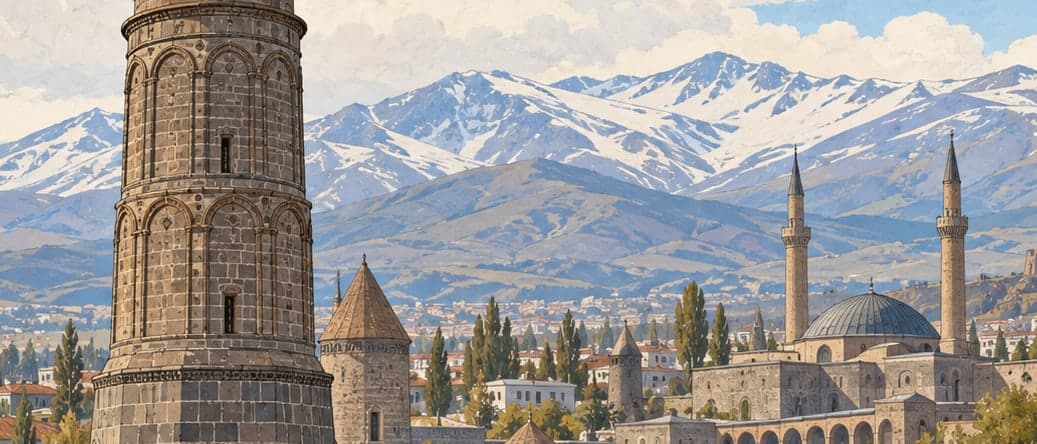
The Emir Saltuk tomb has an eight-sided body, a high drum and a low cap combining dome and cone. It is built of cut stone in two colours, with round-arched triangular pediments, and the niches of the drum carry reliefs of animals — bull, snake, bat and eagle. In one of the niches, between the horns of a bull, is a carved human head that draws the eye.